

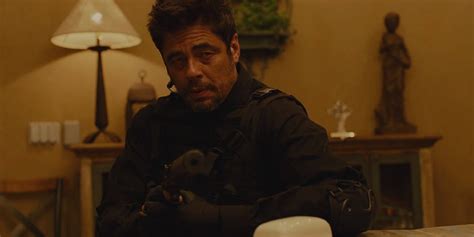
Watching Sicario (2015) was an invigorating experience for me. It was an intense action thriller while also being a subtle meditation on revenge, in ways that I hadn’t ever really considered before. The most intriguing aspect of the movie was the character of Alejandro, whom I saw as an area where the intersections between revenge and retribution intertwine. Even though we tend to think of retribution as an impersonal act, it can be just as personal as revenge.
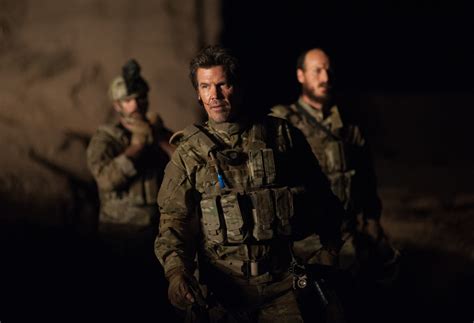
America’s war on drugs is presented in both a personal and political framework; the opening raid scene has dozens of bodies stored in an Arizonian safe house, with the crimes of Mexico bleeding into the US, and multiple officers are killed, with some traumatized, in the climactic explosion. Kate Macer wants to find the men who committed the attack, but she is different than Alejandro in that she looks at her job through strictly legal framework, while Alejandro manipulates the law so that he can get his personal act of revenge under the assumption that he has the same mission objective as Kate. His background of being a prosecutor whose family was killed by a cartel adds to this, as he used to be someone who upholds the law, but has now since abandoned it. Francis Bacon’s essay “On Revenge” fits in well with this idea. He says “The most tolerable sort of revenge is for those wrongs which there is no law to remedy; but then let a man take heed the revenge be such as there is no law to punish; else a man’s enemy is still before hand, and it is two for one,” (Bacon 20). Kate and Alejandro both want to take down the Alarcón cartel, but their personal desires conflict with their objective goals. This is more prevalent with Alejandro, since the mission requires that he go off the grid and hold officers hostage to get to the Alarcón mansion. I thought that was an interesting approach to solving the central conflict of the story; to defeat the cartels in Mexico, the US government had to become a cartel itself, by allowing revenge to obfuscate the retribution. It is clear in the movie that the law was not solely going to solve the cartel conflict. As a result, revenge had to take its place.
The final scene where Silvio’s son is playing soccer while gunfire blazes in the background was an incredibly haunting image. We had seen the brutality of Juarez before, but to see it from the perspective of the people who were living there was something else entirely. From the perspective of the FBI and CIA agents, the city’s violence is more than enough reason to take down the cartel for the sake of retribution. But for the innocent civilians who are living there, especially Silvio’s son, the violence that goes on between the US government and the cartels is only going to radicalize enough youth to join the cartels. Alejandro’s killing of Silvio essentially guarantees that his son is going to be as vengeful as Alejandro, and will probably continue the cycle of violence was more. After watching this film, I saw revenge as more of a hateful cycle that keeps perpetuating itself, in a similar way that terrorism functions in Invasion U.S.A. (1985). As long as there is a group of people unwilling to bow down to the status quo, there will be ideologies in place to make sure that the cycle of violence continues by the radicalization of each new generation. Even though retribution is seen as a final event and judgment, that is by no means an indicator that the violence will stop. If anything, it guarantees that it will persevere.

This article was originally written for MS140 PO-01 Screening Violence at Pomona College, taught by Prof. Kevin Wynter.
 BEYOND THE FRAME
Leave a comment