In this long-spanning retelling of the legendary Charles Aznavour, excellent direction and performances are nearly drowned out by an exorbitant length and the film’s own ambition.
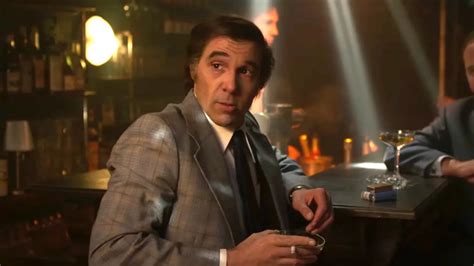
Coming from a poor Armenian immigrant family in France, Charles Aznavour knew that he wanted to be onstage since he was a child. After a struggling career singing cabaret songs in Parisian nightclubs during the Nazi occupation of France, he attempts to launch a solo career, taking him on tour with icons such as Edith Piaf and Pierre Roche. But as his ambition leads him to bigger and bigger heights, it becomes clear that little will slow him down.
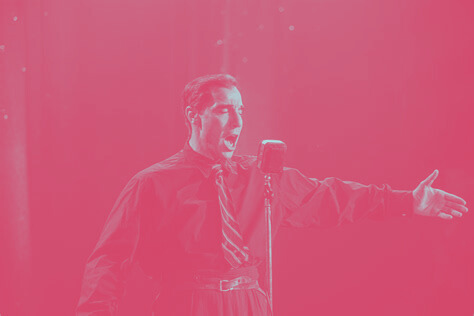
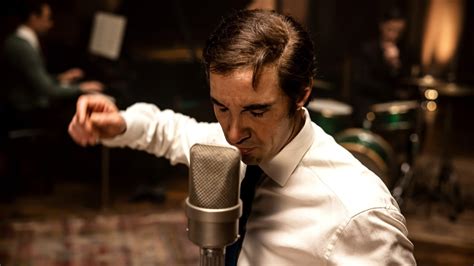
This film was the opening film of SBIFF’s French Wave Festival, which takes place every July for seven days. Monsieur Arznavour is hardly a film to scoff at. It covers three decades in the life of Charles Aznavour, considered to be France’s equivalent to Frank Sinatra, and how he rose from obscurity to become internationally renowned. Tahar Rahim puts on a stellar performance as Aznavour, flawlessly executing the man’s stage presence in a way that would intimidate any actor. He also perfectly captures the man’s flaws, like his relentless quest to achieve the height of stardom, even if it means neglecting his personal life.
The direction and cinematography also deserve special mention. Directors Grand Corps Malade and Mehdi Idir use stunning long takes to capture some of the most critical moments in Aznavour’s life, such as the liberation of Paris, his performance of “It Will Be My Day” to a high-society theatre, and his many renditions of “La Bohéme” in different languages. While I have a hit-or-miss relationship with long-takes, they are done masterfully in this film.
But there are some significant drawbacks in Monsieur Aznavour. Mainly, that it decides to cover the entirety of Charles Aznavour’s illustrious career, which leaves little room for depth in some moments. This isn’t necessarily the fault of the film itself, but rather the musical biopic genre as a whole. It’s impossible to condense an entire decades-spanning career into a palatable two hours. One wonders if it might have been better to focus on a specific moment or storyline, focusing less on his career and more on who he was. Regardless, one cannot say that this film does not have ambition. And like the late great Charles Aznavour, its ambition is its greatest weapon–and its greatest flaw.

 BEYOND THE FRAME
Leave a comment