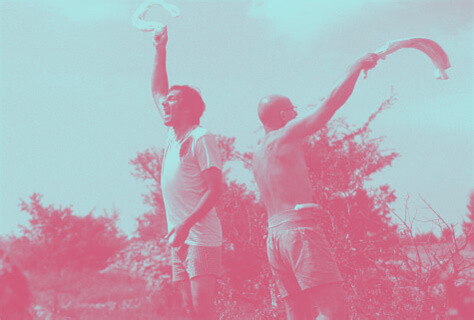
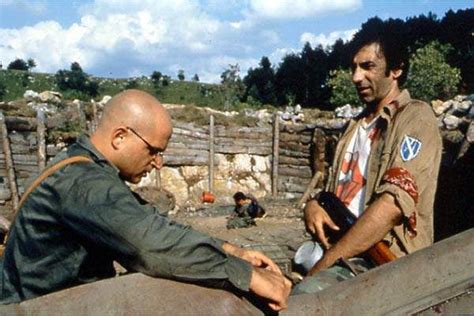
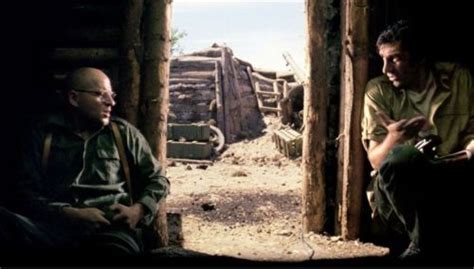
During the Bosnian War (1992-1995), a Bosniak soldier by the name of Ciki falls into a trench after being ambushed by Bosniak Serbs. One of the Bosniak Serb soldiers, Nino, is held hostage by Ciki after the latter ambushes him, and despite some antagonism, the two are tenuously bonded by the need to survive after discovering that what appears to be a corpse is actually Ciki’s comrade Ceka, who is alive and lying on an armed land mine. But despite them trying to maintain order, Ciki and Nino find themselves at odds with one another, leading to disastrous consequences.
During the Bosnian War (1992-1995), a Bosniak soldier by the name of Ciki falls into a trench after being ambushed by Bosniak Serbs. One of the Bosniak Serb soldiers, Nino, is held hostage by Ciki after the latter ambushes him, and despite some antagonism, the two are tenuously bonded by the need to survive after discovering that what appears to be a corpse is actually Ciki’s comrade Ceka, who is alive and lying on an armed land mine. But despite them trying to maintain order, Ciki and Nino find themselves at odds with one another, leading to disastrous consequences.
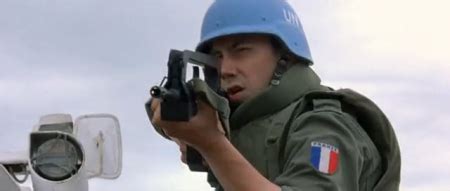
I found Ciki’s speech before his death to be the most powerful moment in the film. Although Bosnia is technically a part of the continent of Europe, its contentious status as an Eastern European country means its relationship to the West is a lot more cynical than others. For all the work Marchand and Livingstone do, they are unintentionally cooperating with a system that is worsening the conditions of the people on the ground instead of truly helping them. They are bringing attention to the desperation of the conflict, but doing so in an exploitative way that is bound to worsen the relationships between the two warring factions.The ending shot of the film is even more brutal. As the only man left standing amidst the carnage, Ceka is truly helpless. He’s not only lying on an active land mine, but he’s been abandoned by the same people that were trying to help him.

This article was originally written for RUST110 PO-01 Russian and Eastern European Cinema, taught at Pomona College by Prof. Larissa Rudova.
 BEYOND THE FRAME
Leave a comment