
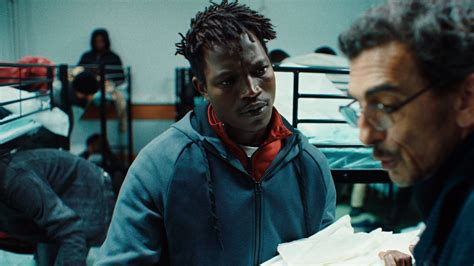
A hustling food delivery man navigates a Kafkaesque system of immigration in this gripping story, with a standout performance from lead Abou Sangaré.
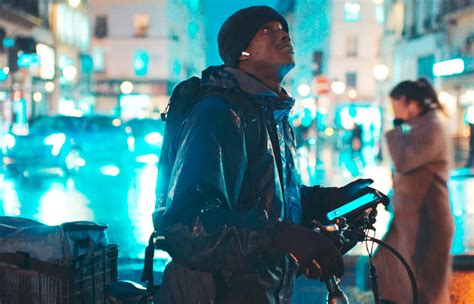
Souleyman is a man whom you wouldn’t think twice about when you pick up a takeaway order from him. A delivery driver who originally hails from Guinea, Souleyman is trying desperately to make ends meet in Paris. Whatever money he earns from delivering he must give half of which to Emmanuel, a friend who rents out his account to him. He also owes monetary favors to a few men in the African immigrant community, who are trying to help each other out yet often do so under an expectation of payment. There’s also the relentless streets of Paris, who reduce him to nothing more than a commodity. Finally, there’s the interview he has in two days, which will determine if he has the right to stay in France.
Yet one of the wonders of Boris Lojkine’s Cesar-winning (French equivalent of Oscars) film is how it offers up rare moments of hope amidst this turbulent landscape. One might head into this film expecting a harrowing ride–which it can be at times–but there’s also moments that allow us to breathe. The street vendors generously give Souleymane support and coffee when he’s at his most desperate, and the few social workers Souleymane interacts with are kind and genuinely want to help. There’s also the rare customer whom Souleymane delivers food to that treats him not like a part of a machine, but as a human being. But it’s not long after these moments of kindness that Lojkine reminds us that for every bit of oxygen Souleymane breathes, there is a relentless tide determined to pull him under.
However, this tide does not have a name. It’s a system, designed with the intention of giving immigrants a straight pathway to citizenship but leaves them with only the barest amount of support. Although there are homeless shelters for immigrants sans papiers, the bus schedule is strict. When a food delivery account gets canceled, the person on the other end of the line says they cannot take complaints. When Souleymane tries getting the documents he needs for his interview, he has to go through Barry, an immigrant from Guinea who coaches him through a fabricated story of political persecution that might get him granted asylum. In return, Barry expects cash. It’s not that Souleymane hasn’t been persecuted–but the social and institutional systems he navigates leave him little room to settle down and breathe.
There is no better performance that could encapsulate the character of Souleymane better than Abou Sangaré. He won the Best Male Revelation Award at the 2025 Cesar Awards, and he most deserved it. You can feel Souleyman’s drive and desperation in Sangaré movements, whether it’s riding on his bike or sprinting through the train stations to make his bus to a homeless shelter. In the climactic scene where he is being interviewed, we are left hanging on every word as Souleymane anxiously talks, reciting his story while unsure of his own. Sangaré’ doesn’t just play Souleymane–he is Souleymane.
Social realist dramas aren’t for everyone. At best, they can be a gripping portrayal of social conditions that nevertheless treat its characters as complex individuals worthy of our time and respect. At their worst, they can be downright exploitative, only seeing the worst out of every frame. I’m pleased to say Souleymane’s Story falls into the former category. Each character isn’t perfect, but they’re not trying to be. They’re just trying to survive. Instead of the filmmakers blaming the characters for their shortcomings, they turn their attention towards the broader implications of a system that sees “Frenchness” as a privilege, and not as something deserved to every person seeking asylum.


 BEYOND THE FRAME
Leave a comment