

This unapologetically sexual coming-of-age tale set in early 2000s Mexico is guaranteed to turn you on and tug on your heartstrings.
In August 2017, I went on a road trip through New Mexico and Arizona with my sister, my Nana, and two cousins. We visited Monument Valley and stopped by the Grand Canyon. We danced at rodeos and went for hikes. And all the while, we watched news of the Unite the Right Rally in Charlottesville, VA. We listened to Trump’s escalating rhetoric towards North Korea. Although we were on vacation, I couldn’t help but taste an apocalypse of some sort was happening all around us.
However, Y Tu Mamá También (2002) takes on a different kind of apocalypse. This time, it’s two friends, Tenoch (Diego Luna) and Julio (Gael García Bernal), who go on a spontaneous road trip with a 28 year-old Luisa (Maribel Verdú), who recently decided to separate from Jan, her husband and Tenoch’s cousin. Tenoch and Julio recently graduated from high school, but they have no plans for their immediate future. All they want to do is lust after girls, take illicit drugs, and lounge around with their stoner friends. But when Luisa tags along on their trip to the illusive Heaven’s Mouth beach, things take an erotic turn.
It’s hard to classify what genre this movie lies in. Although I placed it in the comedy section for its sly humor and teenage spunk, it would be better to classify this film as a road movie, in the vein of Easy Rider (1969) and Thelma & Louise (1991). The leading trio are ostensibly traveling to Heaven’s Beach, but there’s something else there’s searching for, something harder to describe. Is it freedom? Masculinity? A sense of peace? It’s a good metaphor for the country of Mexico at the time. After the Partido Revolucionario Institucional lost power after 71 years of rule, Mexico was thrown into a state that had been inconceivable for generations. With a power vacuum, more and more people within Mexico decided to protest, advocating for indigenous rights and socioeconomic justice.
Y Tu Mamá También (2002) uses Tenoch and Julio’s relationship to illustrate this problem firsthand. The friends come from very different backgrounds: Tenoch comes from a wealthy PRI family with connections to the president, and Julio is working-class who was raised by a single mother. While the two supposedly share the same ideologies when it comes to girls and drugs, they don’t hold themselves accountable to maintain these guidelines. When Luisa enters the picture, she becomes an enigma and a prize to obtain.
Refreshingly, the film doesn’t fetishize Luisa as an unobtainable object of desire. Maribel Verdú plays her with a sense of carelessness and tragedy, giving her actions weighted purpose beyond just simple seduction. Her eroticism plays well into the themes of the movie. While all the boys want is supposedly sex and a good time with Luisa, her eroticism is more mysterious and fluid. Over time, the eroticism turns into something that does not revolve around Luisa exclusively, but something that easily translates from one character to another. Just as Mexico is determined to forge a new path forward after PRI, Luisa’s sexuality represents a possible way forward. However, it’s not a path that can be easily taken.
If you’ve seen Alfonso Cuarón’s Children of Men (2006), you can see some of his directorial trademarks here, such as the long-shots and bystander perspectives. It’s used to great effect in this film, showing the often misunderstood and stereotyped Mexico in a variety of nuanced lights. While there are a couple of bodies lying in the streets, there are also people going about their day, protests blocking traffic, music playing in beachside bars, and celebrations of giant milestones. Cuarón’s immersive filmmaking molds extremely well with the film’s fluid structure. We feel as though we are in the car with Tenoch, Julio, and Luisa, observing Mexico changing right in front of our eyes. By the end of the film, we are changed as well.

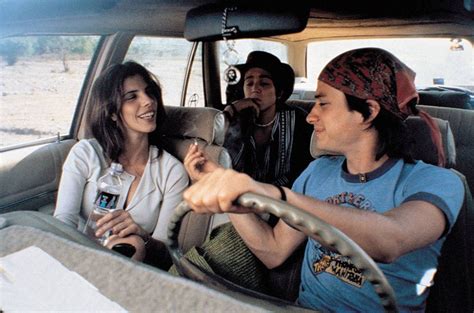
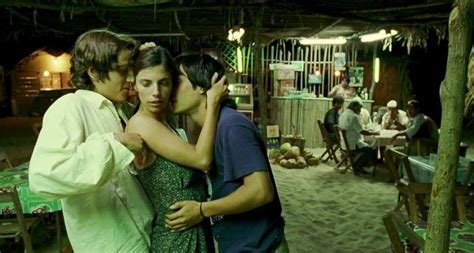
Despite the film’s crude title, Y Tu Mamá También proves that coming-of-age films don’t have to stray away from sexuality and political commentary to make an impact. If anything, doing all three of these things helps to elevate the final project. Anyone who’s came of age can tell you it’s one of the hardest things anyone has to go through, and yet it doesn’t stop happening. Time marches on, as we all must. But instead of sticking to strict binaries of right and wrong and ignoring our hypocrisies, maybe what we should do instead is embrace those contradictions, confront the invisible structures that permeate our lives, and unearth the queerness that lies inside all of us. Even if old relationships change forever, it doesn’t negate the impact it had on you as a youth.
 BEYOND THE FRAME
Leave a comment