
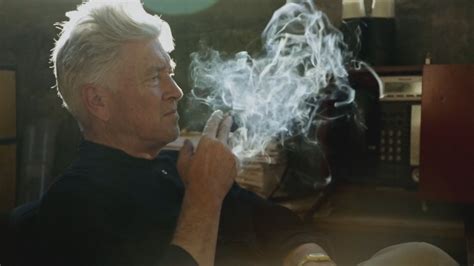
Looking at David Lynch as more than an iconic filmmaker, this quiet yet insightful documentary looks at Lynch’s first and most overlooked passion.
When David Lynch passed earlier this year, I was stunned. I had put Blue Velvet on my watchlist for a few years at that point, but Lynch’s death put a glaze over the film. It wasn’t just a film anymore, but a sort of monument, a reminder that its creator was no longer living. I did watch Lynch’s debut film Eraserhead (1977) as part of a tribute at a weekly 5×5 film club meeting, but that was it. Well, after watching this film, it looks like I’ll have to watch more of his work. And by his work, I don’t just mean his films–his paintings.
The film composes of a series of auditory vignettes by Lynch on his childhood, adolescence, and coming-of-age into a painter and filmmaker dedicated to “the art life,” where “You drink coffee, you smoke cigarettes, and you paint.” It’s a very simple premise, one that indicates a simplistic form. But when the documentary cuts from Lynch’s Hollywood Hills studio to his artwork, you start to see the innards of the artist’s mind. It is far from simple. It is dark, moribund, mysterious, and indicative of an alienation felt by years living in a suburban environment. It’s something even moving to the city can’t erase. But a cohesive narrative is built out of these collection of sketches and drawings. Art simply wasn’t a way of life for Lynch, but a way of navigating through the world. It was a way to convey the angst, heartbreak, joy, and youthful energy of Lynch from his childhood in Boise, Idaho to his turbulent start of adulthood in Philadelphia.
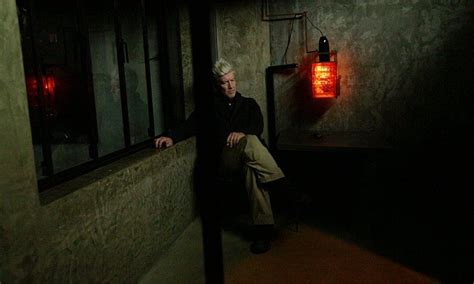
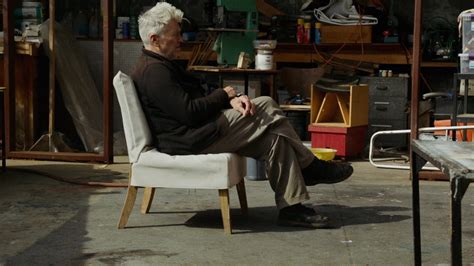
The directors’ decisions to eschew a traditional interview-then-cut format for this documentary was a great decision. It puts the director in a much more humbling light. We simply observe him in his natural habitat–smoking cigarettes, painting, and spending time with his daughter Lula Boginia Lynch. Eve when there are moments where his films are referenced, the directors wisely don’t embellish his personality. They simply let him tell the story, guiding us through each stroke of the brush. Nothing is glamorized about Lynch. He is just a man who has dedicated his life to art.
When one goes through the filmography of David Lynch, one could suggest starting from Eraserhead, or some of the more famous Blue Velvet (1986) and Mulholland Drive (2001). But I would suggest if you want to know a more humble, self-reserved, and naturalistic Lynch, you should start with this one. There’s little mention of his legacy, or his films, or the man whose style of art launched the careers of a new generation of filmmakers. He’s just David Lynch, an artist with a particular way of looking at the world.
 BEYOND THE FRAME
Leave a comment