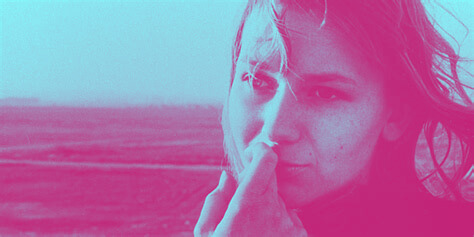
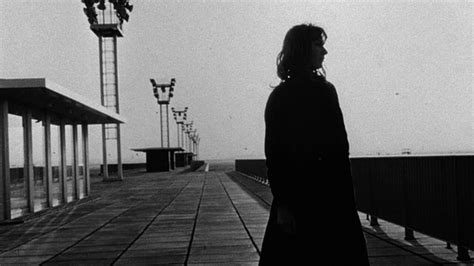
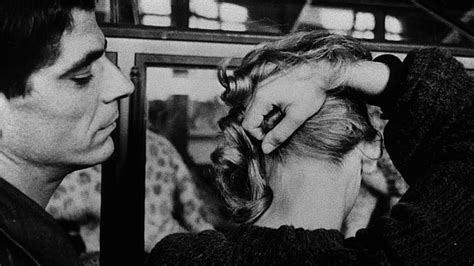
As I was watching La Jetée (1962), I stumbled across an interesting trend; there seemed to be a lot of fetishization of the female character. The film’s formatting seems to mandate this, as instead of using live footage, the film is almost entirely shot with still photos, and this allows the viewer to hyper fixate on some key details, as well as some images that are pertinent to the story. One of these images is that of a lady that the main character keeps witnessing in his experimentation, which was the last image he could recall before World War III destroyed Paris. However, this objectification of the woman and her role within the story is subverted during a sequence towards the film’s final act, as the woman tosses and turns in her bed.
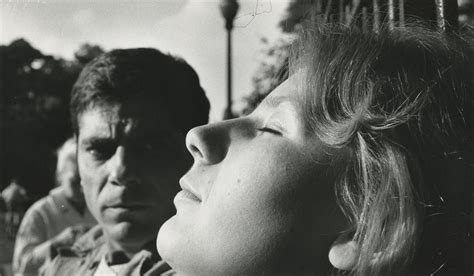
What I find interesting about the film is that it was released in 1962, during the height of the French New Wave. The French New Wave was a critical turning point in cinematic history for how it changed the roles women were given at the time. In Susan Hayward’s summary of the period from 1958-62, gender relations were being challenged: “the couple was represented as a complex entity with issues centering on power relations, lack of communication and questions of identity. The representation of women was more positive, women became more central to the narrative, and more agencing of their desire,” (Hayward 168). This quote appears to run counter to the fetishizing of the woman in La Jetée. We don’t know much about her personality or backstory; all we know is that the man is obsessed with her, like Scottie in Alfred Hitchcock’s Vertigo (1958). The focus seems to be on the male gaze as well, with the man preoccupied with following her in the museum and staring at her as she dozes in the sun. In his memory of her before the war, the audience is focusing on her reaction as she witnesses a man die. So why is the bed scene so startling?
In the scene where she tosses and turns in bed, the shots are all very similar, with the fade-ins and fade-outs of the editing make it appear as though the main character is trying to piece together his memory into real life. And finally, the film breaks its habit of using still images and includes a second or two of live-action footage of the woman blinking at the camera. This moment is entirely startling. It gives the woman agency in a narrative that has largely rid her of it. Throughout the narrative, we were inclined to identify with the man due to his fixation on the woman, but now that identification is broken; it appears as though the woman has broken through the fourth wall, and we are now identified with her. Unlike in Vertigo, where Madeleine’s character never gazes back at the audience, the woman in La Jetée does, and it is jarring to have the gaze disrupted, to be caught in the act.
This article was originally written for LIT135 CM-01 Alfred Hitchcock, taught at Claremont McKenna College by Prof. James Morrison.
 BEYOND THE FRAME
Leave a comment