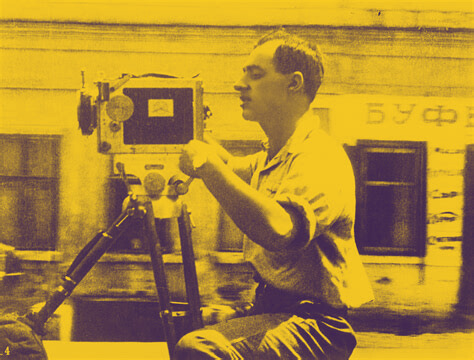
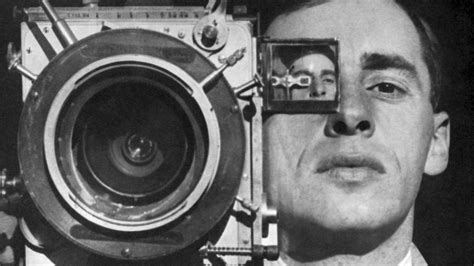
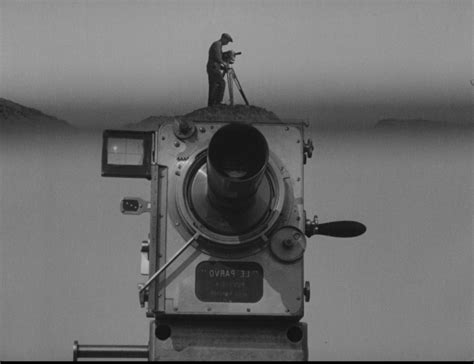
Man with a Movie Camera is an experimental documentary that chronicles an average day in Moscow, from the early morning hours to the carousing at night. There is no plot or written characters; the sole purpose of the film is to demonstrate a number of techniques one can do with a camera, as well as in the editing room. Throughout the film, a cameraman can be seen lugging a film camera through the streets of Moscow.
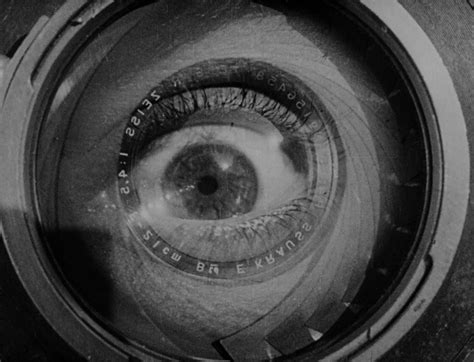
I believe the film was intended to act for a number of purposes. For one, Dziga Vertov is clearly demonstrating how filmmaking can be used to document everyday life in fascinating ways, especially in a non-narrative fashion. Moreover, the relationship between man and machine plays a big role throughout the film, as human activity is edited alongside shots of machinery pounding away, showing how the “kino-eye” can be just as impactful as the human eye, and how the two eyes can intersect. Some of the creative decisions in the film reminded me of those used in Russian Ark (2002), such as when the Marquis chases the Romanov sisters down the hall or interacts with the blind woman in the art gallery. While he is not Russian, his interactions within the space indicate that he is not just a spectator, but an active participant in history. However, this perception comes with a gendered edge.
There are a number of moments in Man with a Movie Camera (1929) where the camera lingers on human bodies, specifically female bodies, in a voyeuristic way. While there are also shots of male bodies in states of exercise and hard labor, I found that women’s bodies contained a more erotic edge. For example, there were shots of women’s legs lounging on the beach, a woman’s bare back putting on her bra in the morning, and the camera focusing on the cleavage of a woman who was exercising. Pearl Latteier has a similarly conflicted opinion:
The film’s images of women are deeply intertwined with its utopian interest in expanding perception and merging humans with machines. But, by examining two ways in which the film represents women—as erotic object and as cyborg—we will see the place of women in this utopia is a complicated one. (Latteier 4)
I agree somewhat with Latteier’s analysis, but I think one could go further in examining this representation of gender as a way of merging man with machine. While the film is successful in portraying the unique power of cinema in developing a near-universal language, the omnipresent perspective of the camera ends up obscuring the more gendered aspects of the camera. Men and women are portrayed working with equal importance, but only women are looked at voyeuristically, with men gazing down at them while they sleep on the streets or at the beach. I found this film quite compelling with its rapid editing and themes, but the utopian ideal that the film intends to propagate comes with some caveats. There is a possibility for cinema to represent a near-universal language, but I doubt it can be truly universal. The gendered gaze of women’s bodies as erotic parts painted the women in the film as distinct from the men; they were not just valuable members of the proletariat, but erotic ones at that.
| Works Cited: |
| Latteier, Pearl. “Gender and the modern body: men, women, and machines in Vertov’s man with a movie camera..” The Free Library. 2002 Post Script, Inc. 03 Feb 2025. |
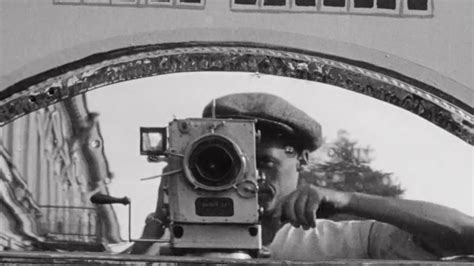
This article was originally written for RUST110 PO-01 Russian and Eastern European Cinema, taught at Pomona College by Prof. Larissa Rudova.
 BEYOND THE FRAME
Leave a comment