
In the 1970s, it was common for thrillers to depict New York City as a hive of scum and villainy. Taxi Driver (1976) is perhaps the most famous example of this. But while Taxi Driver is now regarded as a modern classic for portraying the chaotic mind of a Vietnam War veteran struggling to forge a new identity for himself, it’s also necessary to recognize its influence beyond the interests of film studies. This is where Ms. .45 (1981) comes in.
Inspired by Taxi Driver, Ms. .45 is an exploitation thriller about Thana, a mute woman living in NYC who is brutally raped twice in one day and goes on a killing spree against perverted men. Except it evolves beyond that to targeting men in general. Considering exploitation films have a status of being “low-art,” one could make the argument that Thana is a reductive character who is reduced to her trauma, and her rape begins the start of her character journey into a symbol of vengeance. But I would argue that instead of dehumanizing Thana, Ms. .45 portrays how horrifically rape distorts one’s mind.
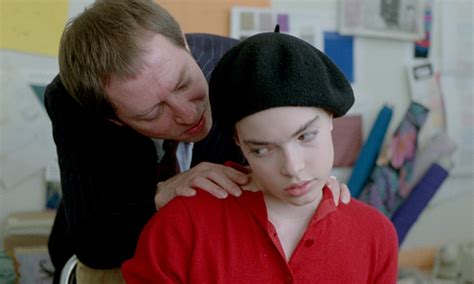
The film wastes no time in reminding us just how creepy some men can be. Right off the bat, Thana’s boss has an odd fascination with her, and pats her on the head like a child when she leaves. As Thana and her female coworkers walk down the street after a hard day at work, they are catcalled by leering men. When Thana is raped the first time, she is mugged in a dark alleyway, with the man coming at her from behind wearing a mask. But when it happens again, it is in her apartment, with her clothes already torn, and the intruder has already been rifling through her stuff. While New York City in real life is not as dangerous as the film portrays, Ms. .45 shows us that not all rapes happen out of nowhere. In fact, sometimes they can happen when you’re already at your most vulnerable.
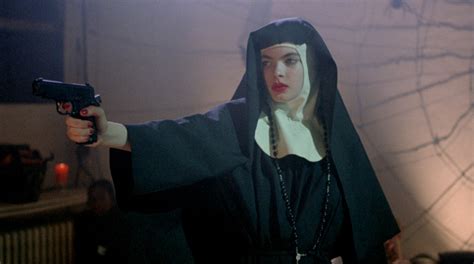
Thana’s first murder happens when she stuns her second attacker with a glass paperweight in the shape of a red apple, a Biblical symbol of lost innocence. Instead of Eve being tempted by the snake into eating the apple, Eve uses the apple to kill the snake, ensuring that the Garden of Eden is only an illusion. It’s a visceral scene, but the color of red evolves. Once she starts her serial killing, she wears more red clothes, until the climax has her wearing a nun habit with bright red lipstick. In this habit, she creates her own vengeance.
There’s been a lot of discussion over rape-revenge stories, especially in the aftermath of the #MeToo movement. I was thinking a lot about the discussions surrounding Sansa Stark’s onscreen rape in season 5 of Game of Thrones (2011-2018), which was then used by the writers as one of the reasons why she had to mature. In season 8, Sansa would later say to her would-be rescuer The Hound that “Without Littlefinger and Ramsay and the rest, I would have stayed a little bird all my life.” Jessica Chastain wrote on X (formerly Twitter) that “Rape is not a tool to make a character stronger. A woman doesn’t need to be victimized in order to become a butterfly,” (McGovern).
I will acknowledge that there were times throughout the film that I thought “Do we really need to see Thana get harassed again?” One problem I have with exploitation films is how they can sometimes use the pain of marginalized groups to justify violence, or exploit the shit out of that violence to shock the audience and get a reaction. But in the case of Ms. .45, I think there’s an argument to be made that while Thana’s rape is the inciting incident, it is far from the only factor that inspires her killing rampage.
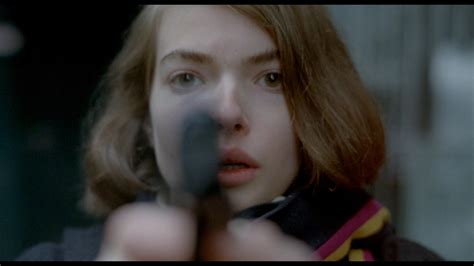
For one, her muteness leads many people to project onto her. While she can write notes to communicate, her PTSD in the aftermath of the attacks makes it clear that it’s going to be hard for her to fully process everything without people infantilizing her or ignoring her boundaries. When she has an episode at the garment factory where she works, all of her coworkers crowd around her, and we see from her perspective how overwhelming it is. When a man starts obnoxiously following her around the city and coerces her into his apartment, her .45 caliber gun is the only way she can make a statement. Considering that she stole that gun from her second rapist, it’s also a way to reclaim some agency from that dehumanizing attack.
The .45 gun is truly what makes this film. In horror films, the trope of the Final Girl has lasted for generations precisely because it places audience members in the shoes of the prospective victim. In films like Halloween (1978), the Final Girl often wields a knife, which can double as a phallic object. But in Ms. .45, the gun becomes a tool of penetration and of distance. As Thana kills, she places distance between herself and the victims, as a way to desensitize herself from the act of killing. Even when she is putting up a fight, she is also struggling with a fractured mind. When Thana meets her grisly end, it is through the edge of a knife, plunged into her back by a female coworker after she goes on a killing spree at a Halloween party. Her last words are “sister.” Instead of a man bringing an end to her saga, it is a woman who didn’t see the pain lying in someone who could have been a friend.
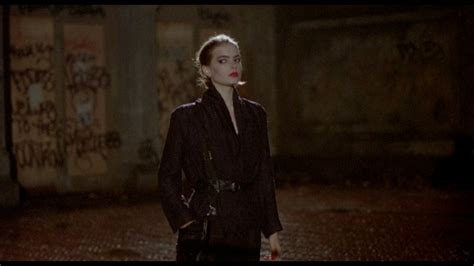
Exploitation films have their flaws, but I think they can have incredible transgressive power for marginalized groups. Blaxploitation films were landmarks precisely because, for many Black moviegoers, this was their first time seeing a Black protagonist kick ass and take names. For once, violence wasn’t solely directed at Black people on account of their being Black. For Thana in Ms. .45, her acts of violence make her an avenging angel, but also as a victim of rape who is trying to navigate a world that is waiting to devour women like her. What sets Ms. .45 apart is how violence is used to highlight the complexity of the mind of a rape victim. Rape goes beyond the physical act. It’s the fear of not being believed, of being blamed, of being labeled promiscuous, of being shamed. It lies in every patriarchal structure. For Thana, the .45 gun gives her the agency that was robbed from her, but even that agency is just conditional. Men still leer at her. She’s never going to be truly safe. Through violence, she goes from a Miss to a Ms.
Works Cited:
McGovern, Tim. “Jessica Chastain Slams Game of Thrones: ‘Rape Is Not a Tool to Make a Character Stronger.’” People.Com, PEOPLE, 8 May 2019, people.com/tv/jessica-chastain-slams-game-of-thrones-rape-sansa-stark/.
 BEYOND THE FRAME
Leave a comment