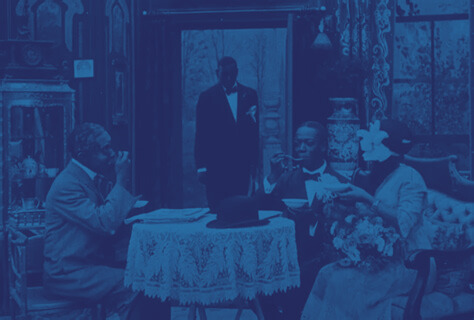
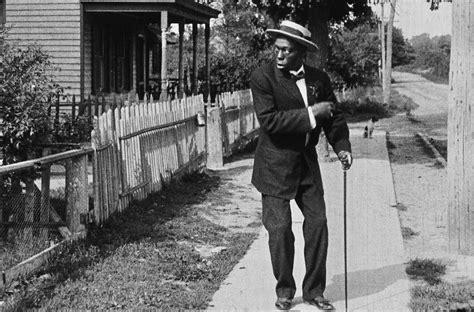
This undiscovered silent film with a historic all-Black cast and female filmmaker might be a product of its time, but it still deserves attention.
It goes without saying it’s really hard to find a film from the 1910s. Cinema was still in its infancy at this point. We kind of take for granted how much modern technology has progressed to the point where we think of things like sound as a given. But back in the 1910s, people were still figuring things out. However, for directors like the French Alice Guy-Blaché, they were starting to get the hang of things.
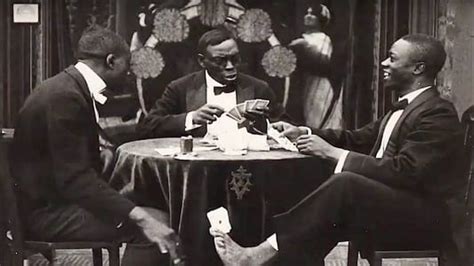
I found A Fool and His Money (1912) while digging through the annals of YouTube, where a few creators have gathered together enough material to satiate one of the most niche decades in film. But what captured my attention about A Fool and His Money wasn’t just the rare female director who is credited as one of the first narrative filmmakers ever, but also how it’s one of the first — or earliest — films with an all African-American cast.
This was especially striking considering the time period. One of the first silent films I ever watched was Broken Blossoms (1919), directed by D.W. Griffith and starring Lillian Gish. It is quite racist. Like most films of the time that portrayed people of color, it would be white actors in blackface or yellowface. Sadly, this is the case because a lot of film actors at the time came from vaudeville theater, where wearing blackface was all too common. This contributed to harmful racial stereotypes that is most exemplified in The Birth of a Nation (1915), which has been credited with a resurgence in the white supremacist domestic terrorist group the Ku Klux Klan.
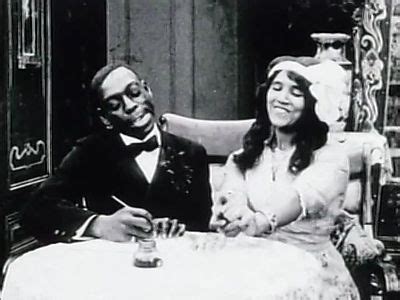
But what’s truly remarkable about A Fool and His Money (1912) is that the Black characters aren’t portrayed as violent maniacs like in The Birth of a Nation (1915), but rather as middle-class suburbanites who have ordinary pleasures. The plot consists of the fool Sam Jones, who stumbles upon a large sum of money after getting kicked out of his love’s Lindy’s house. Lindy, who admonished Sam for his poverty, gladly welcomes him back with open arms once he returns with wealth. But when Sam is swindled at a party, he goes back to square one, and the swindler is Lindy’s new love interest.
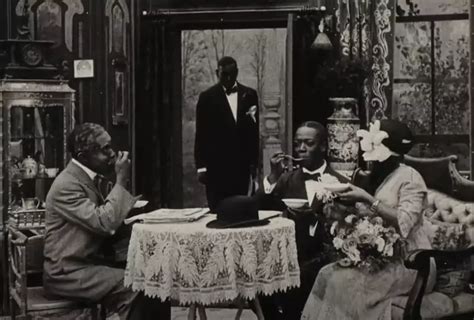
While it would be tempting to say A Fool and His Money (1912) is progressive, considering its all-Black cast, I would be more pressed to say its fair for its day. Although that could just be me, writing nearly a century after this was made. The few Black women we see in this picture are light-skinned, which, in the black-and-white camera lens, makes them appear “whiter” next to their darker counterparts. There are darker-skinned women in the ballroom scene, but I could only spot a couple, whereas Lindy gets a lot more screen time. It’s interesting to consider why this choice was made, although it’s impossible to fully know. I would argue it says a lot about how one’s color was still seen at that point. Darker-skinned Black men were allowed to possess wealth, but it’s only the lighter-skinned Black women that are considered “attractive” enough to be portrayed as love interests. Furthermore, when you take into account the extremely hostile perceptions to interracial relationships at the time (or miscegenation, as it was referred at the time), the film’s choice to have Lindy be light-skinned speaks volumes at how the darker-skinned Fool attempts to win the affections of a lighter-skinned girl, but is cheated due to his own negligence.
Even if you’re unsure about silent films, I would highly advise giving this one a shot. For one, it’s short–it comes in at 10 minutes. It also has Alice Guy-Blaché at the helm, who directed what is considered to be the first narrative film, La Fée aux Choux, in 1896. Not only that, but she’s also a female director that has gone wildly unnoticed for generations. If you want a silent film that changes your perception of what silent film looked like, A Fool and His Money is the one for you.
 BEYOND THE FRAME
Leave a comment