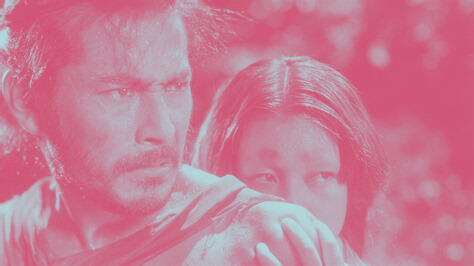
One of the defining films of the 20th century, Rashomon (1950) questions if truth is an immovable object, and what happens when different versions of the truth collide.
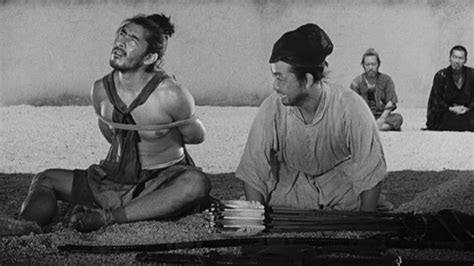
A man walks through the woods, hoping to collect some wood. After combing his way through trees, he stumbles upon a horrific scene. First, a white hat. Then a piece of rope showing signs of struggle. Finally, a dead body.
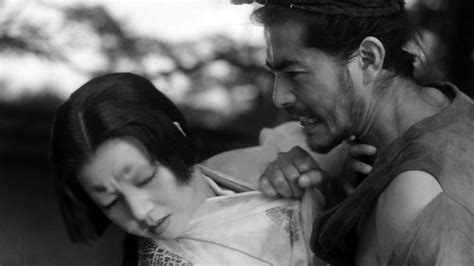
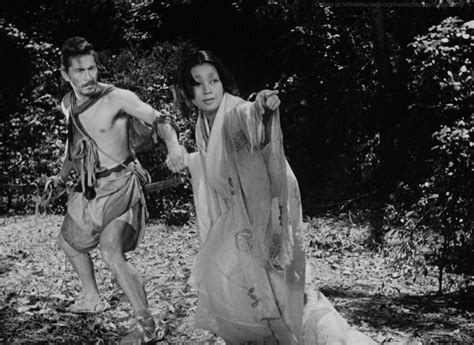
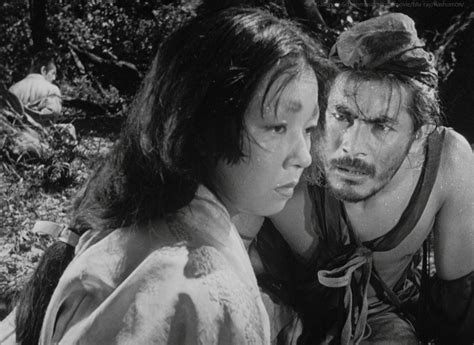
Beyond that, there’s not much we can know. All we are left with is several witnesses — including the victim through a medium — who leave credible yet contradictory reports of what happened in that forest glade. The person who discovered the crime appears to be the most credible, since he just happened to stumble upon the scene, but what about those who were directly involved? Did the philandering thief assault the woman? Did the woman kill her husband after he looked upon her with scorn? Did the woman put the two men against each other? Did the man kill himself?
Does the truth matter anyway?
The first words of the film are quite literally “I don’t understand.” By the end of this film, you might not even comprehend the actions that have taken place. But Kurosawa makes it a point to situate the story in an epistolary format; three men are recounting this story inside a dilapidated temple during a raging monsoon. Rashomon can essentially be seen as a spooky campfire story, where in the end, regardless of what exactly happened, something did, and whoever is covering up the reality is the true monster.
Much like the staging in the first act of Kurosawa’s High and Low (1963), each retelling of the same story reveals new dimensions of power. You’re inclined to believe the woman due to her being the victim of rape, but a later version of events from another character makes her story less trustworthy. Does that mean her status of the victim is nullified? What about the husband from beyond the grave? After all, he was the one who ended up dying. She just ended up with a lifetime’s worth of trauma. His low voice speaking through the medium is so frightening you’d find it hard not to believe him. But considering it’s a medium, can it be a reliable source? In our search for an objective truth, we end up realizing there is no “the,” but in “a.” In every person’s mind, there is a truth that seems irreconciable.
As a member of a generation brought up on true-crime podcasts and fake news filtering through every source online, this film speaks volumes. Every time I try to think more about this I end up going down a rabbit hole. The fact this story is being told in a crumbling temple is incredibly poignant, as this symbol of reverence is beginning to lose its place in the natural world. All these men sitting in a temple as a monsoon rages could be a young person in the world right now on their phones, speculating what’s real and what’s not, all the while things outside of our control spiral onwards without care.
In the end, it can be argued that nothing really matters. One man still died. His wife is left forever traumatized. One thief is utterly unrepentant. But what about the personal truth? What about your own perception of how honest you really are? Is admitting you’re dishonest a proof of honesty? In Rashomon, self-perception is the key enemy. Men are dangerous, but they’re not without reflection. It’s only when we turn away from this reflection that we become the most dangerous of all.
 BEYOND THE FRAME
Leave a comment