
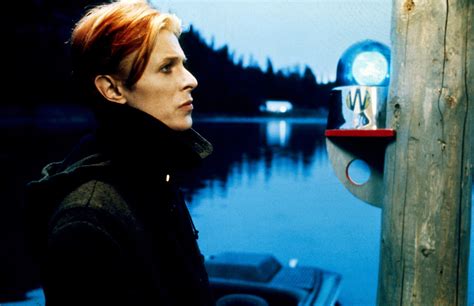
This highly underrated work of science fiction takes an extraterrestrial perspective on our world by questioning who is the real alien: those from other planets, or ourselves?
Science fiction is always a tricky genre to navigate. Sometimes the best way to explore humanity is by venturing outside of it, even though sometimes the fascination with extraterrestrials and futuristic technology can come at the expense of the human element. But in Nicolas Roeg’s The Man Who Fell To Earth (1976), the paradox is successfully done.
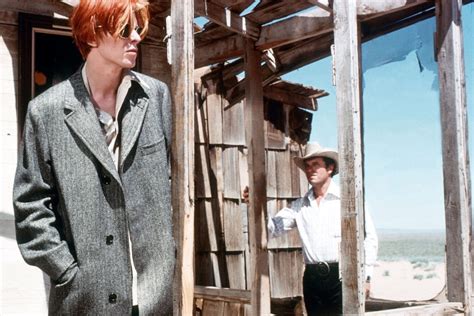
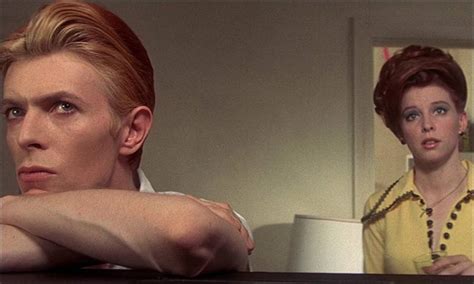
David Bowie makes his film debut as Thomas Jerome Newton, an alien who arrives on Earth with a series of inventions and becomes enormously wealthy seemingly overnight as the CEO of World Enterprises. He meets the lonely hotel stewardess Mary-Lou at a hotel in New Mexico, and he starts a mission to return home under the guise of “space exploration.” But in his homecoming quest, he falls victim to the most common sins of the growing 1970s and 80s: greed and vice.
Bowie is positively otherworldly in this role. His legendary music career prepared him well for performing Thomas Jerome Newton, who is just as mysterious and elusive as Ziggy Stardust. (Or as Jareth the Goblin King in Labyrinth (1986), which was my first introduction to him onscreen.) Newton’s a specific kind of specimen, the kind who longs for home to his wife and two children, who flashes back to the past in staggering montages of surrealism, but who is also bewitched by television, gin, and the pursuit of pleasure. From his first moments onscreen, it’s startling to see this character you’d perceive as fish-out-of-water as startling mature. But this is what distinguishes The Man Who Fell To Earth from other works of science fiction. Instead of portraying Newton as more extraterrestrial than human, Bowie portrays him as neither and both at the same time. He’s too above the affairs of man to act like a person, but he’s introspective enough to recognize the harm he’s caused to the people closest to him.
The surrealism is undoubtedly one of my favorite parts about this film. There’s a definite 1970s spirit in this, what with the freedom of camera movement and delightful escape from reality. As Newton and Mary-Lou make love in their new mansion, the camera cuts away to dream-like portrayals of sexual ecstasy between two extraterrestrial beings, covered in a mysterious substance. It’s unnerving due to the context and the uncanniness, but it’s also strangely romantic and intoxicating. It also makes Earth more strange as well. Films concerning aliens always tend to make it a fascination to ponder what it must be like on other planets, but Nicholas Roeg takes a different direction and uses Newton’s extraterrestrialism as a way to explore what makes our planet strange as well.
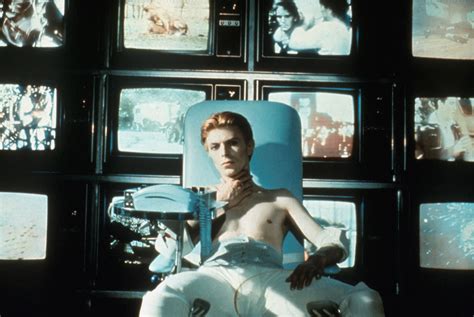
There’s definitely elements of Thatcherite economics at play, even though Margaret Thatcher and Ronald Reagan would ascend to positions of power several years after this film’s release. Newton learns about the ways of the world through television, which condense the complexities of human life to simulations only seen through pixels. He can know the bare elements of how people behave, but he can’t truly know what they’re like. More importantly, although he grows to hate television, he can’t stop watching it. Everything in his life is ultimately a performance. Despite important relationships with Mary Lou and his subordinates Dr. Nathan Bryce and Oliver V. Farnsworth, he doesn’t have much emotional connection on Earth, but rather for his home he left behind. Instead of looking forward to the future, the complications of media make him yearn for the past.
Besides Newton, Dr. Bryce was one of my favorite characters. He starts out as an absolute pervert, but turns into something different by the end of the film. He starts off as a deluded high school teacher who sleeps with his barely legal students to ward off a midlife crisis, before becoming fascinated with working at World Enterprises, and later, with Newton. He knows the man isn’t human, but instead of reacting with horror, he grows curious as to why he would want to return and leave his new life behind. Dr. Bryce is a man in transition between the sexually charged and liberated 60s to the disillusioned late 70s, where rapid economic growth and change has meant that more people long for simpler times. When we reach the end of the story, we find that Dr. Bryce and Newton have gone on similar paths, but only one of them has truly changed.
I was pleasantly surprised to find I enjoyed this. Finding obscure science fiction films is hard, and finding one I might enjoy is even harder. But I liked the existential journey The Man Who Fell To Earth took me on. Sure, there are a lot of things that didn’t age well in this film, like the practical effects and the weird social values. That being said, David Bowie was utterly captivating, and presented to me in a riveting new light. His otherworldly onstage personas translate beautifully from the stage to the screen. Not to mention the other characters paint a perfect picture of a world struggling to define itself. Even though science fiction is obsessed with exploring new and mysterious worlds, The Man Who Fell To Earth posits that maybe we are the strange things we have been looking for. What we decide to do with this information is entirely up to us.
 BEYOND THE FRAME
Leave a comment