
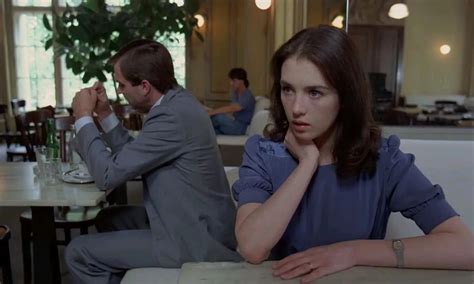
Andrzej Żuławski’s Possession (1981) latches on and feeds off the soul in this portrait of a marriage tearing itself apart and bleeding from the orifices.
Hoo boy. Where do I begin?
I’m a huge fan of body horror. It’s such a deeply personal experience. You might think that seeing the body contort and mutate unnaturally onscreen would dissuade anyone from taking this subgenre seriously, but I would argue the opposite. It’s because you psychosomatically feel everything the characters feel that you can’t help but become attached to every emotion they experience, even to the point that it makes your stomach twist.
That being said, the stomach-twisting part can get to me. After watching Possession (1981), I can feel my intestines twisting inside out. This is not just a portrait of a dying marriage; this is the equivalent of watching two people cannibalize each other for survival. Sam Neill and Isabella Adjani play Mark and Anna, a married couple living just within eyesight of the Berlin wall when Anna abruptly announces her intent to divorce Mark. She claims it is due to her having an affair with another man, but it becomes clear there is more to the story. Cue the gross-outs.
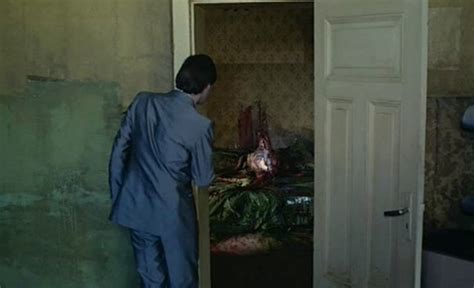
West Berlin just looks completely and utterly dead in this film. Everywhere you look you don’t see any sign of color and life in this, with the exception of each blood spatter on the walls. Other characters don’t seem to exist outside of Mark and Anna’s story. Which makes the story all the more enticing. Everywhere and everything seems dead, so it becomes clear that Mark and Anna’s story is less about their individual marriage dying and more of a spirituality dying, symbolized in the debaucherous Heinrich’s motto that “disease is the only way to God.”
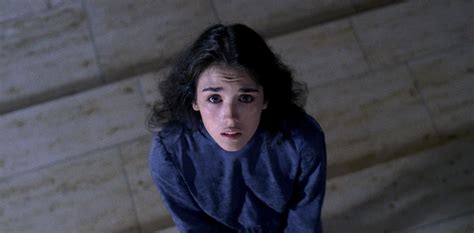
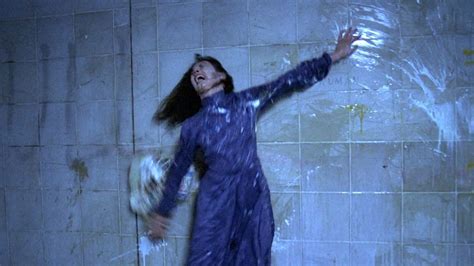
If this is a film about spirituality, then Isabelle Adjani is positively possessed in this film. Well, it’s not entirely positive–Adjani went through severe mental turmoil both during and after production concluded. But she is a goddamn tornado. One scene in the German subway is guaranteed to haunt you. With nothing but a bag of groceries, screams, and frenetic movements, you would think you are witnessing some otherworldly force present itself in the human body. Her dual role as Helen only adds to her acting prowess. She isn’t just playing a woman having a nervous breakdown in real time, but she is playing the woman in charge of it.
But the true horror comes not from the unearthly monsters or the gore, but how raw Andrzej Żuławski portrays a dying marriage. It was based off his real-life breakup from actress Małgorzata Braunek, and you can tell the guy was going through some stuff directing this. The acting isn’t exactly naturalistic, and I haven’t gone through a divorce, but this is kind of what I imagine it feels like when you’ve discovered the person you’ve loved for years is not the person you thought they were. When Mark and Anna fight, you feel their tiny apartment shake like the gods themselves are fighting. I felt myself resonating with the innocent Bob, who is caught in the middle and forced to watch his caretakers destroy everything around them.
This film is incredibly bleak. It makes you question a lot of what you’re seeing. You could definitely say this is a body horror feature, but there’s also elements of psychological horror, and a lot of Cold War-era paranoia is present in this film as well. Everything is constantly in motion. So when nothing is set in stone, it’s hard to get a grip.
But that’s exactly what body horror is like. We live in our skin everyday, to the point that we take it for granted. When we feel sick, we put off going to see the doctor until it’s absolutely debilitating. But it’s only when it’s too late that we pay attention. And by the time we notice, bombs are falling from the sky. So in that sense, Possession (1981) is a true work of body horror.
 BEYOND THE FRAME
Leave a comment