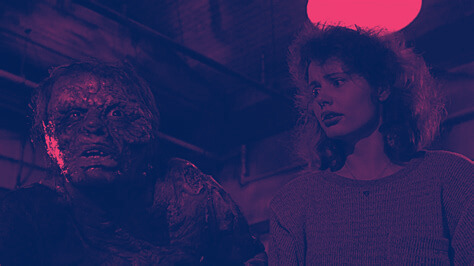
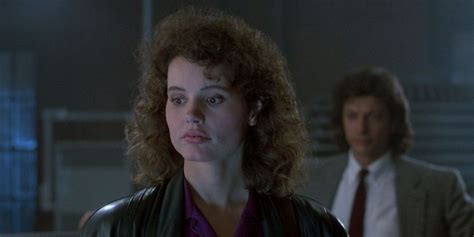
Making your heart pound in more ways than one, The Fly (1986) stands as one of Cronenberg’s crowning achievements.
Jesus.
One of my favorite films in the last year was The Substance (2024), and I still go back and watch clips of it sometimes. There’s so much to mine from that film, but a lot of it is due to how applicable it is. It’s not just about how hard it is to be a woman in Hollywood, but it’s also about how negative body image destroys our perception of ourselves. As fantastical as body horror can get sometimes, one thing I always appreciate is when filmmakers allow us a chance to get to know the people before the blood starts flowing. It makes the violence hurt more, every wince of pain is something you feel through the screen. In this film, David Cronenberg achieved that masterfully.
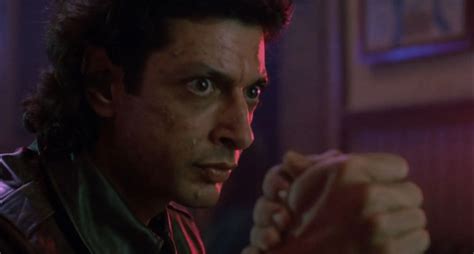
I wasn’t a huge fan of Shivers (1975), Cronenberg’s breakout hit, mostly due to how the characters seemed very flat to me. There were moments of humanity, but the characters seemed more like poster boards than actual people. This time, we get Jeff Goldblum’s Seth Brundle and Geena Davis’s Veronica as fully formed characters.
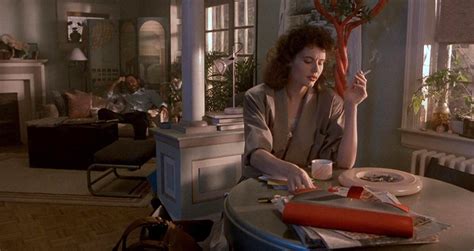
The film starts off as a bit of a rom-com, but the tight screenplay ensures that we only get the most necessary interactions to make their relationship work. Seth Brundle is socially awkward, but both he and Veronica gel together in a way that seems natural and comforting. Plus, Veronica’s ex-lover Stathis is an obnoxious piece of shit, so that helps.
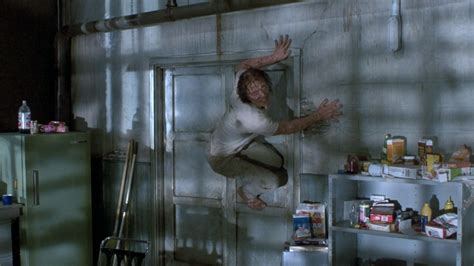
The scares go up in intensity, but Cronenberg doesn’t lambast you with them. There’s a few jump scares that are well-placed, like the inside-out baboon and the broken wrist of the man at the bar. But some of the most unnerving sequences happen when there’s little going on. Seth is working out early one morning, and he is displaying so much strength and finesse that Simone Biles would be impressed. It’s astonishing. But it’s almost too astonishing. Like something unnatural is at play. And of course, something is.
There’s an argument to be made about the film being an allegory for the HIV/AIDS epidemic, especially considering that at the time this movie was released, the moral panic around the disease was making it even harder for this afflicted to receive treatment. But I think if we try to ascribe a strong allegorical meaning to a story, it can lose some nuance.
Cronenberg’s films are about our changing relationships to the flesh. At the time of the 1970s and 80s, we began to look at ourselves differently. We weren’t just existing in bodies, but in forms of living that can always be improved. Have too much fat in your body? There’s workout videos for that. Going through a midlife crisis? Have a lot of sex. When we’re presented with countless variations on what to do with our bodies, it can feel like we don’t really exist as ourselves anymore.
That’s why this film works. Brundle’s transformation is as painful for us as it is for him and Veronica. It’s not just one man’s body changing, but an entire personality we’ve gotten to love. It’s a relationship we’ve become invested in. It’s a man and a woman in love who are realizing that they are encountering something beyond their control. It’s not just about one thing anymore, but an entire mess of things that happen to exist within one flesh. So what do we do with it? Do we look for a new and far-fetched solution? Do we call it quits? No. We should be afraid. Very afraid.
FURTHER THOUGHTS
- Jeff Goldblum reminded me a lot of Adam Driver in this film, especially with the long black hair. (If someone remakes this film based on this premise, I will delete this post.)
- Once you watch enough body horror, the sight of a man’s melting limbs become a lot less gruesome. Once you’ve seen one, you’ve seen them all.
 BEYOND THE FRAME
Leave a comment