
In this evocative and tragic portrayal of a little girl’s imagination in the wake of Francisco Franco’s ascent, The Spirit of the Beehive (1973) provides an understated look into a horrific part of Spain’s history.
Do you remember the place? That place that all the kids spread rumors about when you were a kid. Maybe it was a house rumored to be haunted. Or an exit off the highway someone said was cursed. Maybe it was a weird guy whom people suspected had murdered his entire family. Maybe it’s a beehive that pretends everything is working smoothly, when in reality, it’s more flawed than ever.
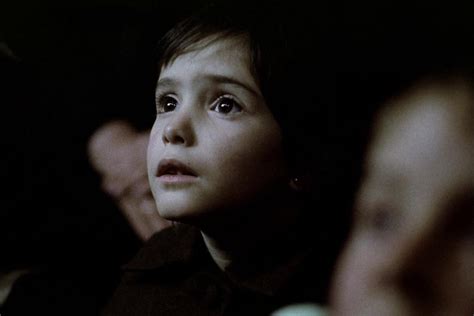
Told through the eyes of the innocent Ana, The Spirit of the Beehive takes us on an evocative yet understated journey through a remote village in the Castilian plateau in 1940. Francisco Franco and his forces had just won the Spanish Civil War, and all that’s left to do is quell all the remaining rebellion. While we don’t see too many soldiers in this film, the effects of the war linger in the background. You see men leering out the window at the Ana’s mother Teresa. You see adults with grim expressions watching James Whale’s Frankenstein as their kids stare with wondrous looks. In a towering house, every creak of the floorboard sounds like a monster stomping through the halls. In a way, there is.
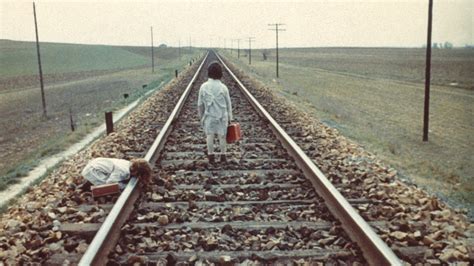
Even though this film uses Frankenstein (1931) as a grounding point, the best way to describe this film is a ghost story. While there’s no obvious antagonist, each member of Ana’s family is culpable in some way towards maintaining silence. Teresa and Ana’s father barely speak, and Ana’s older sister Isabel is playful to an almost aggressive level. In one scene, she plays dead, only to reveal herself as the “monster” and laugh at her sister’s aghast expression. It’s a quiet bit of cruelty that truly reveals how no one in the film is on Ana’s side.
So it makes sense that Ana is determined to meet the spirit that Isabel told her about, even if it means making herself more of an outsider. Like most readers today, we are more inclined to see Dr. Victor Frankenstein as the monster rather than the creature he created. Moreover, audiences have continuously reexamined the creature as a tragic victim of circumstance, not that it excuses his terrible actions. When Ana questions why the villagers killed the creature, it reveals so much. She’s not just a naive girl, but she’s someone who is desperately alone, in need of someone to understand her.
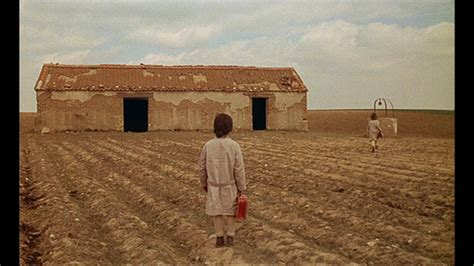
The abandoned house where Ana visits becomes a refuge. There, she is allowed to shout into the well and examine every crevice until it becomes hers. Instead of the large and empty house where she lives, she is content to exist in this lonely, abandoned shack where almost no souls live. Until she meets one, and then her destiny changes. From then on, she embarks on her own fairy tale, where she must face the perils of the real world alone.
This film isn’t the easiest to sit through, not because of any “objective” content, but rather because the pace and reliance on symbolism might not be the most accessible medium to communicate to audiences. But it works to make this one of the innocently creepiest films about kids I’ve seen. The White Ribbon (2009) and The Spirit of the Beehive feel like counterparts to the other, in that they look at how kids can retreat into fantasies and ultimately strike back against the institutions holding them back. However, while The White Ribbon explores the more insidious side of this angle, Spirit of the Beehive takes a more complex approach. Retreating into fantasies can bring comfort in difficult times. But how comforting can it be?

FURTHER THOUGHTS:
- I love how yellow this film is.
- This film is an absolute prerequisite for fans of Guillermo del Toro. Not just for Frankenstein, but also for the storytelling of the Spanish Civil War told through a child’s POV.
- We need to bring traveling cinemas back.
 BEYOND THE FRAME
Leave a comment