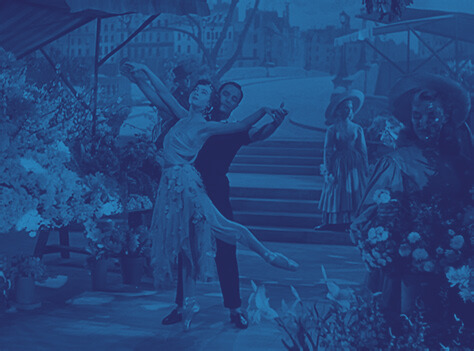
This dazzling and effervescent musical makes Paris look like another world entirely in this romantic comedy about lost souls and finding one’s way.
I’ve got to give my sister credit. She knows her musicals.
My sister’s been leaning on me to watch this for a while, and tonight I gave in and did so. She makes fun of me for being a theater kid, but I would argue if this is one of her favorite movies, she might be no better. And it is, by the way. At least I think so.
But jokes aside, this film was truly something. It’s a classic love story set in one of the most romantic places on Earth with a dazzling George Gershwin score and marvelous production design. Plus, the choreography is to die for. But everything in this film warrants why musicals need to continue to be made.
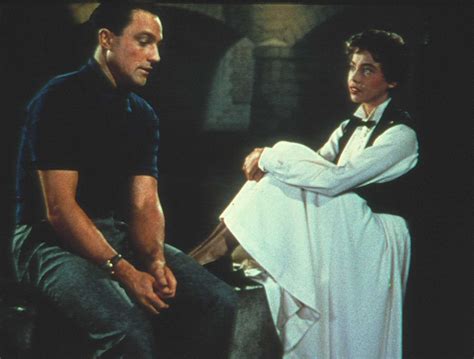
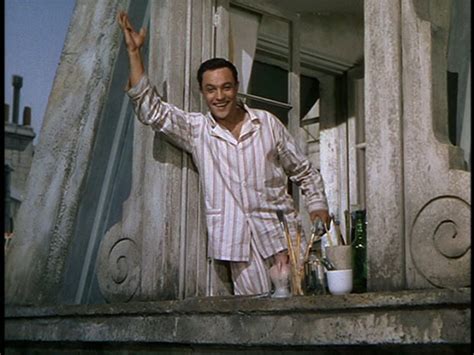
The story itself is very simple, which is by no means a bad thing. There’s Jerry Mulligan, a former American GI who decided to make his living as an artist in Paris once WWII concluded. He’s having a rough go of it, struggling for money and looking for a break. At first it looks like he might find one with a wealthy American art dealer who sees one of his paintings. And then he realizes his true break when he meets Lise, a perfume seller who just so happens to be engaged to one of his friends.
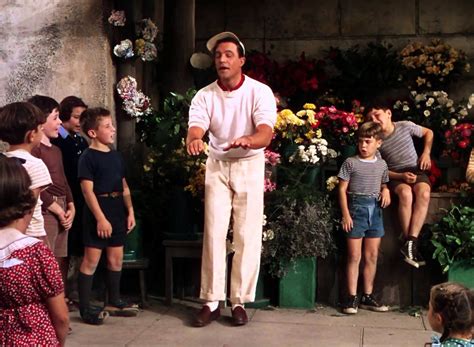
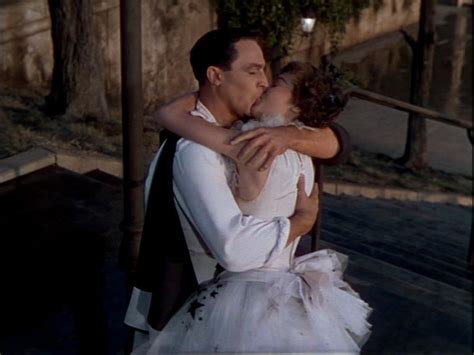
Of course, Jerry doesn’t know this. But with the chemistry between Gene Kelly and Leslie Caron, you’d be pressed to root for everyone else. (Granted, I found Jerry to be kind of a creep, but that’s just me.) Their dancing together is one of the best displays of romance onscreen, especially in the way they complement each other. Which is interesting, because while Gene Kelly is incredibly versed in tap dancing, Leslie Caron’s is in ballet. These dancing types might seem like polar opposites, but the two actors make them seem inextricable from one another. Despite their opposite personalities, Jerry and Lise just make sense.
I haven’t even gotten to the supporting cast yet, and that’s truly a tragedy. Adam Cook may be one of my favorite characters in the film, and I’m not exaggerating. Oscar Levant plays him so well, both as someone trying to define themselves artistically and as someone who loves their friends yet wants to be kept out of all of their drama. Plus, Levant is an excellent piano player and composer whose dream sequence might be one of the best in the film so far, which is chock-full of dream sequences.
That’s not to say this film is in the realm of David Lynch, however. One part I really liked about An American in Paris (1951) is how it refuses to be pessimistic, even while it comments on how hard it can be to be an artist. While Jerry wants to be a successful artist, he wants a fair trade, and he doesn’t want to be rushed for the sake of making quick money. Adam is in the same boat, as he wants to return to America yet is having trouble keeping his creative spark alive. Not to mention he’s constantly sparring with Henri, who looks down on Adam’s vaudeville style of music while upholding his more modern tastes.
Musicals like An American in Paris (1951) endure because they are optimistic. It’s about singing and dancing even when your feet hurt, and every better instinct is telling you to stop. It’s about loving even when you feel it’s wrong. It’s about persisting even when you’re tired. And more importantly, it’s about appreciating the beauty around you even when you feel like giving up. I feel like we can all use a little more of that today.
FURTHER THOUGHTS:
- Leslie Caron’s thigh game was truly unmatched.
- Jerry mastered the tiny house trend a half century before it went viral.
- We need to bring black-and-white masquerade parties back.
 BEYOND THE FRAME
Leave a comment