In this forgotten piece of lesbian cinema, filmmaker Cheryl Dunye plays herself as she navigates the “history” of a Black lesbian actress.
In my final semester of college, I took a class titled Queer Histories. It was about the various ways the LGBTQ+ community has been categorized and reshaped throughout history, and how queer organizations have been trying to reshape biased perceptions against them. I hate it to break it to my professor, but he missed the mark by not having this on the syllabus.
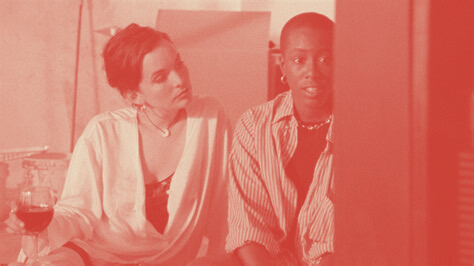
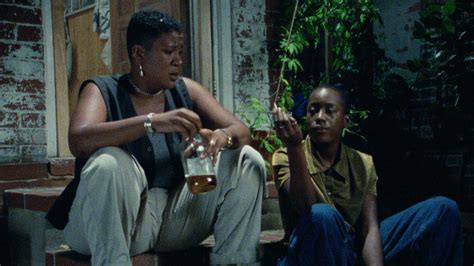
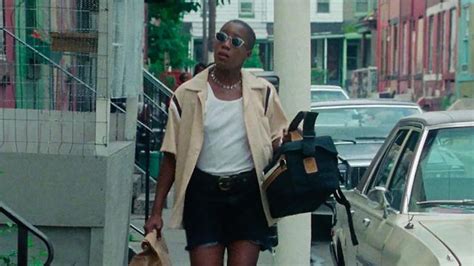
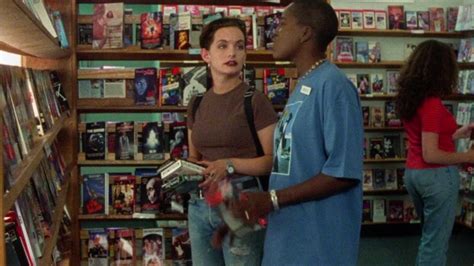
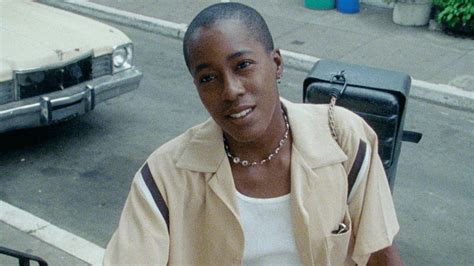
The Watermelon Woman (1996) stars director Cheryl Dunye as a video store clerk/filmmaker Cheryl, who starts filming a documentary into the life of the elusive “Watermelon Woman,” a Black actress from the 1930s who Cheryl believes is a lesbian. At the same time, she starts dating white Philadelphia newcomer Diana, which causes new tensions in Cheryl’s Black friend group who view her interracial relationship with suspicion.
The film has a different structure than one might expect. The Watermelon Woman is technically two films: the documentary Cheryl (the character) is filming about the titular actress, and the film itself. It’s an interesting conversation between two voices. On the one hand, you see Cheryl come into her own in her documentary, becoming braver and bolder as she dives deeper into the mystery. But when she’s not working on her documentary, she feels smaller within her friend group, especially with her best friend Tamara. And eventually, both different films converge on each other in surprising ways.
Intersectionality has become a prime focal point for conversation in feminism, and this film is a perfect example of that. The “Watermelon Woman” is examined from a number of angles, from the oral storytelling of Cheryl’s mother and family friends to secondary sources found at local libraries and archive collections. Whereas Cheryl’s mother and friends view the “Watermelon Woman” as a dynamic performer and a crucial part of Philadelphia’s club scene in the 1930s, the predominately white spaces of Swarthmore College and a volunteer-run lesbian archive collection in NYC tend to pick apart the “Watermelon Woman,” reducing her to specific parts of her identity rather than examining the whole picture. Cheryl perfectly encapsulates the frustrating process of capturing queer histories of people of color. Once you reduce someone from history to just a simple characteristic, you’re not getting the full picture. Even worse, you’re dehumanizing them, forcing them to become another abandoned box in a closet.
Outside of the documentary, Cheryl’s relationship with Diana also becomes a point of contention. Cheryl and Diana are infatuated with one another from the moment they meet at the video store where Cheryl works. Refreshingly, there are no qualms about coming out or facing discrimination on being a lesbian. It’s just two women in love. But because Cheryl is Black and Diana is white, their relationship becomes something bigger than them. At one point, Tamara accuses Cheryl of wanting to be white and Diana of wanting to be Black. While Tamara has her fair share of flaws, Diana’s sneaky glances at Cheryl and small moments of lust reveal some truth in Tamara’s statement. The attraction is certainly there, but the racial fetishization also lingers.
But what’s easily the most powerful part of the film for me is how easily it defies storytelling conventions. When you sit down to write a story, the first step in the process involves doing a lot of research, and putting thoughts down on paper. But as Cheryl finds, it’s not so easy. Not only do institutions have scarce resources for Black queer women, but they also have a ton of hoops for people to jump through to access them. Moreover, Cheryl finds the best support comes from her family and friends, whom, while they may not be experts in record keeping, are excellent storers of memory.
Finally, Cheryl’s best resource actually comes from her own experience. In her documentary, she continues to find similarities between the “Watermelon Woman” and herself, from her desire to be accepted into the mainstream to her uneasy relationships to her lovers and other loved ones. Essentially, The Watermelon Woman is a conversation between two artists, even though one of them is fictional. When we think of queer love stories, we tend to think of them in terms of romance, but queerness isn’t clearly defined. Sometimes, it can be challenging one’s perception of oneself, and challenging how you see the world. And when you feel it, you can see it.
FURTHER THOUGHTS
- All of the characters in this film could have gone to Scripps College.
- Question: is Philadelphia worth visiting? I have a feeling it’s not.
- That one archive collector was getting on my NERVES.
 BEYOND THE FRAME
Leave a comment