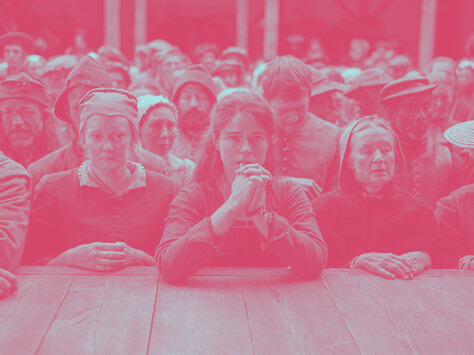
Chloe Zhao gives a beautifully human look at Shakespeare’s family life in this heartbreaking yet soulful depiction of grief.
Well, fuck.
Shakespeare has a profound piece in my heart. When I was in middle school, I was in a summer camp called Rebel Shakespeare, where kids like me got together and performed the Bard’s plays while frolicking in the woods and connecting with one another. For a shy kid who was having trouble connecting with her peers, this camp provided me with an outlet I needed.
At one point, we gathered in a circle and were instructed to share a time where we felt vulnerable, and a quote that resonated with us. By the end of the exercising, we were pretty much all crying, but we were all happy. We didn’t feel like we alienated anyone, or that we made each other feel bad. We all felt safe. When I think of Shakespeare, I think of catharsis. Even when he shared the darkest sides of humanity, he saw that there was a reason for tragedies to be told.
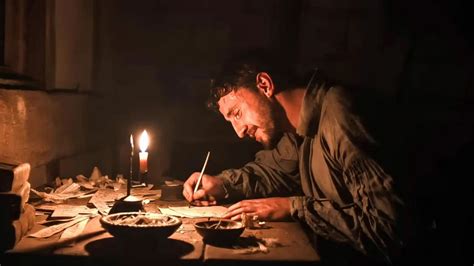
Tonight, I watched Hamnet (2025), an exploration of that very ethos from Oscar winning director Chloe Zhao. It’s an adaptation of Maggie O’Farrell’s book of the same name, which tells the story of Agnes Hathaway and William Shakespeare and the tragedy that falls upon their family when their son Hamnet passes away. I have to say, Zhao may have made one of the best films of the year.
One trend I’ve noticed throughout this year’s Oscar’s season is that there’s a fair amount of films who like to display their messages front and center. There’s a moment in Frankenstein (2025) where people outright call Victor a “monster,” and while I’ve gone on record for my adoration and love for that film, I can admit there’s some legitimacy to people’s complaints about laying the message on too thick. I feel like there’s a growing sense of literalism in today’s cinema, like the filmmakers have to reach an extra hand to grab the audience’s attention. Which is sad, because Zhao’s mastery of the screen proves that subtlety can be the most emotional form of poetry.
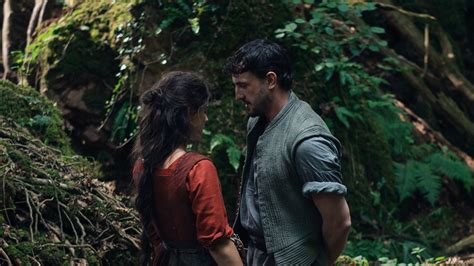
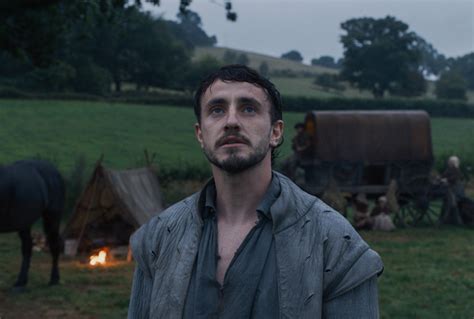
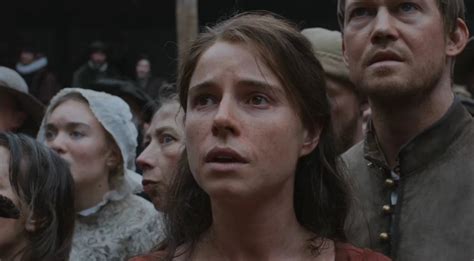
Jessie Buckley and Paul Mescal will absolutely destroy you. I am not even joking. I’d only seen Buckley in a couple of episodes of Chernobyl, but I was completely unaware of how raw she could be. She sells every aspect of Agnes’s character: her strong connection to nature, her maternal instincts, and her deep love she has for her family. Paul Mescal is fantastic as well, with his performance in this one wiping the mediocrity of A History of Sound (2025) from my mind. He’s a supporting character, but every time he’s onscreen, you fully believe you’re witnessing the Bard at home. He’s fully human, in ways that are both intimate and soul-crushing.
One of the film’s most admirable aspects is that it doesn’t hide the tragedy right away. There’s no montage of happy times. We’re given glimpses of a family that is full of love and strength, and even when there’s troubles, they overcome them. But there’s always images of looming spectres, of shadows on the wall, of dark caves in lush forests, of dead falcons and a London that resembles the Underworld. The myth of Orpheus and Eurydice is a common motif, and its use in this film rivals its presence in Portrait of a Lady on Fire (2019). You will always believe in the love onscreen, but you will fear that something offscreen is coming to take it away. And when it does, it will destroy you.
But the thing about nature is that when things destroy it, life is resilient. The very first shot of the film is of Agnes sleeping underneath a towering tree, making her seem like an infant in a mother’s womb. When she’s giving birth, she is both bringing life into the world and suffering under the sheer weight of it. There’s always grief lingering around the corner, but Chloe Zhao never lets you forget just how precious life is. Not just in a hold-your-loved-ones-close-you-never-know-when-they-could-depart kind of way. But it’s more in the idea that even when they go, you will never stop grieving, but that doesn’t mean you can’t stop living. And your loved ones can continue to live in different forms.
I’ve moved around a lot over the last few years. When I was in Rebel Shakespeare, I was a middle schooler in the North Shore of Massachusetts. I had just moved from North Carolina, and I’ve done a fair amount of moving since then. One thing that’s always kept me going is storytelling. That’s what films like Hamnet are for. They’re for not only truthfully showing the most arduous aspects of human existence, but also for celebrating the power of storytelling to heal the deepest wounds, and to remind us that life is worth living, even when it fucks us up. For every story that brings you to tears, there’s the catharsis of knowing you will come out the other end, maybe not the same, but definitely not alone.
FURTHER THOUGHTS
- I wish the person who turned on their extremely bright phone in the theater during an emotional scene a very special “go fuck yourself.”
- My dad wasn’t a fan of this, and he is wrong.
- Max Richter, you brilliant man.
 BEYOND THE FRAME
Leave a comment