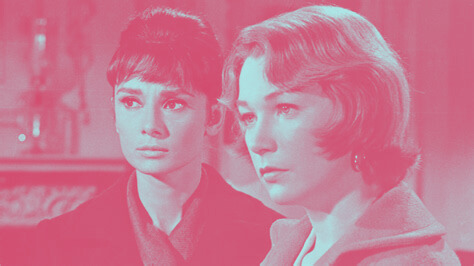
William Wyler’s hard-hitting portrayal of a smear campaign against two lesbian teachers is a touch melodramatic, but all the more compelling.
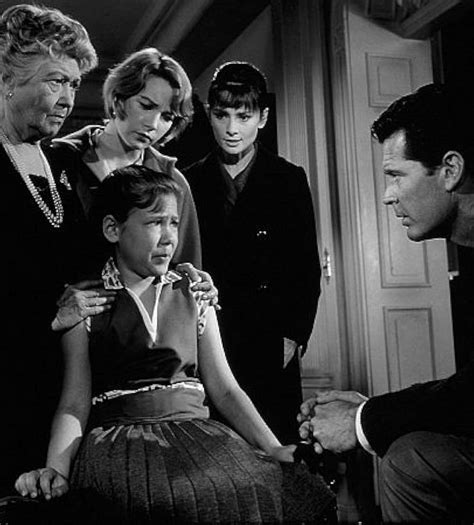
I’ve never wanted to punch a child more.
This film was infuriating, but in ways that made sense. The worst kind of film to watch is one that makes you mad you wasted hours of your life on watching it. If you’re watching a film that knows what it’s doing when it’s making you mad and you act accordingly, then it’s done something right. That’s how I felt watching The Children’s Hour (1961).
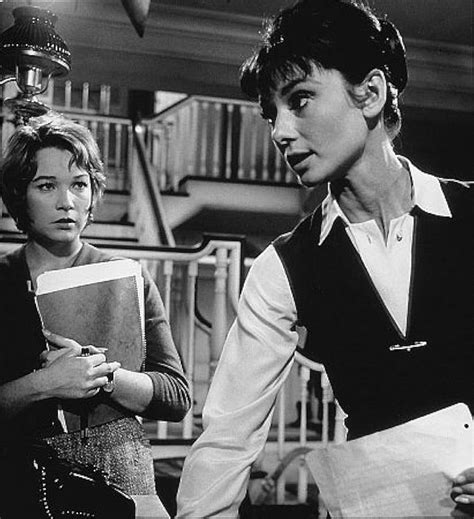
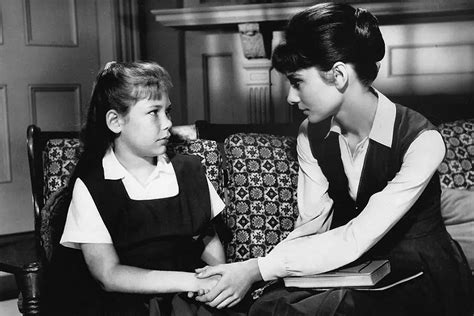
William Wyler’s film takes place at an all-girl’s boarding school, where Karen and Martha teach. The school is starting to take off, and the students and the teachers seem to get along very well. But when bully student Mary (one of the most hateable characters I have ever watched with the most punchable face) starts a rumor about Karen and Martha being lesbians, the two teachers are forced to reckon with a homophobic society that takes every chance it can to bring them down.
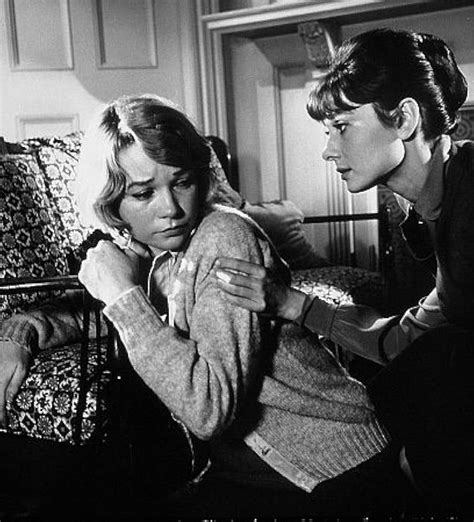
Audrey Hepburn and Shirley MacLaine act their asses off here. I will confess I could be watching more of Hepburn’s work, because she’s such an icon and my sister’s still mad I haven’t seen Roman Holiday and Breakfast at Tiffany’s yet. But Hepburn and MacLaine’s acting perfectly matches the tone. You see the emotions gushing out every moment, even when it gets slightly over the top. And when one of them has glazed eyes, you can feel how lost they are.
There was something very Hitchcockian about how people look at each other in this. There’s definitely the of voyeurism. From the very moment we see a young student peek out the curtains at Karen outside, we are only left to speculate what the person we’re looking at is thinking. But when the gaze is reversed, and we see people in the distance looking at us, we feel interrogated, like someone is getting too close to the truth. Even though they may not know the full extent of it, part of you can’t help but wonder if they have at least a grain of the truth. And that is enough to make you terrified.
That being said, the melodrama here could get on my nerves, even though it was at least understandable. I had a similar issue with A Place in the Sun (1951), but here I could tolerate it somewhat more. Mostly because if there’s any group that deserved to be melodramatic about their life in the 1950s, it was every marginalized group, especially gay people. They didn’t have the luxury of coming out to loving families, or tight-knit communities that could span county lines. There were gay societies, but they were mainly focused on “respectability.” So if you fell in love with someone as a gay person in the 1950s, you bet all of your emotions rushed into you like a fucking tsunami.
But one thing guaranteed to heighten those emotions is a smear campaign, and this film delivers on that. You don’t hear what the parents are saying, but you know at least something of what they’re thinking. And when Martha and Karen witness the smear happening in real time, it makes them feel so hateful of themselves it turns the school into a prison where everyone walks by to gawk at them. Instead of the school being full of love and quiet moments of queer love, the school becomes stale, almost as if it’s frozen in time and unable to move forward.
I’m a bit tired of the sad-gay-period-piece romance film. We definitely need more films that celebrate queer joy in all its forms. But that doesn’t mean queer pain in film shouldn’t go away, because queer pain still exists. Even now, after all the progress we’ve made, people still feel intense self-hatred over their sexuality, and it can be both painful and cathartic to witness that pain reflected onscreen. Sometimes, cinema is a space for you to cry. To have that space is a right every marginalized group should be entitled to.
FURTHER THOUGHTS
- That husband was about as charming as a vanilla milkshake.
- I’m definitely going to request a loose grey cardigan I can wear on my shoulders for Christmas so I can pretend I’m Audrey Hepburn moping through my house.
- There was just as much blackmailing and scheming in this film as Game of Thrones in its earlier seasons.
 BEYOND THE FRAME
Leave a comment