

This shocking and engrossing film about the tragic cycle of violence is full of energy, gripping you from the start and never letting you go.
Ho-ly shit.
Typically, when my dad recommends a movie he watched on the plane, I tend to view it with a bit of skepticism. The last two movies he told me I should watch were It Ends With Us (2024) and The Sun Is Also a Star (2019), so I’ve learned not to take his word too seriously. But he was right on the money with this one.
City of God (2002) takes place in the titular Cidade de Deus, a suburb of Rio de Janeiro that was supposed to be a new opportunity for growth in the wake of devastating floods. However, instead of the promised prosperity, poverty and gangs have taken over, leading young people to be firsthand witnesses to gruesome murders and to see crime as a viable career. The film follows multiple characters as Cidade de Deus cycles through different eras of crime, from the amateur Tender Trio to the dictatorial rule of Lil Zé and the resulting gang war with Carrot.
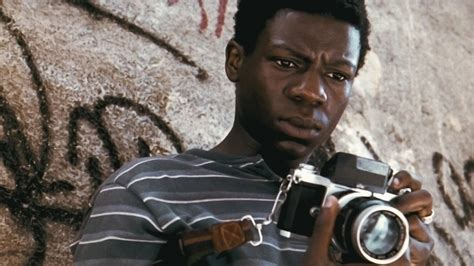
We witness this story through the eyes of Rocket, a young boy who evolves into a photographer as the gang wars rage on. He occupies a very tenuous role, with his position as an outsider placing him around the periphery of getting involved. After the death of his older brother by Lil Zé, he retreats into his photography to catch a glimpse of the world around him. While other boys view the world through their guns, Rocket views the world through his camera.
But compared to his peers, he’s having a hard time coming-of-age. Granted, that’s not saying much, because by the time Rocket’s a teenager, Lil Zé and most of the other kids in the neighborhood have been killing since they were kids. Meanwhile, Rocket’s problems include not having a stable job and still being a virgin. To him, crime does seem to pay, even though he doesn’t want to hurt anyone.
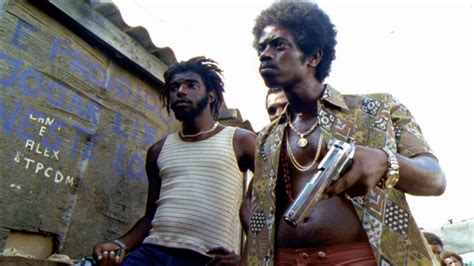
Therein lies the issue–in the City of God, with crime comes power. We see different shades of it throughout the film. There’s Lil Zé, who gets his start on crime by massacring a brothel when he’s barely cracked the age of ten and, as an adult, goes even further. There’s Benny, Lil Zé’s friend who’s more able to bring the community together. There’s Carrot, the old guard of the drug lords who’s just as vicious as Lil Zé, but poses more restraint. Then there’s all the other characters who get caught in the crossfire.
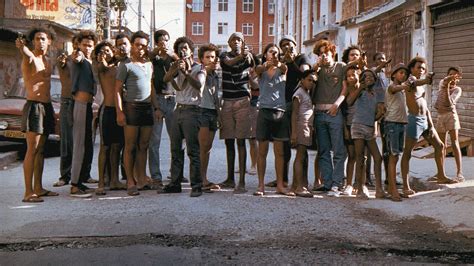
That’s not to say that the background characters are meant to be killed. No one is destined for death in City of God, but the background characters might be the most important one. In Cidade de Deus, the manpower maintains the cycle of violence that keeps the drug business alive. We’re introduced to a group of kids called the Runts, an amateur gang who spend their days robbing stores and trying to live up to Lil Zé’s name. In one harrowing scene, Lil Zé confronts them and forces one of their leaders to decide between shooting them in the hands or the legs. What’s truly horrific about this scene is not just the act of violence itself, but rather how casually the characters treat it. For Lil Zé and the others, it’s just a normal day. There’s fear, but it’s so frequent it’s become oxygen.
One of the main parts about this film I appreciated was its ambiguity. There’s no convoluted plot–it’s just people hurting other people because they were hurt by the person they’re hurting. There’s an instinct to justify some acts of violence, but the only thing the violence is going to accomplish is inspire more. The police are essentially useless, the parents are nonexistent, and the opportunities for upward mobility are second to none. The film almost resembles a Brazilian “Lord of the Flies.” But if everyone’s trying to survive, what line will some people cross? What deaths are justifiable? Are any?
City of God is a perfectly distilled story about how the cycle of violence can be both a birth, a rebirth, and a death. Rocket’s story is the exception to the rule, not a blanket pathway for success. When it comes to each photo he takes, every shot stands as a memoriam to youth that will be taken away in a second flat. For every poignant coming-of-age that is peaceful, there is always a child having their innocence robbed. That is, if there was ever an innocence to speak of.
FURTHER THOUGHTS
- How the Oscars didn’t recognize Katía Lund’s role as a co-director in the nominations is a crime.
- I’m not a vegan, but that opening scene made me come very close to becoming one.
- Tiago reminded me of Vanya from Anora (2024). Coke addicts never make for good company.
 BEYOND THE FRAME
Leave a comment