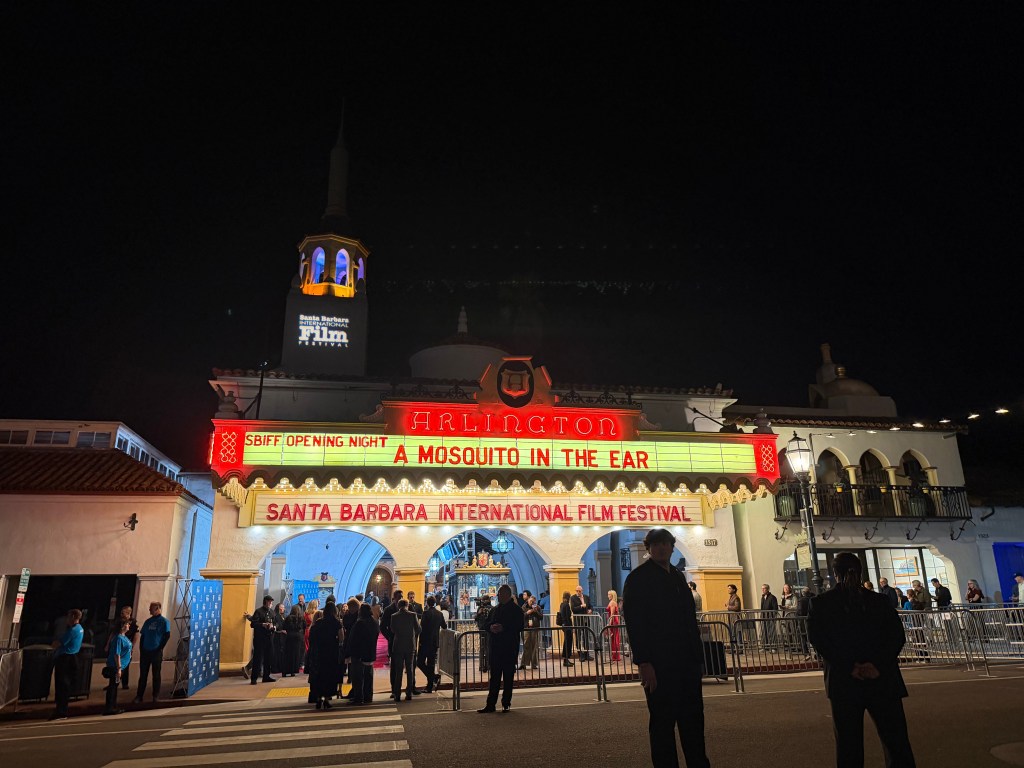
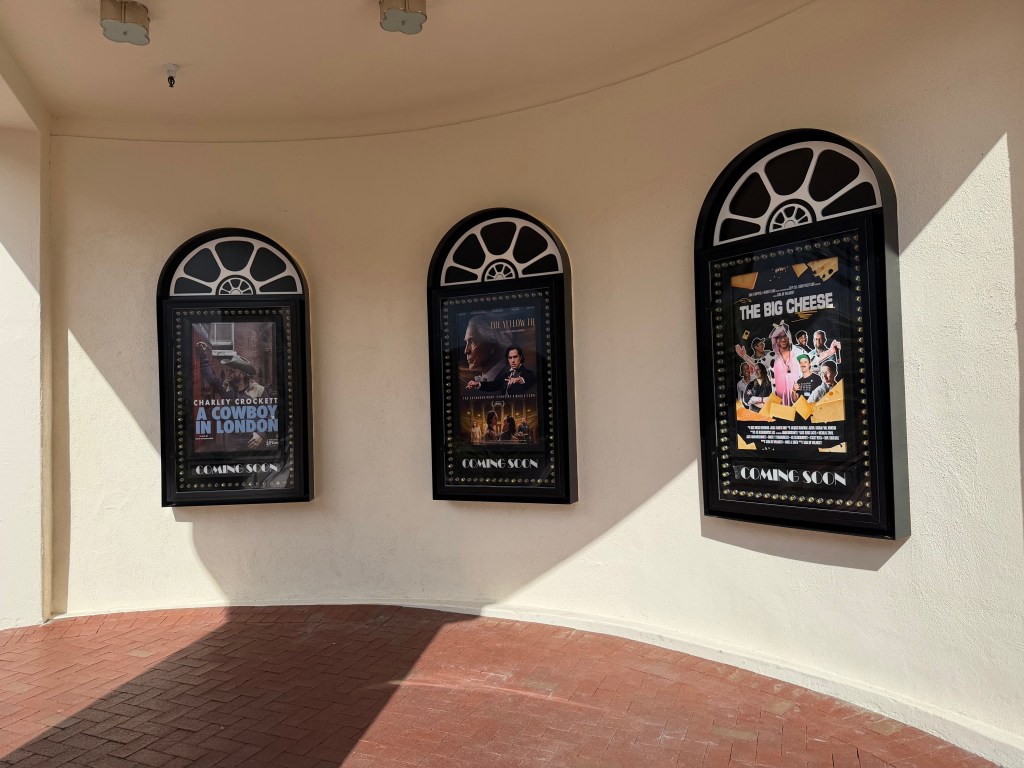
It’s been almost a week since I worked at the 41st Santa Barbara International Film Festival as a second-year Programming Intern, so I figured I might as well post something about it. It was definitely an improvement over last year, especially since I didn’t have school to worry about and I knew what I was expecting heading in. However, there were a few changes.
For one, I didn’t attend any tributes. This wasn’t for a lack of enthusiasm for who was being honored, for the record. I would have killed to see Stellan Skarsgaard, Teyona Taylor, Wagner Moura, Michael B. Jordan, Leonardo DiCaprio, Sean Penn, AND Benicio Del Toro at the Arlington Theatre. I also didn’t see as many films as I did last year, although that was because I wanted to be on more hand in case things changed during the festival, which they often do. The main reason things changed was because I had a job, which meant there were some nights where I couldn’t introduce films because I had to cover town hall meetings in Carpinteria.
But for all the things I missed, there was so much more joy that eclipsed that. Seeing the people I met last year again felt like a giant family reunion. When I didn’t have anything to introduce, it would feel awesome just to sit in the lobby and talk about our Letterboxd, what films were showing and who was our film “nemesis” (that one person knows what I mean). It was even better meeting the new Programming Interns who were previously Film Studies students or currently attending UCSB. They did a fantastic job introducing films, especially since many of the theaters were packed. They’re definitely going places.
I was also impressed with SBIFF managed to do with the new McHurley Film Center. They started renovations on the Film Center right after the festival last year, but as the months went by, I started getting skeptical on whether or not it would actually be finished. Thankfully, they did, and the renovations are magnificent. There’s red plush seats, impressive audio systems, and bathrooms that resemble the ones in The Shining (men’s is red for Jack Nicholson’s encounter with the Groundskeeper, women’s is green for the naked lady). There were a few spots that they could work on–the sound insulation in Theater 3 wasn’t perfect, so we were often cautioned to keep our voices low. Especially after we talked about the Saltburn bathwater scene. Again, those who were there know what I’m talking about.
SBIFF 2026 truly hit all the right notes with its programming. Claudia Puig and Stewart Short, both head programmers at SBIFF, hit it out of the park with their selections. Some of the films I saw at Santa Fe International Film Festival reappeared at SBIFF, including Steal This Story, Please! and ASCO: Without Permission. Remarkably, Travis Gutiérrez Sanger, the director of ASCO, recognized me from the Q&A I moderated in Santa Fe back in October, and that really got to me. It was so nice to see him again.
Amidst all the regular chaos of a film festival, SBIFF was something special this year. Without further ado, here’s what I saw at the 41st Santa Barbara International Film Festival.
A Mosquito in the Ear (2026) dir. Nicola Rinciari
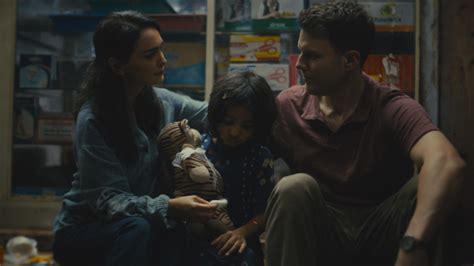
This Italian-Indian co-production was the Opening Night film, and it was the right call. SBIFF likes to start the weeklong event with a crowd-pleaser, which A Mosquito in the Ear certainly was. It’s based off a real-life story of an American couple who adopt an Indian girl, only to find that she’s extremely reluctant to leave the orphanage where she grew up. I knew Jake Lacy (aka Shane from The White Lotus) could act, but I was pleasantly surprised to see him take on a more gentler role so well. Not to mention the main child actor fucking kills it. This film had the potential to fall into some White Savior tropes, but it did a great job at humanizing everyone involved and not patronizing the girl at the center of it all. It’s not perfect, but the film worked.
Let Me Paint My World For You (Ich male dir meine Welt) dir. Andrea Christina Furrer
This was the very first screening I saw at the McHurley Film Center, and it was truly the right film to kick off SBIFF’s new era. This film was a true sensory experience, chronicling the artwork of several artists with autism who strive to express themselves and their condition through art. Andrea Christina Furrer lets the artists take the helm, allowing them to talk about their experiences without portraying them as victims. While the pacing went a bit too slow at times, it was the right choice for a story of the power of creativity.
Mortician (2025) dir. Abdolreza Kahani
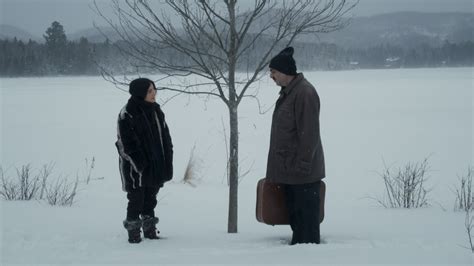
Mortician was one that stuck with the audience long after the credits rolled. It’s not a particularly happy film, but it’s a poignant one. It’s about an Iranian man living in exile who finds himself in an unlikely friendship with another exile whose experience radically differs from his. It’s also a sly spy thriller, although thankfully the theatrics of espionage take a backseat. The filmmakers came out for a Q&A afterwards with a hard-hitting message about what’s happening in Iran. This is the kind of film that sucks the air out of your lungs both in wonder and in immense sadness. It might be called Mortician, but it’s one that reinvigorates your love for your friends and fellow humans.
No Mercy (2025) dir. Isa Willinger
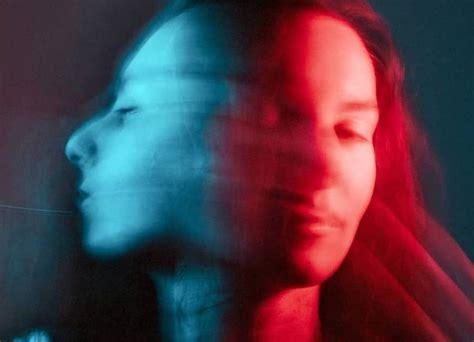
I was a bit disappointed by this one. As someone who’s always interested in boundary-pushing films directed by women, this film didn’t offer anything new, besides a new watchlist for films I should watch. No Mercy uses the question “Do women make harsher movies than men?” as its guiding force, but it also tries to center Ukranian filmmaker Kira Muratova’s work and the films of numerous other women directors alongside it. The film certainly has great intentions, but the whole thing feels stuffed to the brim to the point that not much is thoroughly investigated.
A Life Illuminated (2025) dir. Tasha Van Zandt

A Life Illuminated was insanely cool. I have a minor case of thalassophobia, where you’re in the ocean but can’t see anything except for a dark void, so at first I wasn’t sure if the film would be transcendental or excruciatingly terrifying. But Tasha Van Zandt does a great job of capturing the beauty of the unknown. Edie Widder, the UCSB graduate marine biologist at the center of this documentary, makes for a great subject, as her warmth yet tenacity helps the journey of capturing bioluminescent life feel more tenable. When I saw what Widder captured under the ocean surface, I was entranced. The cinematography also did a fantastic job of transporting us alongside Widder as she submerged herself. It wasn’t just a scientific mission–it was a culmination of her life’s work.
The Yellow Tie (2025) dir. Serge Ioan Celebidachi
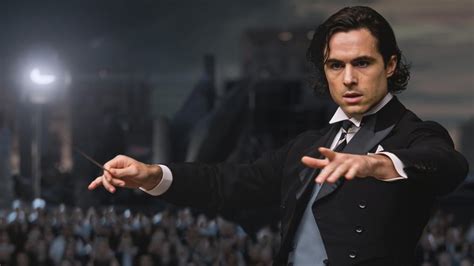
This was the first film I both introduced and moderated a Q&A for at SBIFF 2026, and one I’m most certainly proud of. Music biopics can be a hit-or-miss genre for me. On the one hand, their scale is almost certainly impressive, and can allow us to glimpse a different side of icons we might not see as totally human. On the other hand, the film can also collapse under the weight of its own subject. However, The Yellow Tie exceeded my expectations. With a 2.5-hour runtime, it paces itself perfectly. It doesn’t waste time trying to extract more information from the most mundane of places, and it lets the history-making moments breathe. It also makes the life of Romanian conductor Sergiu Celebidachi understandable, given today’s modern contexts of digital media going up against in-person experiences.
I was nervous in the lead up to the Q&A, because I would be essentially interviewing the producers, some of the actors, and the director, who’s also Sergiu Celebidachi’s son, in front of a packed house. Thankfully, it went very well, and Serge Ioan Celibidachi had a lot to say about how it was important to maintain an objective perspective heading into filming. While the magic of the experience was somewhat dulled as we had to be shuffled out for a quick turnaround for another screening, it was one of my proudest moments of the festival.
Sell Your House dir. Eric Foss and Brandon Pickering
But The Yellow Tie was only the first Q&A I would moderate. My second Q&A came literally the same day with Sell Your House, a documentary about the making of The Last Stop in Yuma County (2023), an independent neo-Western crime thriller directed by Francis Galluppi and executive produced by James Claeys. The film’s title comes from Claeys selling his own house to finance the film’s production, and it’s a crazy journey. While you’d imagine the production was the most stressful part of the creative process, it’s just the tip of the iceberg. The friendship between Galluppi and Claeys comes under immense strain as the distribution process goes underway, and Galluppi gets more attention and praise while Claeys’s sacrifice goes under-acknowledged. Galluppi and Claeys are still friends, but the process of getting the film drove a wedge.
Miraculously, the film contains a hilarious bone that makes the viewing experience incredibly fun. The Q&A with the producers of Sell Your House was very entertaining and revealing, as they read out a message from Galluppi and Claeys since they couldn’t attend the screening due to filming a new episode of Naked & Afraid. The film still hasn’t received distribution yet, but if any film deserves one from SBIFF, it’s Sell Your House.
Holy Days (2026) dir. Nathalie Boltt
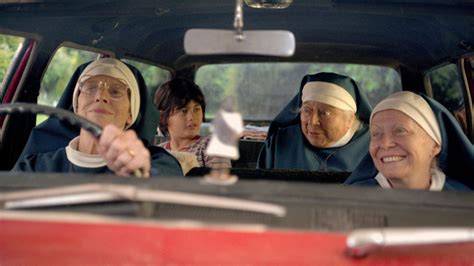
I decided this year I would try and watch more narrative films at SBIFF, so I thought I would try out this coming-of-age comedy about rebellious New Zealand nuns directed by Nathalie Boltt, aka Penelope Blossom from Riverdale. Unlike that goddawful CW show, this one was very sweet and really really good. Boltt had been trying to make this film for 12 years, and you can tell that effort went everywhere. The acting is great, the unique bits of animation are charming and eschew traditional wide shots of people traveling, and the story is so sweet without being schmaltzy. It’s about a troublemaking Maori boy, Brian, who’s struggling to cope with his mom’s death, and a few nuns at a convent who are at risk of getting evicted. They team up together to get the acquired funds, and some hijinks ensue. There’s some criticism about the White Savior implications of the film, but I don’t think this film fits into this category. There’s some shades of it, but the film allows Brian to be his own character. Plus, Miriam Margoyles is always a gem.
Silent Struggle (2025) dir. Sara Sálamo
I didn’t like Silent Struggle. Like No Mercy, I certainly understand the intentions behind the film, but I had a few problems with the execution. Director Sara Sálamo is the wife of the subject Isco Alarcón, a Spanish football player who’s facing career uncertainty after receiving a devastating injury. Maybe I’m not a fan of observational documentaries, but Silent Struggle feels more like a vanity project than anything else. There’s nothing about the broader implications of the wide-scale problems of the football industry, or about the intense media coverage these players receive. I get the sole purpose is on Isco, but there’s a lot of missed opportunities here.
Versailles (2025) dir. Andrés Clariond
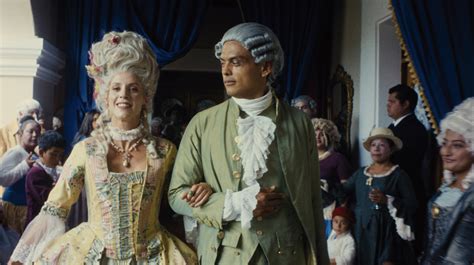
I’m a big fan of films that manage to pull of insane concepts incredibly well, and Versailles certainly delivered. This film won the award for Best Latin American Film at SBIFF, and it deserved to. It chronicles the story of Chema, a Mexican politician who attempts to recreate the iconic Versailles pre-French Revolution at his mansion after failing to receive his party’s nomination to run for Mexico’s president. It’s absurd, morbid, surprisingly funny, and politically relevant in a way that only a Latino film could pull off. There’s so many layers to this film it’s almost offensive to keep this review limited to one paragraph. After how well The Secret Agent pulled off its political commentary, Versailles is a great companion piece that can be applied to almost any country today.
Laundry (2025) dir. Zamo Mkhwanazi
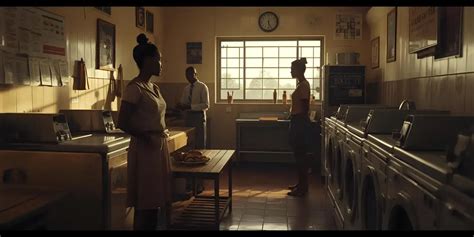
As the Closing Night film of SBIFF 2026, Laundry delivered. Zamo Mkhwanazi hit it out of the park with her tale of attempting upward mobility in the bleak landscape of apartheid-era South Africa. After his dad is imprisoned for attempting to advocate for his business, music enthusiast Khuthala tries to break into the industry as his family’s business struggles to survive. While films like Marty Supreme go to absurd lengths to capture one person’s strive to succeed, Laundry reveals the brutal aftermath, especially when that journey takes place amidst a harsh environment where every opportunity for upward mobility is squandered for marginalized groups. The film places you directly in the time and place of 1960s Johannesburg, and you feel for every character amidst every obstacle they face. This was an excellent film to end SBIFF 2026 on, and I hope Mkhwanazi has a bright future ahead of her.
Well, that was the 41st Santa Barbara International Film Festival. I’m so grateful for the Programming Team at SBIFF for all the support they gave. I’d especially like to thank Claudia Puig, who was always there to share her insight, advice, and support. She’s an amazing film programmer, and without her, the film festival circuit would be a less interesting place.
Here’s to another great iteration of SBIFF!
 BEYOND THE FRAME
Leave a comment