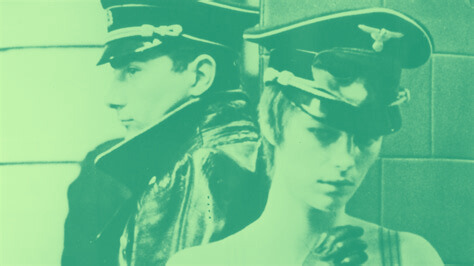
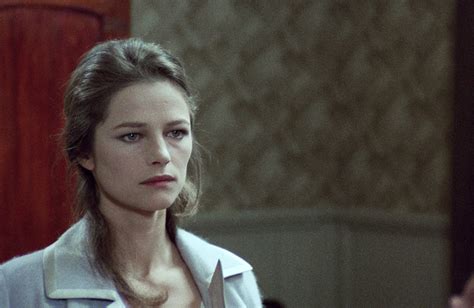
Liliana Cavani makes Luchino Visconti look like an amateur in this disturbing exploration of a sadomasochistic relationship between a concentration camp survivor and a former SS officer.
Suffice it to say this is going to be a tough review.
BDSM has always been a tricky yet enticing subject for filmmakers to navigate. On the one hand, it combines audience’s fascination with sex and power (sex sells). On the other, it definitely goes beyond what audiences typically expect from sex. We tend to think of sex onscreen as an utmost act of love and eroticism, but very rarely do we see it done in the most disturbing of circumstances.
This was a bit of a random pick for me, but I had no idea what was in store for me. I was reminded constantly of The Damned (1968), Luchino Visconti’s extravagant and uncomfortably sexual retelling of a German dynasty collapsing under the weight of Nazism, while watching this film. But Liliana Cavani makes The Damned look like a walk in the park. Not just because the director herself didn’t see all that much with Visconti’s vision, but also because she saw something else in the two leads, especially Charlotte Rampling.
Charlotte Rampling in The Damned is a virtuous and feminine figure whose only purpose is to die so that the last vestiges of good in the family are wiped out by the very instruments that have infected it. But the Charlotte Rampling of The Night Porter (1974) is something else entirely. Paired opposite Dirk Bogarde (also an alumni from The Damned), Rampling plays a concentration camp survivor who rekindles a sadomasochistic relationship with her torturer and lover, a former SS officer. It’s an undeniably disturbing premise, but Rampling’s performance as Lucia is so magnetic that it draws you in.
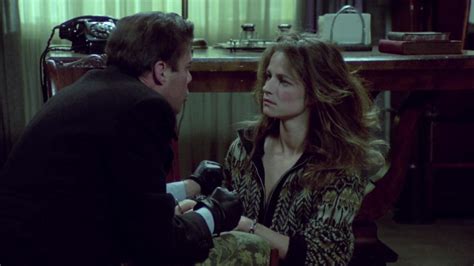
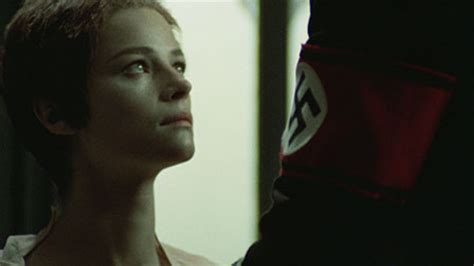
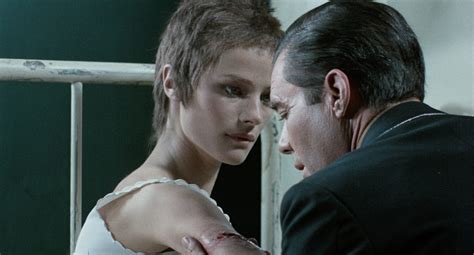
When Lucia first sees Max for the first time in nearly a decade, there is at first shock, then horror, then barely contained lust. Flashbacks reveal the brutality of their first encounter in the camps. Stripped naked, Lucia is forced to flee from Max as he shoots at her, not shooting to kill, but to terrify. Later, he forces her to wear a little girl’s dress. Then she’s shown staring at him with a slight smirk forming as he kisses her cut arm. When she sees him at the Viennese hotel she’s staying at with her husband, it’s almost as if the past has crashed into her like a freight train.
The story of The Night Porter is not that of love, or even of lust. It’s about the power struggle between two diametric opposites that get a kick out of exposing the other one’s vulnerabilities. While Max is in a different position, he still acts like a senior SS officer, with a straitlaced demeanor and a cold and pressed uniform. Lucia is now transformed from a terrified survivor of the Holocaust to a conductor’s gorgeous wife, sitting in the front rows of opera houses. Put together, Lucia and Max tear at each other like wild animals, blurring the line between sex and pure violence. It’s asking if the chicken came before the egg. Did their lust result from violence, or did the violence result from lust?
It’s hard to say. That’s part of why I’m a bit nervous to write this review. Many critics at the time took great issue with Cavani’s choice to have the “romantic” relationship take place between a Nazi and a camp survivor. I think it has a lot to say with how Europe was dealing with the after-effects of World War II. There was resolute condemnation of the Nazi Regime, but there was also a sense of shock and awe at the scale of the violence that happened. In the course of five years, millions of people were systemically killed, their histories wiped, their identities erased. In some ways, it was easier to pretend that only invulnerable monsters could have committed such heinous crimes. You see that illusion torn to bits in The Night Porter, where the impossibly polite Max and the mysterious Lucia gnaw at each other until all that’s left is the broken flesh that reveals the horrible, horrible humanity.
FURTHER THOUGHTS
- I wonder if there are any films from Italy in the 1970s that weren’t disturbing as hell. I need a break.
- It wouldn’t be a postwar Italian film about the lasting traumas of WWII without a cross-dressing number to Marlene Dietrich!
- If you think women calling their boyfriends “daddy” today is creepy, just wait until you hear Max refer to Lucia as “his little girl.” Your skin will crawl right out of your body.
 BEYOND THE FRAME
Leave a comment