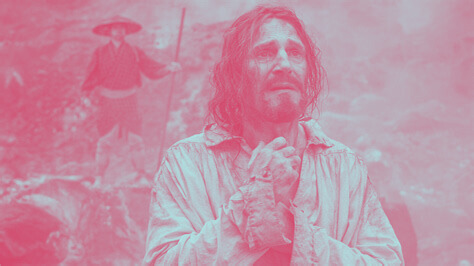
Martin Scorsese takes his form to bolder and more daring heights in this massively underrated deconstruction of Christian missionary work in 17th century Japan.
I’ve been trying to engage myself with more of Martin Scorsese’s work, ever since I was dissatisfied with Shutter Island (2011) being my first encounter with the famed director. It felt a bit weird watching that film, not because it was bad, but because it felt very mainstream compared to his earlier work, like Taxi Driver and Raging Bull. I wanted less of Scorsese trying to fit the Hollywood mold and more of him pushing it to do new things. Then I found Silence, and my prayers were answered.
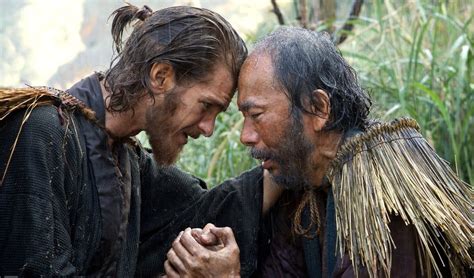
Silence concerns two Portuguese Jesuit padres, Fr. Rodrigues (Andrew Garfield) and Garupe (Adam Driver), who endeavor on a dangerous trip to Japan to bring their mentor Fr. Ferreira back home after hearing troubling rumors about him apostatizing. As they journey through hidden villages to avoid detection from the Japanese Inquisitor, they undergo a deep spiritual crisis as they struggle to hear God amidst witnessing the cruel suffering of Japanese Christian peasants.
I was surprised by how well this film deals with religion. I’m not a super religious person myself, only practicing on the holiday season, but I’ve been trying to look at religion with a more nuanced lens. Sure, many high profile religious figures hold hypocritical positions and have been responsible for a number of horrific historical events, but there is a genuine comfort that religion brings to people. It’s a way of connecting yourself to a being beyond, and the idea of an all-loving Father who loves you regardless of what you do can be deeply rooting for many people.
Scorsese understands this. As Rodrigues and Garupe first disembark in Japan, they’re amazed at the sheer bravery and devotion the Christians they encounter show. They’re willing to risk their lives and their belongings to worship God when it could lead to their demise. Rodrigues and Garupe are at odds over this–Rodrigues is touched and optimistic, while Garupe is more cynical and just wants to find Ferreira and bring him home. As the film progresses, Scorsese puts these two perspectives on Christianity against each other. While Christianity does bring comfort to those who believe, sometimes missionary work can do more than good, no matter how good the intentions are. Rodrigues is motivated to spread the faith, but you can only pray with your eyes closed for so long.
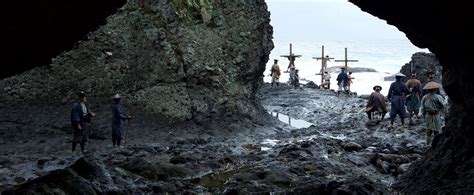
Akira Kurosawa is one of Martin Scorsese’s most deep influences, and I was seeing him in every frame of this film. It wasn’t just the fantastic framing that reminded me of Stray Dogs, or the medieval Japanese setting of Rashomon. It was also the themes of what men do when their faith in something concrete in shaking. You can hope all you can for a better future for you and your followers, but ultimately there’s only so much you can do to change someone’s entire worldview. Especially when you see what men are capable of.
Fr. Ferreira acts as something of a symbol for Rodrigues and Garupe. When they hear that he is apostatized, they still believe he can be brought back into Christianity. But as they keep witnessing the atrocities that Christians are facing, they start wondering if it’s worth looking for him at all, or even if he’s dead. After all, it’s not just Ferreira–it’s their lives they’re putting on the line, as well as the lives of their followers. More importantly, who’s to say that the Japanese followers and the two padres are worshipping the same God? There’s an entire continent and ocean between them, not to mention the language difference. Are they indeed worshipping God, or are they worshipping the two men who make worshipping God the base of their existence?
Ultimately, Scorsese doesn’t have an answer. Which is kind of the point. Religion isn’t an end-all-be-all, but rather a guide for how one should live their live, and sometimes that life doesn’t work for everyone. Scorsese’s open-ended thesis doesn’t feel incomplete, however, but engaging. Much like religion, you can only give someone signs and hope they mean something to someone. They can mean either salvation or destruction. They can represent the grace of an almighty being or the cruelty of men. They can be either a means to an end or an end to a means. Ultimately, religion doesn’t necessarily define us. It only helps us to become what we are meant to be.


FURTHER THOUGHTS
- Andrew Garfield resembles Jesus to such an astounding degree I wonder if the casting director had a revelation herself.
- It took Martin Scorsese decades to get this work, and it shows in every frame.
- Kichijiro is such a fascinating character. He’s having a crisis basically the entire time, making every moment with him one to watch.
 BEYOND THE FRAME
Leave a comment