Although it could have done with a bit more subtlety in its message, this 1931 disaster film does a splendid job of recreating a catastrophic tragedy with Silent era-inspired style.
Glück auf, indeed.
After watching Wings of Desire, (1987), I knew I had to explore more German cinema. It was one of the first pioneering studio systems in the world, leading to such masterpieces as The Cabinet of Dr Caligari and Nosferatu. So when I saw that G.W. Pabst, the director of Pandora’s Box had directed a claustrophobic thriller, I knew I had to check it out.
I’m happy to say this one pleasantly surprised me.
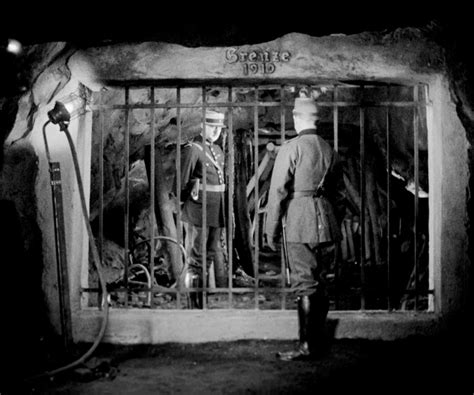
Right from the get-go, you know the situation. Taking place when WWI was still fresh in European minds, France and German workers are at each other’s throats. German workers aren’t to be let across the border if they’re unemployed, and an interaction at a French club leads to some aggression that threatens to boil over. The Ruhr invasion (when France invaded some industrial regions of Germany to force them to hand over some money they owed France for the Treaty of Versailles, which deprived Germany of many resources) is still fresh in the minds of coal miners. Not to mention France and Germany haven’t been friends for decades. Especially in blue-collar areas.
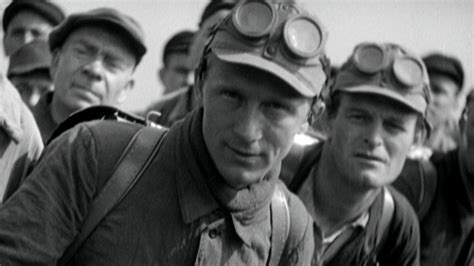
But when a mine on the French-German border collapses, leading to French miners being trapped underground, German soldiers step up to the plate. The French rescue teams won’t be there in time, the French miners’ families are banging against the gates, and the Germans have enough manpower and resources to get there quicker. But there’s some resistance. Germans are still bitter over getting shafted by the French in WWI. Why should they risk their lives when they’ve got families of their own to take care of?
Nevertheless, German miners head over anyway. Cue the rescue.
Even though G.W. Pabst is working with sound in this picture, he uses a lot of the style and directing you’d expect from a silent film. When a couple of German minors cause a stir at a French club across the border, the camera takes the miners’ POV as they’re stared at by a hostile French crowd. When the mine collapses, There’s unique tracking shots that depict the panic and hostility from the French crowd. You feel like you’re right there with them as it unfolds, as helpless as they are.
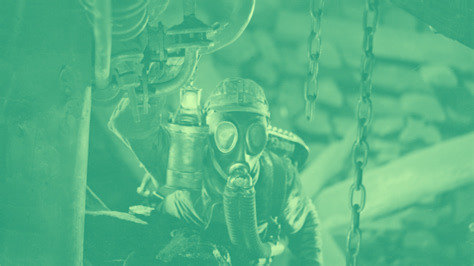
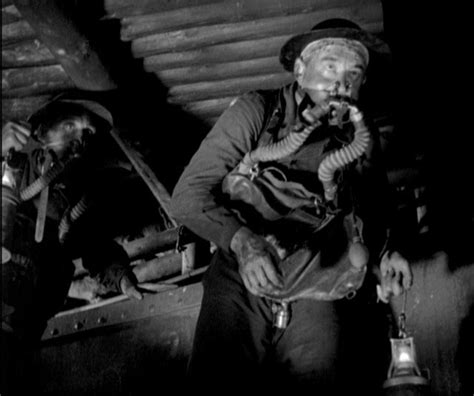
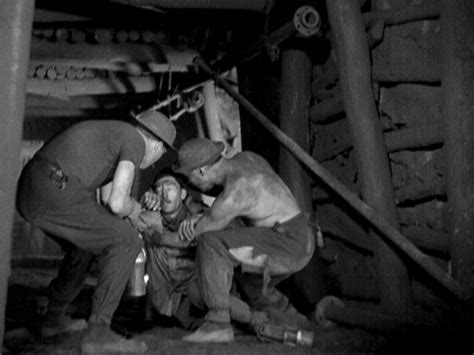
But that’s nothing compared to what is happening underground. Coated in black coal dust, miners are fighting for their lives as a fire breaks out, and then the ceiling above them collapses. The practical effects are astounding. There’s none of the theatrics you’d associate with German Expressionism; no over-the-top acting, no set pieces, just pure human terror. As the water fills up and the claustrophobia sets in, you start wondering if any of the miners will end the story alive.
I was astounded by how well expressionism and realism are mixed in this film. You’d think they’d be distinct methods of filmmaking, but a collapsing mine is the perfect place for these two -isms to join forces. The naturalistic acting makes each miner’s emotions and inner dialogues apparent, whereas the cramped environment proves ample opportunity for Fritz Arno Wagner to flex his cinematography muscles. With the trapped horses and smoky atmosphere, you feel like you’re descending into the pits of hell itself. Instead of expressionism and realism feeling too different to coexist, Kameradschaft proves they can.
That being said, the film gets a bit moralistic at the end. It’s on point for the time, considering it’s a 1930s film about international cooperation. So it’s not surprising that the lay it on thick like butter on toast. But it’s also refreshing to see a film that takes on these themes with the complexity it deserves. It’s a rewarding film, but there’s a sense that this lingering optimism can only last for a short period of time. After all, we all know what will happen in the next decade.
FURTHER THOUGHTS
- The main love interest being named Françoise is incredibly on the nose, even if it’s appropriate for a moralistic film.
- I feel like if this happened in the world of Dark (on Netflix), Sic Mundus Creatus Est would have almost certainly been involved.
- If I woke up and the first thing I saw was a man with a gas mask, I’d freak the fuck out too.
 BEYOND THE FRAME
Leave a comment