
This film could have been a noir, yet I wouldn’t have had it any other way.
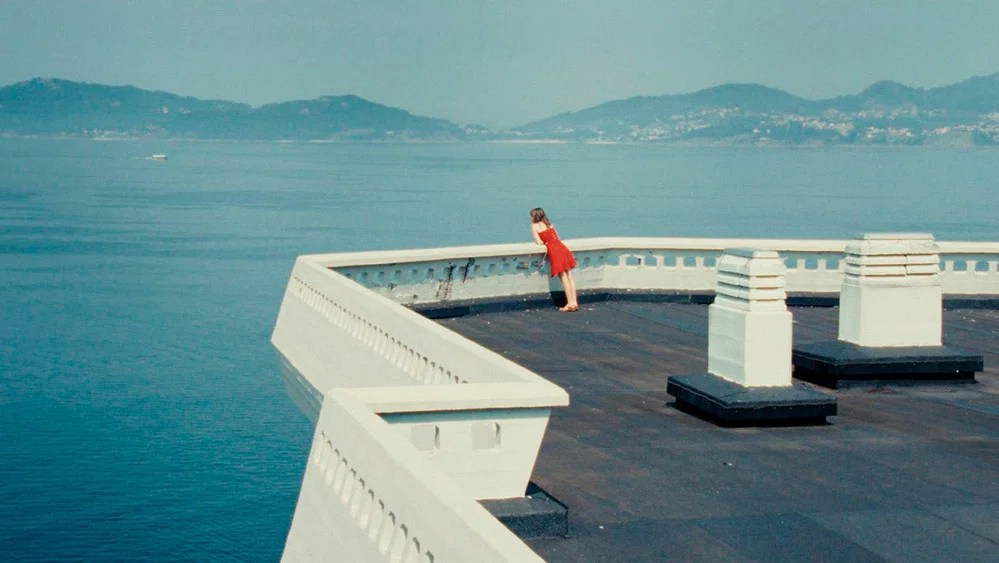
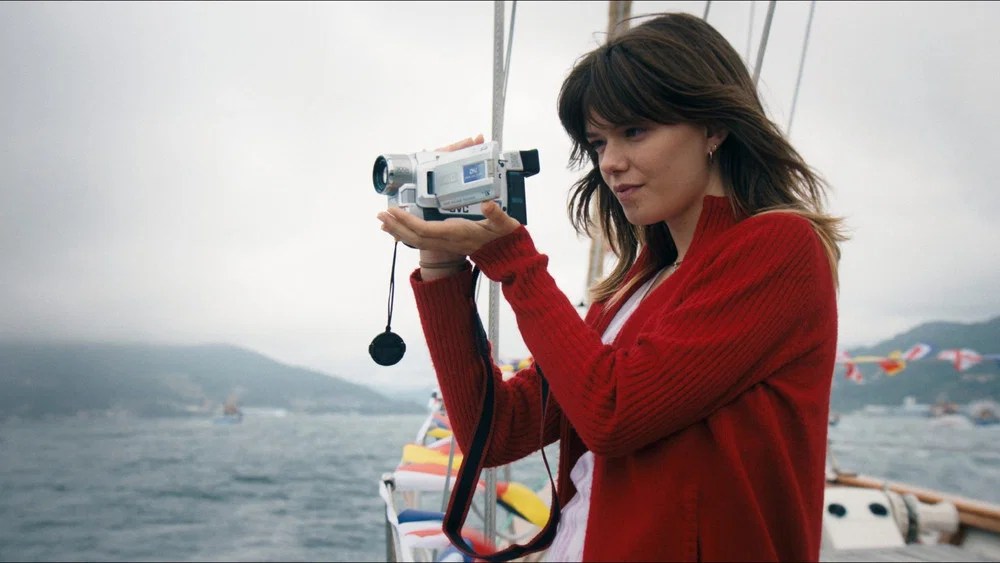
In 2004, Catalan film student Marina travels to the island archipelago of Vigo in Spain to meet with her extended biological family, who can give her the proof she needs to apply for a scholarship. Marina’s parents have been dead as long as she can remember, but she has her mother’s diary with her. She films her trip with her camcorder as she arrives via boat. She is greeted by her uncle Lois, whose sons are rambunctious yet inviting. Yet they say “Be glad you weren’t raised here”
When Marina asks whether her parents lived in a tall building on the mainland, Lois responds: “Who told you that?”
Then the story begins.
Romería is not your average family drama. Amidst the floating sailboats and the lackadaisical nature of Marina’s family, there are a lot of unreliable narrators regarding the lead’s parents. All of her stories are met with rebuttals of “Who told you that?” or “That’s not true.” The more she asks and probes, the more mysterious her parents become. Did they tragically die, or did something else happen? Were they victims or perpetrators? More importantly, what does this mean for Marina’s place in her family?
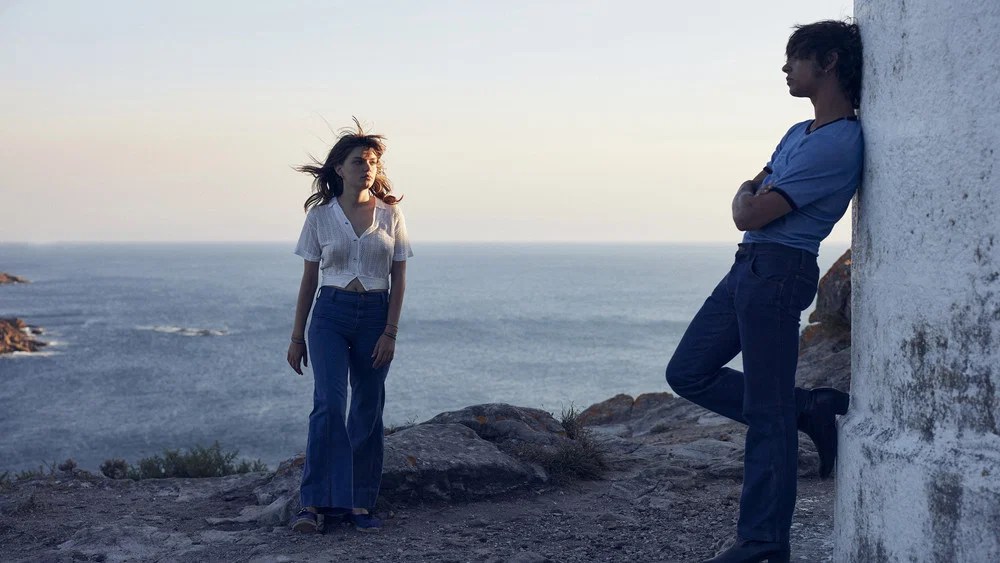
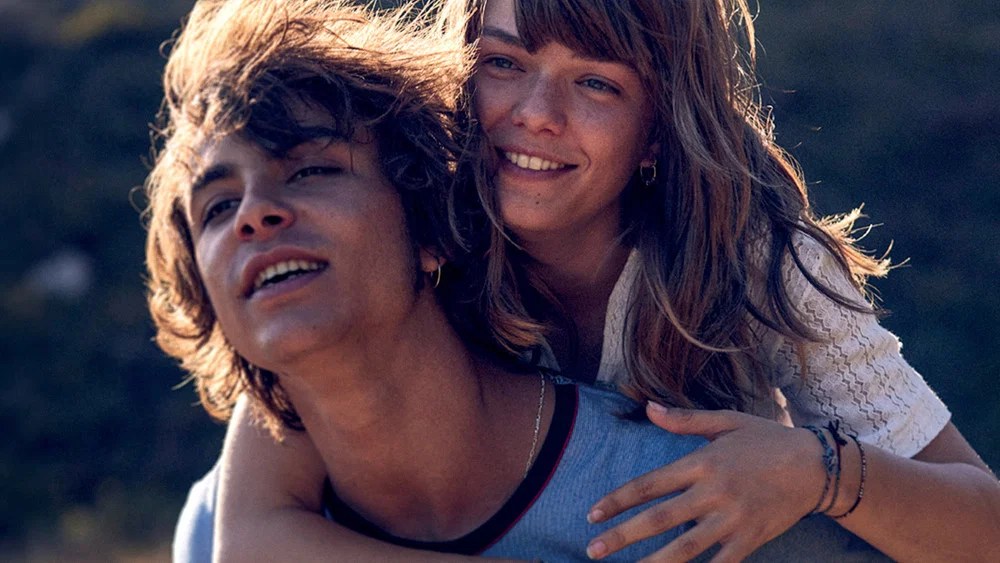
Like most families, everybody has their own opinions about each other, most of it contradictory. Some of Marina’s relatives, like Xulia and Iago, look on Marina’s parents with fondness and sympathy. Iago, in particular, shares a commonality with Marina’s father Fon in that they are both seen as the family disappointment. This makes it especially more prudent when Marina finally meets her grandparents, who react to her presence with coldness. While everyone remarks on how much she looks like her mother, the ghost of her father lingers in the shadows, threatening to pull at loose threads.
The fact that everyone is an unreliable narrator with their own biases and contradictions makes Romería incredibly fascinating to watch. Carla Simón takes care to portray the family as flawed but loving, especially within the larger contexts of the culture in which Marina’s parents grew up in. It also makes the intergenerational trauma and conflicts more emotionally impactful. If everyone has a different version of the truth, how is one supposed to heal and move on?
But it’s not just the characters that are unreliable narrators. In some ways, Marina is also one herself. Armed with her mother’s diary, seemingly the only primary source in the narrative, Marina starts to worry about whether her version of the story is the correct one. Since she is also a film student recording her trip on a camcorder, the first-person perspective also gives us as viewers a partial view on the broader conflict.
As an audience, we tend to sympathize towards our main character, but throughout the film I was worried about whether or not Marina was telling the truth. It’s hard enough when it seems like everyone is not telling you the complete truth, but it’s even harder when you don’t know if you can trust the main character.
Marina’s mother’s journal is also dreamlike, nonlinear, and doesn’t make sense until the very end. That’s part of what makes Romería so captivating. Unreliable narrators are so fascinating because it upsets what we think it means to be a protagonist. We expect someone to hold our hands and guide us through the mess of the story, but it’s bold for a director to trust the audience to put together the pieces. Most of the time directors fumble the ball by overestimating the audience and coming off as pretentious. But in this instance, the act of solving the mystery becomes an act of healing.
Being an unreliable narrator isn’t always a bad thing. After all, sticking to a narrative dictates our reality. And sometimes reality can be so terrible and shocking it’s better to pretend a softer version to protect yourself. It can even become a method of emotional survival. But those narratives can’t last forever. If anything, they can tear people and their loved ones apart.
Romería is about pulling at those loose threads and seeing the whole fabric come apart, before considering whether and how to put it back together.
FURTHER THOUGHTS
- Llúcia Garcia is absolutely stellar in this. She’s going places.
- Europeans absolutely know how to dress themselves, and I am so jealous. I dress for comfort most of the time and I end up looking like a high schooler.
- If you thought Euphoria glamorized drug use, you should know this film doesn’t.


 BEYOND THE FRAME
Leave a comment