When the pandemic was well under way, I decided to make a list of ten films I would watch, among them Cleo from 5 to 7 (1962) by Agnès Varda. That list would change my life, as it would lead to me choosing to study film in college and eventually to the creation of this blog. However, I wasn’t aware until a few months ago that Varda would continue to have a late career renaissance starting decades after the French New Wave, with a series of documentaries that focused on the underrepresented. One of these was The Gleaners and I.
Gleaners are people, historically farmers, who collect leftover produce after harvest season is over. However, today gleaning has taken on a new meaning after the rapid rise of consumerism, with gleaning expanding more to urban areas where people glean leftover food after farmer’s markets have closed. Instead of leaving boxes of cabbage, fish, and apples to rot beside busy Parisian streets, these gleaners, either by necessity or by choice, peruse this graveyards of consumption to find their next meal.
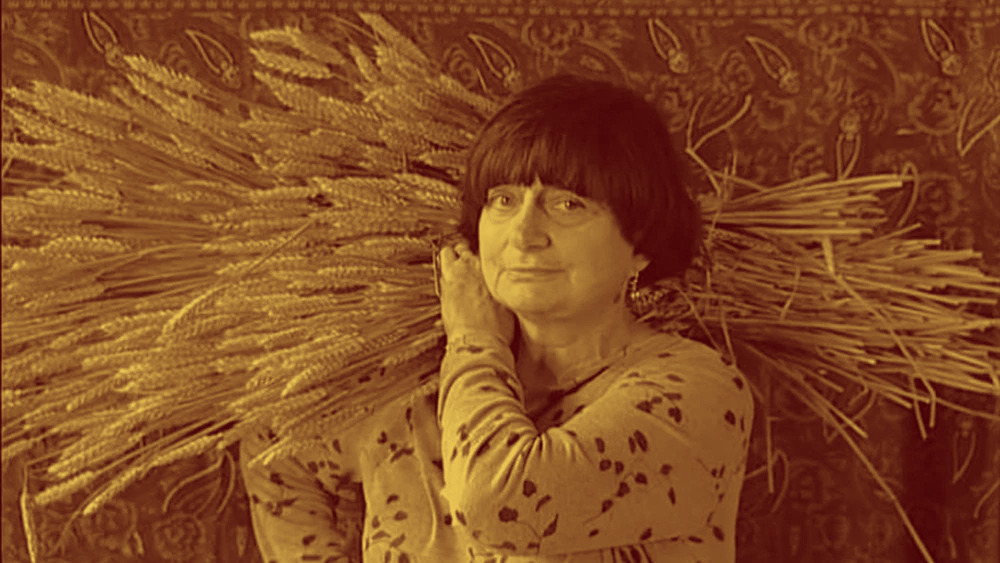
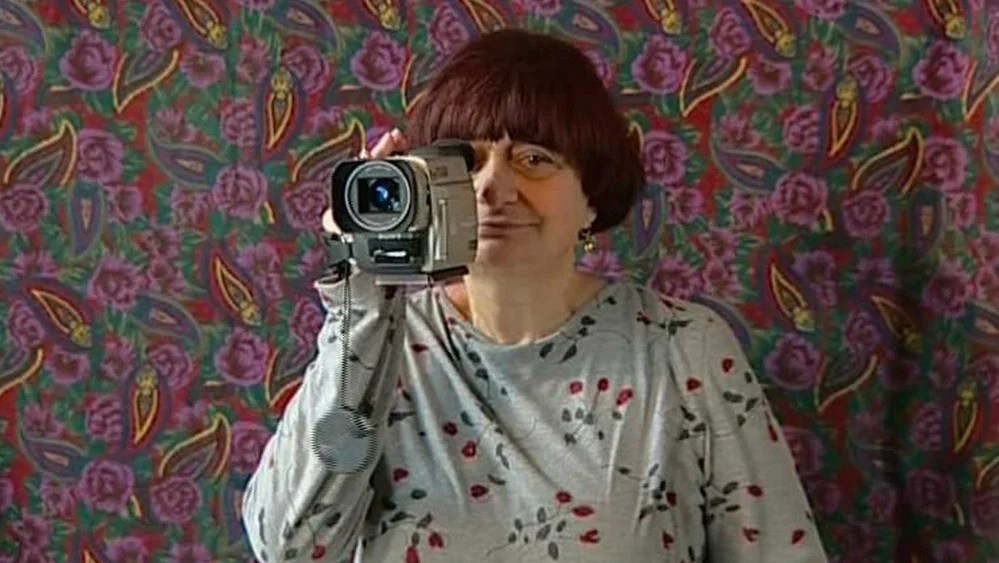
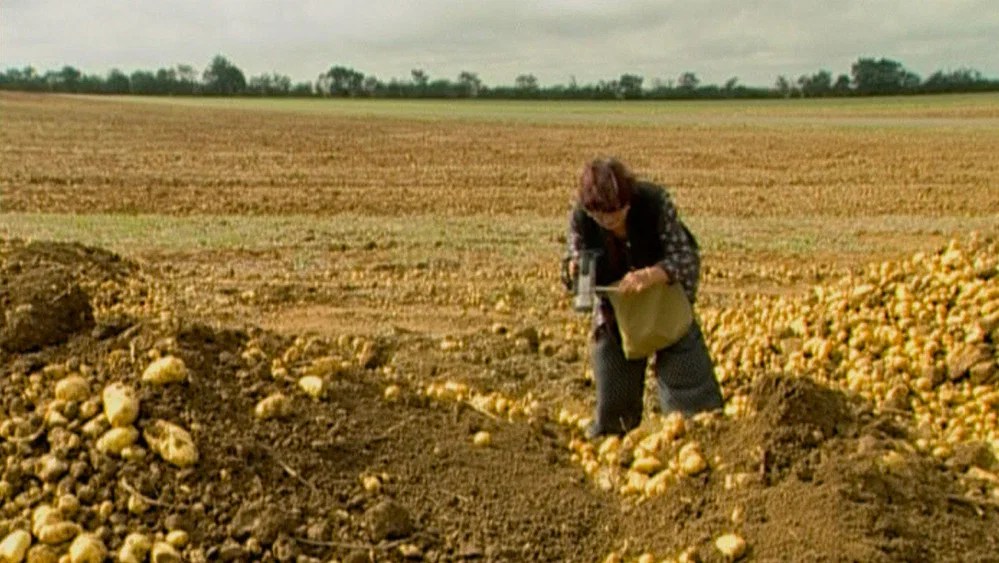
Varda’s exploration of this marginal group in society also coincides with a new turning point for her as a director. She’d been a filmmaker for decades, but it wasn’t until The Gleaners and I that she experimented with digital filmmaking. With a digital video camera in hand, she takes a hands-on approach with her filmmaking, whether it’s gleaning heart-shaped potatoes by hand as her lens cap dangles of interviewing people in their homes. She also takes time to film herself mimicking the famous Gleaners landscape painting by Jean François-Millet, a classic symbol of gleaners that takes on a new meaning for Varda’s film.
In some ways, Varda becomes something of a gleaner herself in the making of this film. In her look at those who live on the margins, she puts herself in a freer position to move around and immerse herself in the experience. This extends outside of the in-field filming, where she inserts rap songs into her montages to create a broader collage of bottom-up solidarity. While digital filmmaking isn’t exactly seamless, Varda isn’t looking for seamless. She lets the subjects she interviews do the talking, and their lives are as every bit as colorful as the fruit she gleans.
I was impressed by how compassionate Varda approaches the subjects. She doesn’t judge them; she looks at them with curiosity as to how they came about to glean, whether it was through family tradition, economic situations, homelessness, or anti-consumerist activism. When she follows them along, it’s with an empathy and grace we don’t see a lot from filmmakers nowadays. This even extends to the judges whose responsibility it is to prosecute those who glean according to certain areas. This is especially pertinent in urban areas, where local grocery stores are less keen on having homeless teens glean from their trash bins. While you might disagree with the judges’ actions, Varda’s argument is more symbolic. Regardless of whether you partake in gleaning or not, you can’t deny that the society we live in is highly wasteful and deeply unsympathetic to those who live on the margins.
When one looks back at Varda’s career, you see a director who is endlessly curious about the world and those around them. Cleo from 5 to 7 is a real-time look at a sometimes unlikeable woman who is reckoning with a life-changing event. Black Panthers is about the titular antiracism group that caused quite a stir in the late 20th century. And The Gleaners and I looks at those who live their lives from one trash bin and field at a time. But what’s interesting about this documentary is how Varda uses it for self-reflection without it coming off as self-interested. She’s doesn’t view her subjects through an omniscient perspective, but rather as a storyteller who wants others to have the mic as well. That’s what makes Varda’s films so compelling. It’s not just about the characters, but how they are formed by the world around them.
FURTHER THOUGHTS
- Agnès Varda’s cats will never cease to win me over.
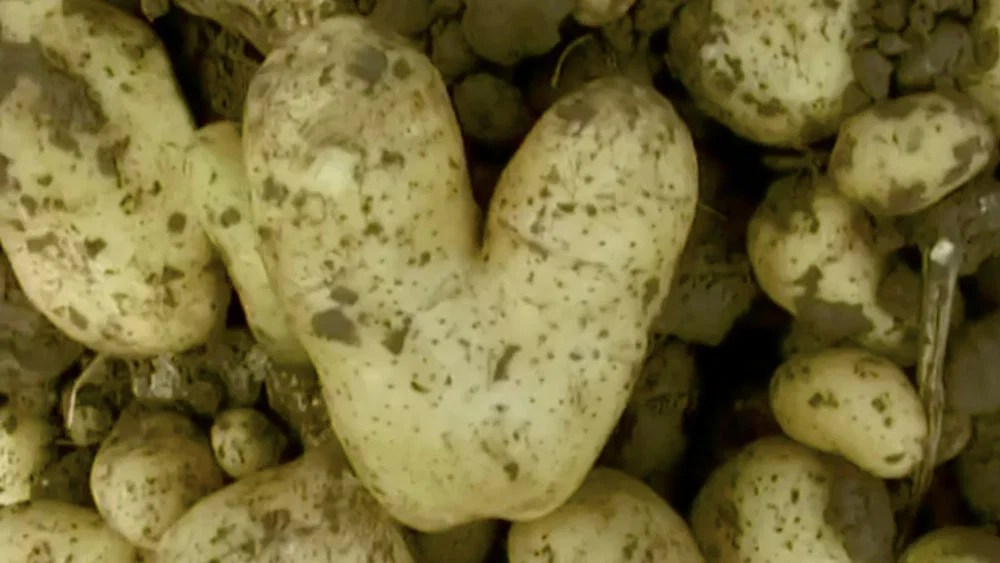
- Those heart-shaped potatoes (pictured above) do look insanely good.
- Varda seems like such a sweet lady. I love her so much!


 BEYOND THE FRAME
Leave a comment