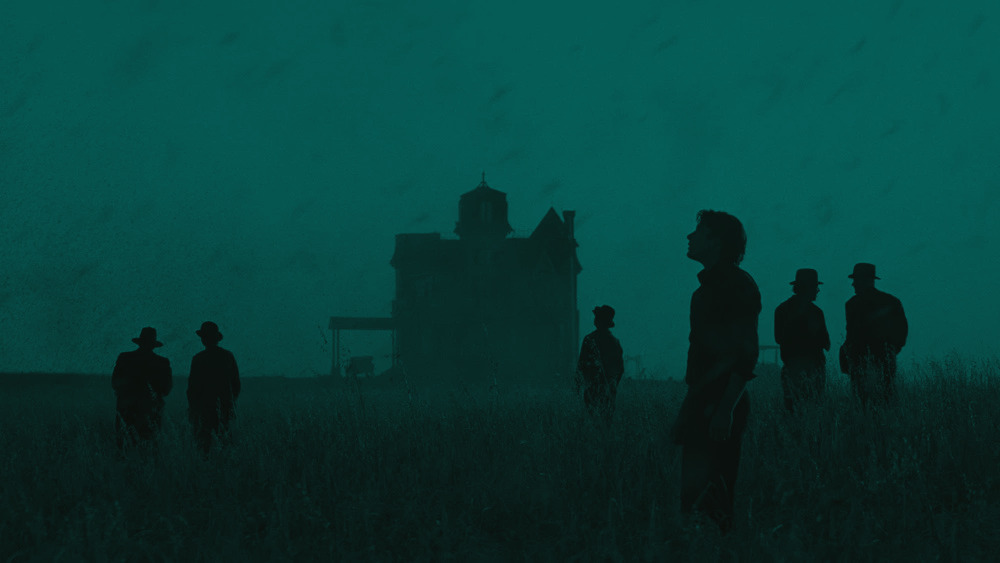
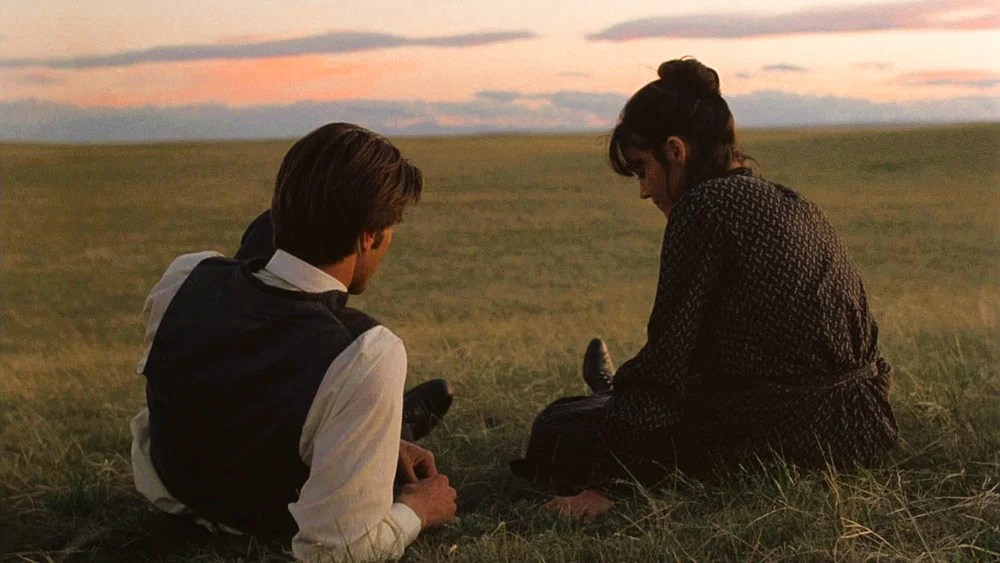
My first trip with Terrence Malick was with The Thin Red Line in college, where the horrors of the Vietnam War were painted with a melancholic brush that didn’t dismiss the horrors while still giving the hills of Vietnam a beautiful gloss. The hills seemed to come alive when the soldiers ran through them. You’re left with the images of these vast expanses of flora that are then tarnished when humanity comes in. For once, you want that tranquil moment with nature to last forever. You don’t want the story to end. When I watched Days of Heaven, I was reminded of that same feeling.
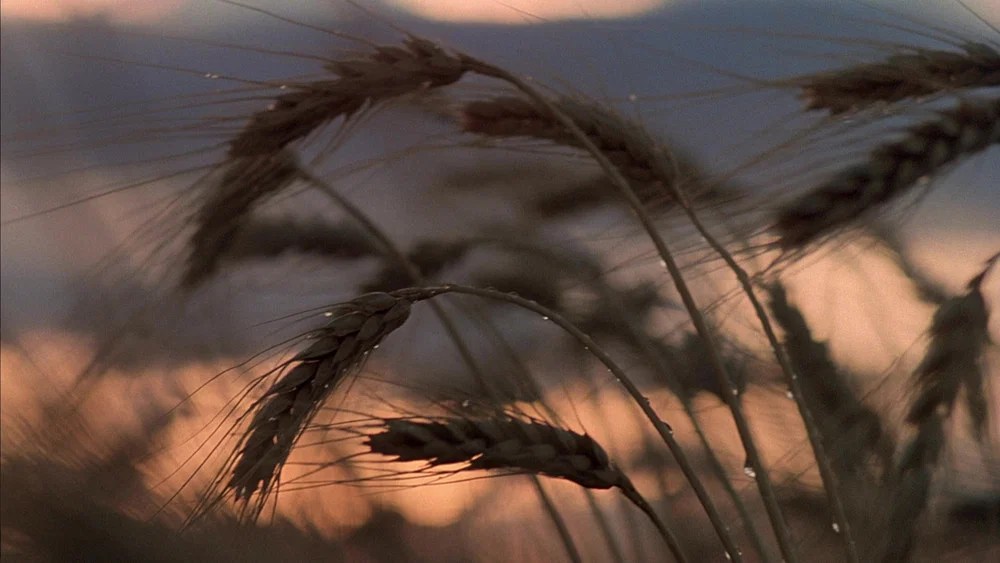
I haven’t heard that much about Days of Heaven before I saw it. I saw one brief clip on YouTube Shorts from It’s Just Cinema about it, and something about it just struck me. Granted, “Jacob and the Stone” will pretty much persuade me to do anything. But knowing Terrence Malick made it also struck a chord. There’s just very few filmmakers like him that will make a shot of wheat compelling.
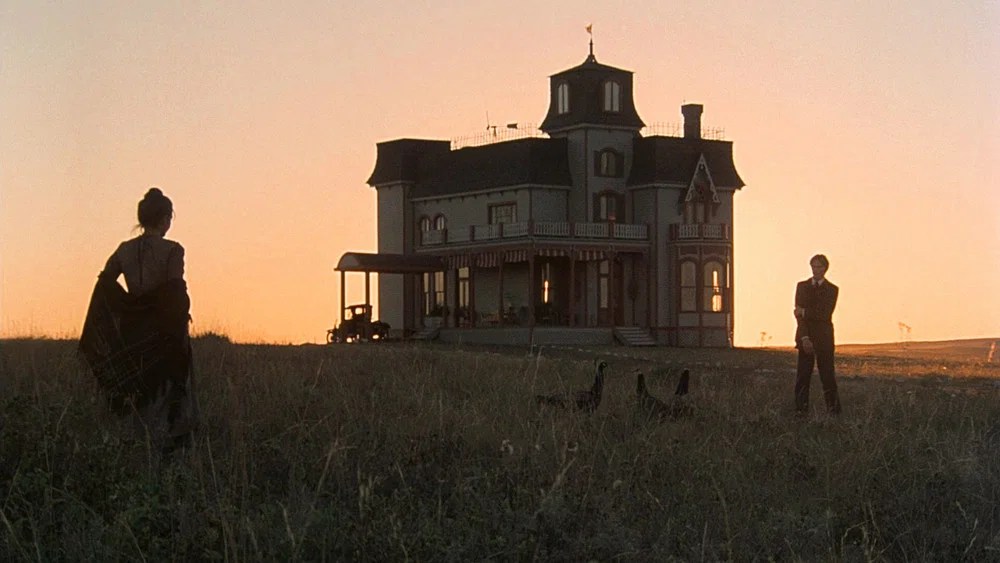
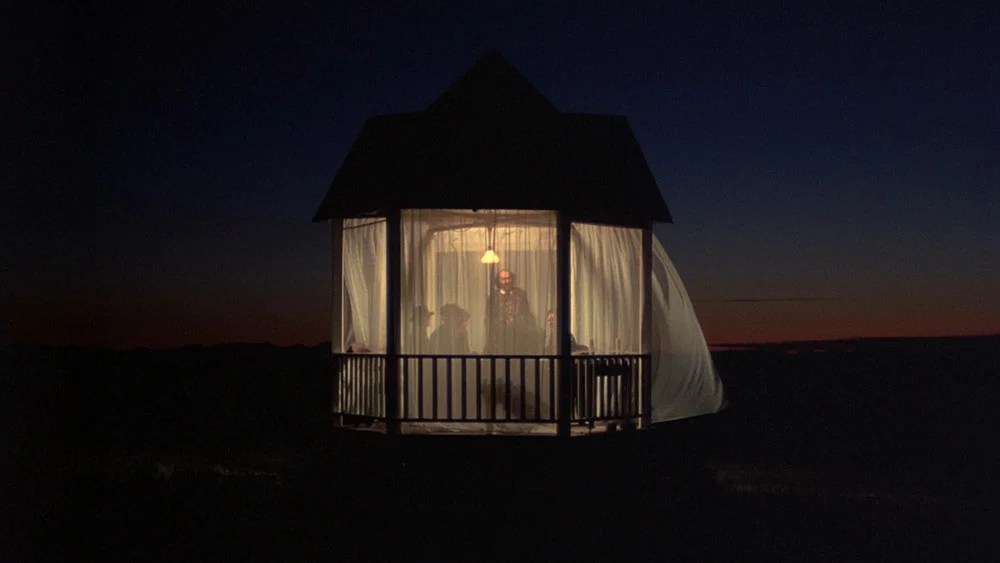
And there’s certainly a lot of wheat in this film. Set in the 1910s, Days of Heaven follows Billy, a steel worker in Chicago who lives with his little sister Linda and his girlfriend Abby until he accidentally kills a supervisor and is forced to flee. They wind up on a wheat field along with other runaways in the Texas panhandle, where they work long hours to gather up wheat during the ripe harvest seasons. While they survive on $3 an hour, the lonely Farmer is making six figures. But when Billy and Abby find out the Farmer is terminally ill, Billy convinces a reluctant Abby to marry their boss so they can inherit his wealth when he dies.
I was itching to write a social commentary on this film, partially because it takes place in the 1910s where social inequality was intense. But I think a more pertinent theme in this film is change, and how we deal with it. Billy, like most impulsive people his age, wants change to happen quickly. When he kills his supervisor, he knows he has to get out there and go on the run. When they arrive in Texas, his thoughts are on the future, where they can hop on a train with other vagrants and catch work in another state. However, Abby is more content with staying in one place. Linda is the happy medium between the two. She shares Abby’s willingness to forge new relationships, but she also possesses the same zest for life as Billy.
The fields are a perfect illustration of each character’s outlook. The wheat fields are beautiful, but they’re easily polluted by the presence of men and the machines who harvest them. When harvest season is over, the fields look like they’ve been hastily chopped. All of the beauty has been torn up, and replacing it are the bodies who’ve conquered the fields. Until the next season, when the wheat grows back for more farmers to cut them down. And so the cycle repeats.
Whereas nature is constantly changing, man is stubborn. When we first meet Billy, he is shoveling coal into an oven, suffocating under the gears around him. He seems more at peace in Texas, but he’s burdened by the presence of other men who question his relationship with Abby, whom he says is his “sister.” Billy’s always thinking about moving up in the world; whereas everyone else on the field wears raggedy clothes, he wears long coats that make him look wiser than he is. Part of his reason of not settling for too long is that when he gets comfortable, he gets shoehorned in a place he doesn’t feel at peace with. At least when he’s moving, he can say he’s doing something of himself. In a way, he’s the classic American individualist.
Then there’s Abby. When Billy proposes the marriage plot to Abby, she’s reluctant. She’s no stranger to men looking at her, but she’s also weary of men using her for their own gains. Billy’s pragmatic ways are understandable, but it’s also hard not to take Abby’s perspective to heart as well. He’s so concerned about survival he isn’t so much concerned with living. Abby isn’t content with her life, but her pragmatism is more empathetic. She agrees to the plot, but she sees the Farmer as more of a man that Billy sees him.
Overall, vagrancy is the thread that connects all these characters together. They start on the road as vagrants, and in some ways the characters remain vagrants for the rest of the story. They’re not satisfied with going down one singular path for the rest of their lives. They want to experience everything–love, success, joy, a sense of fullness. But they know it’s impossible to actually attain all those things simultaneously. The Farmer seems to have it all figured out, but he’s as lost as they are. In reality, no one knows what they’re doing, and the gorgeous wheat they harvest is ultimately as futile as they are. Instead of the characters being the root of their own change, things happen outside of their control. Their rootlessness is the root of their characterization.
In a way, I ended up resonating with this film more than I thought I would. This film captures the restless energy of youth colliding with the harsh realities of the adult world in a very abstract yet resonant way, in a way that only Terrence Malick could capture. No matter how beautiful the wheat is, it’s only beautiful when the sun is almost done setting.
FURTHER THOUGHTS
- Weirdly enough, I’m Team Farmer.
- Man, I’m starting to get why Jacob Elordi was cast as the younger version of Gere’s character in Oh, Canada. They look remarkably similar.
- Why are my films on Letterboxd this month all so yellow?



Leave a Reply