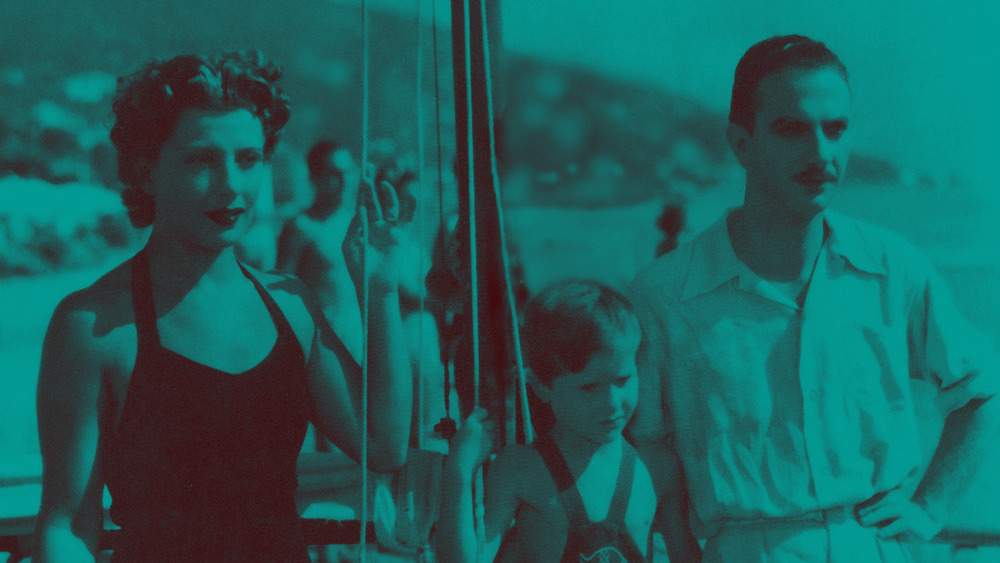
Widely considered the foreground of the Italian Neorealism movement, The Children Are Watching Us proves that some of the first films in a cinematic movement aren’t always the best.
One thing I’ve learned through this blog is that sometimes the “first” films in a film movement or by a director are not always the best. There’s a lot of reasons as to why. Part of it has a lot to do with the fact that film movements are established by critics long after these eras have ended. It’s really hard to establish a film movement as it’s getting started, especially because film trends come and go like the wind. More importantly, though, films considered the “first” in a film movement are not always well-defined pieces of art. Take The Children Are Watching Us, directed by Vittorio de Sica.
De Sica’s Bicycle Thieves (1948) is considered one of the best films of all time for its deep commitment to neorealism, making it the favorite of many directors such as social filmmaker Jafar Panahi. When I watched Bicycle Thieves for the first time, I was simultaneously enchanted by how a film could be committed to the everyday struggles of the common man while managing to weave in sentimentality. However, The Children Are Watching Us falters in this regard.
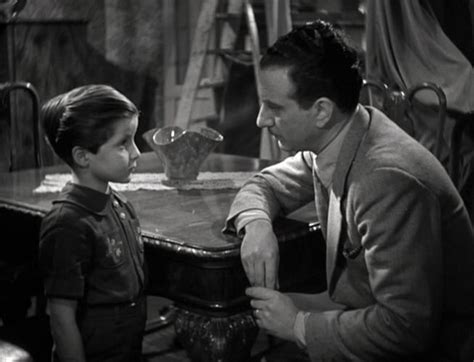
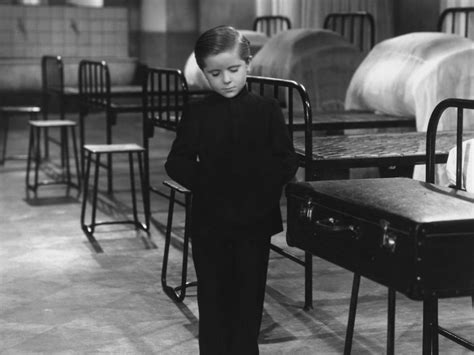
In full honesty, I was intrigued because the title was foreboding as hell. The story is similarly captivating. It’s about a young boy named Pricó, who witnesses his mother having an affair and the subsequent dissolution of his family. As his parents try to stick it together for his sake, it’s clear that nothing is going to be the same, whether it’s the knowledge of that betrayal or society’s deep judgment of their living situation. It’s a lose-lose situation, and it’s heartbreaking to watch.
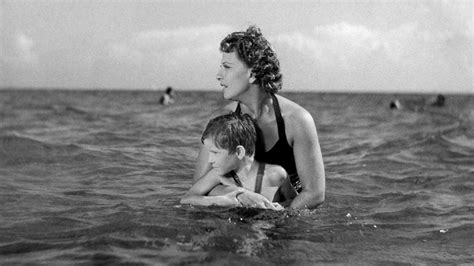
I read the booklet that came with the vintage Criterion Collection set, and it’s certainly interesting. It definitely gave me a lot of context I hadn’t considered. I knew that this being 1940s Italy the gender dynamics were going to be a bit outdated, but the class commentary flew over my head. Since the family is middle-class, the public dissolution of their marriage is felt on both sides of the socioeconomic hierarchy. Since the middle class was shrinking considerably in postwar Italy, Pricó’s family is part of a dying breed that many can’t afford. They live in a more lower-income apartment complex, so the neighbors relentlessly gossip about the parents’ fallout. But when they’re vacationing in a more affluent seaside village, they receive snide comments from the wealthier guests. Either way they play it, they are screwed by the hierarchy.
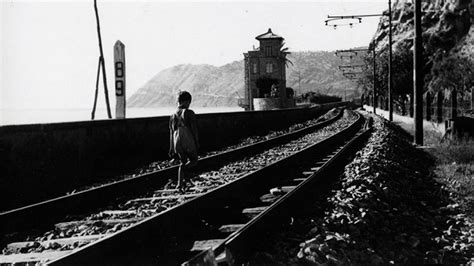
One trope I hate about children narrators is that they are pure and innocent. For this film’s credit, I like how they make Pricó a troublemaker by having him constantly run away and causing a stir. It not only adds more tension to the narrative, but it also acts as a vehicle for Pricó to act as his own agent. When he is out on his own, walking along the train tracks that lead back to Rome, he is curious and indifferent, gathering himself as his world collapses his around him. Once he is brought back to his parents, they swaddle him with love and affection with his doe eyes glazing back up at the camera. Every time the real world brings him back to the fray, he is reduced to being a child, not someone on the cusp of realizing harsh truths about adult life.
But a lot of the technical elements of the film ruined it for me. Luciano De Ambrosis is almost too good of a child actor playing “innocent” for me to take him seriously. There were times where I felt like I was watching more of an ASPCA ad and not an Italian divorce story. The Children Are Watching Us has a tendency to draw out the melodrama more than the realism, resembling more of a Hallmark story than a hard-hitting drama.
Granted, sentimentality and realism do go hand in hand in some way. When we’re confronted with the harshness of the real world, even as adults, we all want to go back into the loving arms of our childhood and retreat into comfort, even if it’s imagined. When we look at a photo from a family vacation, will we see ourselves, or will we see the last glimpse of something whole?
FURTHER THOUGHTS
- Why does no one keep their damn doors closed in this film??
- Every Gen Xer and Boomer loves to reminisce about how they used to run around freely when they were young without mentioning how they nearly got run over by a train on more than one occasion. They’d have more in common with Pricó than they’d like to think.
- Thank God Italian kids in the 1940s didn’t have E-bikes. Pricó would have killed somebody.



Leave a Reply