Ever since I saw Wings of Desire, I knew Wim Wenders just became one of my favorite new directors. His films are undoubtedly poetic and artistic, but they’re also filled with a lot of keen insights into human behavior that make it worth watching. By far one of my favorite themes of his is how ideology contrasts with how people interact with the world around them. It’s one thing to believe in something like art, but when you’re trying to make a living or leave a meaningful life, it can be inextricably hard to live up to those ideals.
Philip Winter is a German journalist who is tasked with writing an article about his experiences traveling throughout America. He mostly documents his travels through Polaroids, much to the chagrin of his boss. When asked why he keeps taking photos instead of writing, Winter says he wants to prove that he was in that place, and that his relationship to a place was deeply personal. He feels disconnected by the rapidly edited ads flashing on the TV. When he’s back in New York City, he resembles an ant waiting to be crushed.
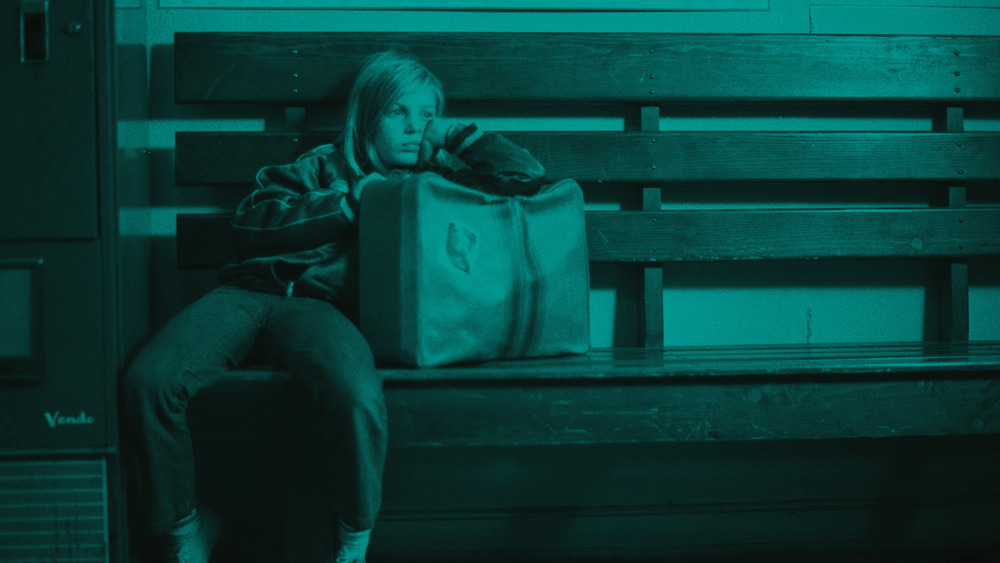
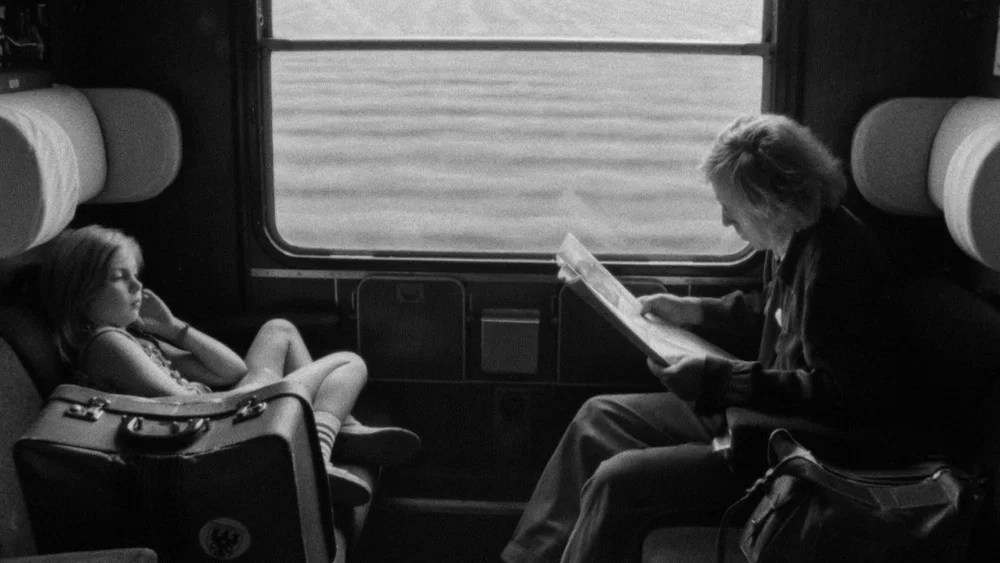
He’s not alone. There’s also Alice, a 12 year-old German girl travelling with her mother back to their home country. Alice’s mother has a tenuous relationship with Alice’s father, and before their last-minute flight to Amsterdam, she stays behind, leaving Alice in Winter’s care. Winter, while taken aback at the sharp turnaround, tries his best to take it in stride. But as their journey into Amsterdam begins, it soon becomes clear that the destination is less important than the trip.
Some of the most memorable vacations I’ve been on have been through road trips. You’re not spending your time at fancy hotels, dining on excellent food and going to exclusive events. You’re deep in the belly of America, taking breaks at dinghy gas stations and eating whatever you can get your hands on. Because you’re on the ground, you have no choice but to deal with what is right in front of you, even though what you’re facing might not be pleasant.
Winter and Alice’s journey exemplifies this. Spurned by the indifference of the modern world, they try to find their own place within it. Alice takes interest in Winter’s photos; at one point, she praises a photo he’s taken of an airplane wing as “empty,” even though her tone of voice is more complimentary than brutally honest. She can come off as selfish and petty in her interactions with Winter, especially since she keeps asking for robust meals when Winter barely has enough money as it is. However, he eventually gives in, getting out of the hotel they’re staying at and journeying deeper into Western Germany.
Over time, they start to develop a deeper relationship. Although they come from different worlds and from different outlooks on the world, they both long for lives that are more vibrant in the living than in the inevitable end. Although Winter is a writer, he wants to convey deeper visual meanings to an audience that is starting to forget what it’s like to view things from the bottom. Alice, the daughter of an emotionally exhausted mother, wants to experience as much as she possibly can. While her mother just wants to get home, Alice wants to find her estranged grandmother, who lives in the Ruhr region and spawns a two-day search for her house with Winter in tow.
I like that Wim Wenders doesn’t diminish how exhausting these road trips can be. At some point, you endure a kind of summit fever where you just want to get to where you’re going, ignoring the risks involved. There were a few moments during Alice in the Cities where I wish the pacing would have been tighter, but then that would have depreciated the true value of road trips. They’re long, and they’re often arduous, but the images you’ll get while driving along a country road are the ones that will stick in your mind forever.
There’s one shot early in the film where Winter is stuck in NYC, calling from a cramped phone booth while the afternoon traffic drowns him out. The shot is tight, making Winter feel like a complete outsider in a town known for welcoming pretty much everybody. The journey of Alice in the Cities helps provide a kind of exhale, promising that for every dead end road, there’s always a train heading to new possibilities.


FURTHER THOUGHTS
- I’m not a New Yorker, but seeing the Twin Towers in this kind of hurt. And I wasn’t even around when 9/11 happened.
- Wim Wenders is the kind of filmmaker to understand that kids can be sweet and unintentionally profound, but also a huge pain in the ass.
- I didn’t know that the binoculars on the Empire State Building had that great depth of field.





Leave a Reply