
Él starts off in a church, where Francisco Galvón surveys a foot washing ceremony among the ornate Catholic decorum. The camera lingers on the shot of a priest kissing a boy’s naked feet, and then we see Francisco eye the shoes of the people sitting in front of him. They’re all wearing shoes that cover up the top part, except for one person. The owner of the shoe is revealed, and it’s the beautiful and enigmatic Gloria, who runs away from him as soon as the service is over.
I’ve been intrigued with the work of Luis Buñuel for some time now, especially for his work in how the unconscious mind reacts. He’s most known for Un Chien Andalou, his surrealist collaboration with Salvador Dalí, but I was surprised he managed to make film noir his own creation with this one. And since this was made in his exile to Mexico following the end of the Spanish Civil War, it’s even better.
Luis Buñuel’s style of filmmaking is one that constantly bends the boundaries of authority. Whenever you think is happening is actually something else. The people you think stand for the moral values are actually deluded or secretly corrupted. In Viridiana (1961), the titular nun who seems to be the definition of purity is overwhelmed by what she sees around her. In Él, Buñuel introduces us to a man who seems to be morally upstanding. He’s a well-known figure among the Mexican Catholic community, he allegedly has a historical connection to Mexico City going back centuries, and he lives in a beautifully eccentric house with warped lining designed by his father. By all accounts, he’s the man.
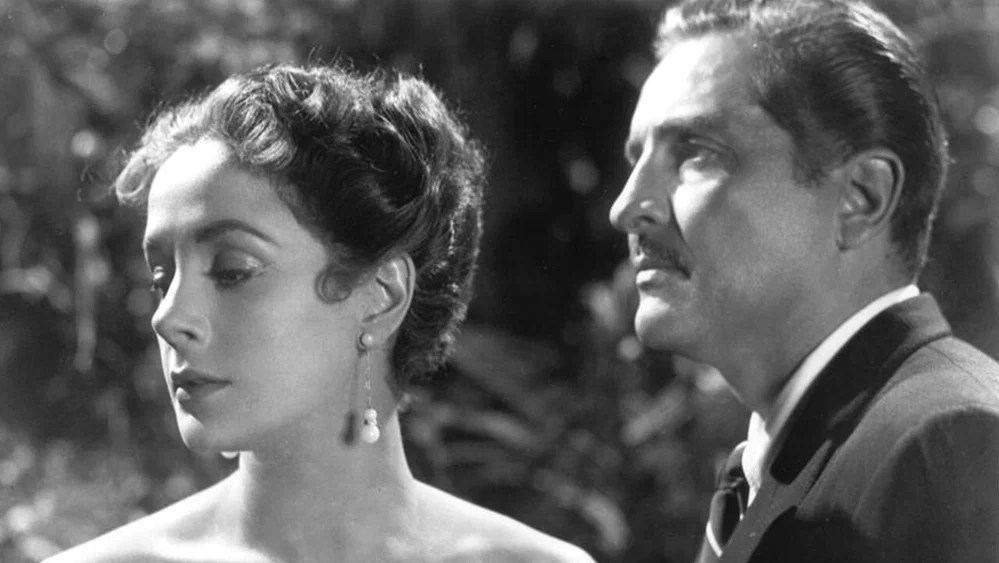
Except he’s also a man. The title Él is deliberately ambiguous. It doesn’t just refer to Francisco, but to all the people who uphold a patriarchal culture that prioritizes the “he” over everyone else. Gloria, with her religious name, seems to complement Francisco. She’s devout, gorgeous, and more importantly, seductive in a way that doesn’t come off as racy. She’s the perfect wife.
That’s when the nightmare starts. Not with the wife, but with the man of the house.
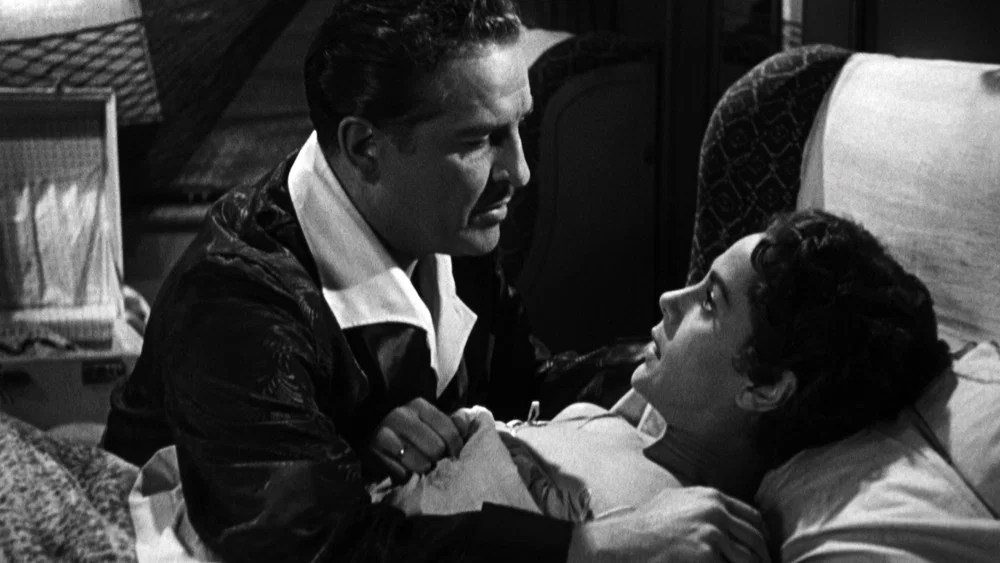
It becomes clear that much like the wavy lines in his house, Francisco is not the upstanding man he likes to present himself as. He’s mercurial, prone to raging jealousy, yet always remorseful and desperate to love and be loved. He sees Gloria as the key to maintaining the illusion that the man he is on the outside is the man he is on the inside. He doesn’t want to see Gloria as interested in other men because he wants to be the man in her life. For a man with supposedly eclectic tastes, he has rigid boundaries that must not be crossed.
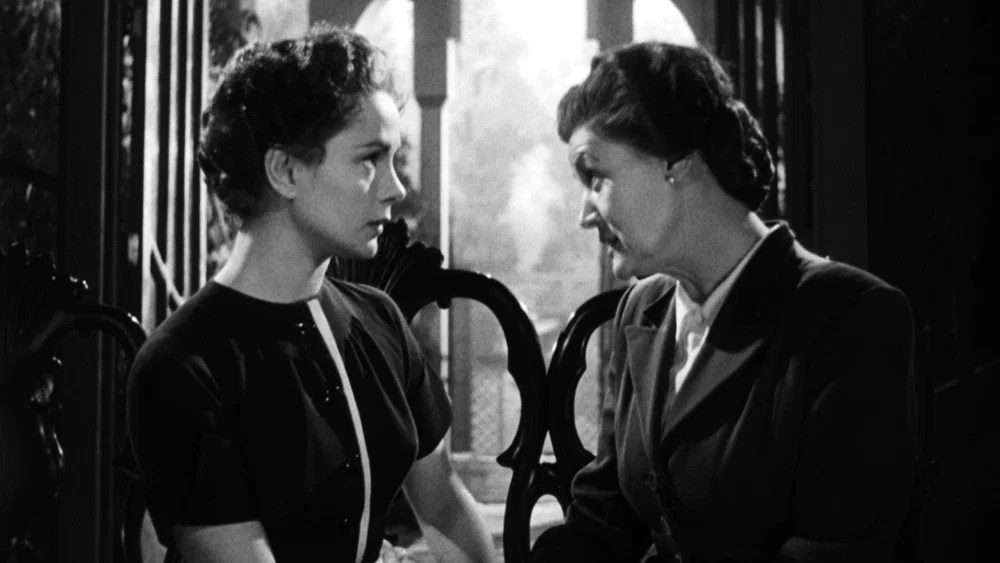
If anything, the true surrealism comes not just in the mind screwing aspects of an unhealthy marriage, but also in the hypocrisy of powerful people. When Gloria begins to suspect something is wrong, the people she thought would help her turn about to be anything but. They tell her this is the way things are, that she should go back to her husband, that everyone else loves Francisco, so why shouldn’t she? No matter where she goes, there’s no escaping his gaze. Even at a church, she isn’t safe from his opinion that he’s above everyone else, while she should share his opinion about the people down below being “worms.”
To look at Luis Buñuel, you have to look at someone who is constantly questioning the structures of the society around him. His career took him around the world, but he derived a lot of influence from his Catholic upbringing in Spain in the early 20th century, where the ultra-patriarchal Francoist dictatorship was on the rise. His artistic partnership with Dalí ended once the surrealist’s fascist sympathies collided with Buñuel’s Communism and atheism. Once more of his friends and allies started perishing in the fascist takeover, Buñuel left Spain into a sort of exile in Mexico, where he made films that commented on Francoist Spain from afar. One way to look at Él is to see Buñuel in the character of Gloria, who’s desperate to cling onto a version of a husband who loves her, even though his definition of love could kill her.
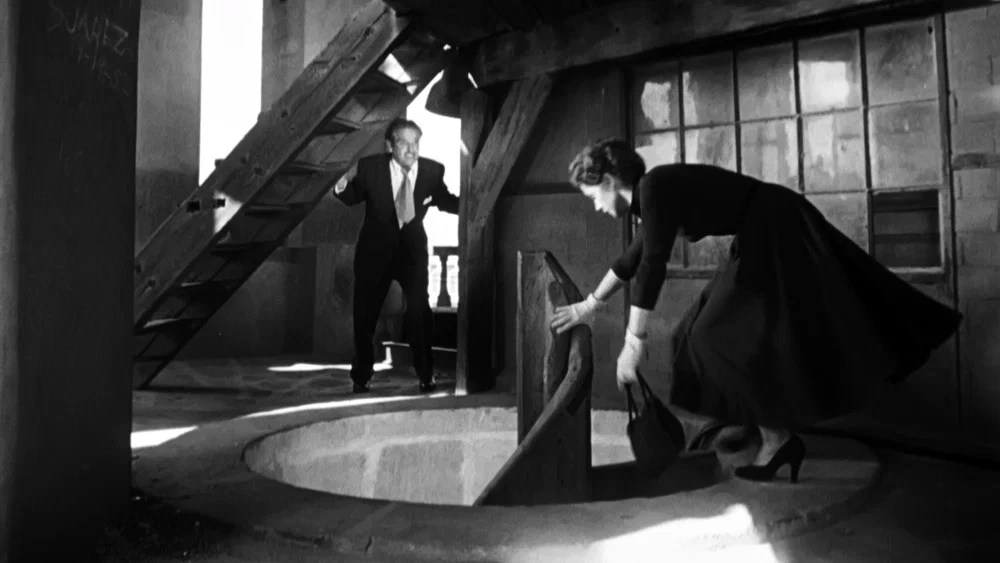
But aside the political critique, Él is a hell of a noir (see what I did there?) Smoke and mirrors is easy to create with the right amount of high contrast lighting and murky notions of justice, but it’s even better when one is questioning the foundations of the society around them. In a world where society was just starting to rebuild, the comforting notions of marriage started to feel more illusory. If you’re not safe in your own home, then are you ever safe? What would be the limit for you to realize?
And when you realize, will it be too late?
FURTHER THOUGHTS
- Francisco’s actor looked a lot like Pedro Pascal is certain shots, and it was seriously bothering me, in both a good and bad way.
- I’m a terrible driver, but even I don’t think I could survive a day in Mexico without hitting someone.
- Something tells me Gloria from Él and John from The Night of the Hunter would get along.




Leave a Reply