
I was really trying hard not to think of Chappell Roan while watching this film.
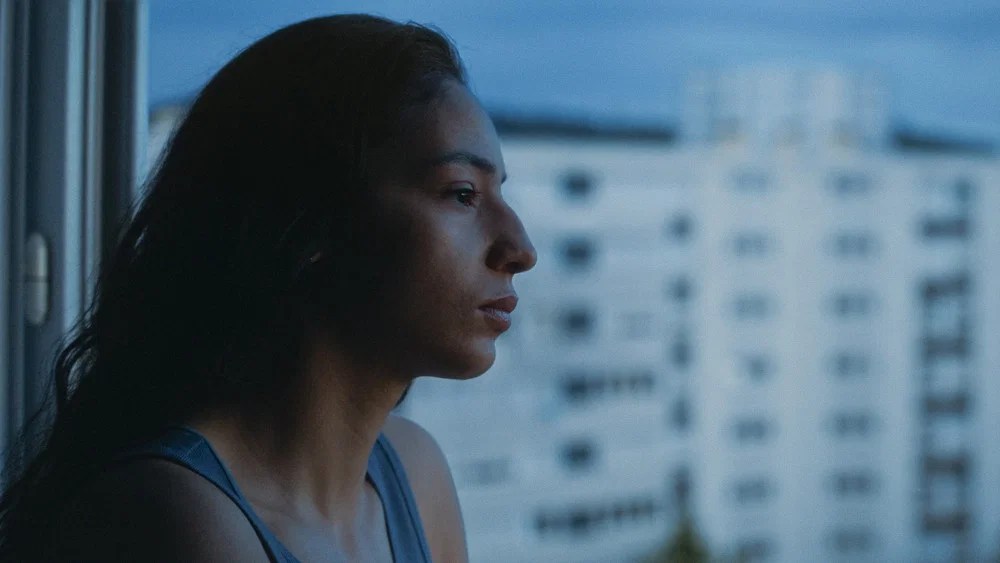
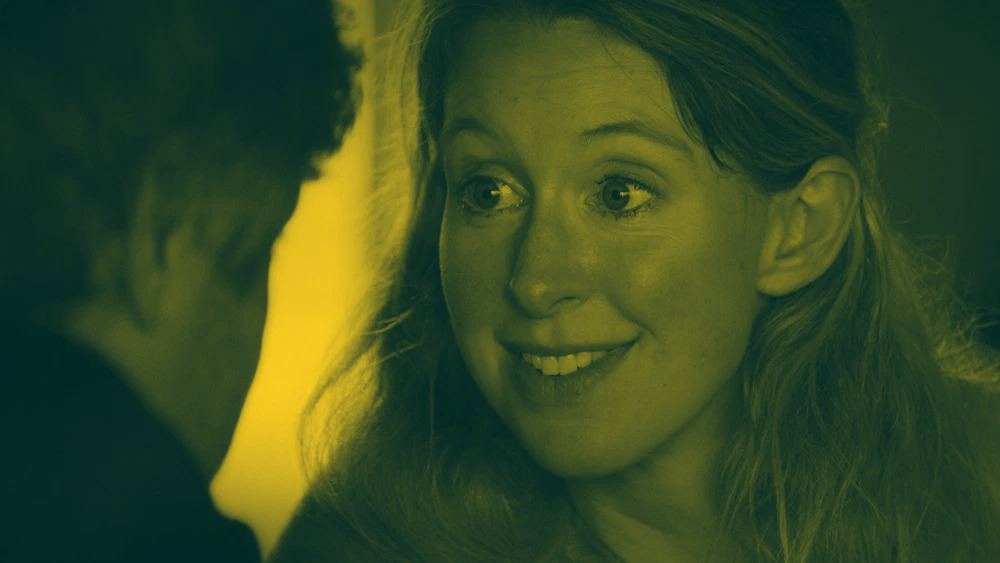
For my first contemporary picture of SBIFF’s French Wave Festival, I decided to take a look at The Little Sister, an adaptation of an autofiction novel by Fatima Daas. Based off the author’s personal experiences, it looks at a one-year evolution of Fatima, who is exploring her newfound attraction to women while also struggling with familial and societal expectations. When I first read the synopsis, I thought it was going to be generic. Now that I’ve seen it, I’m kind of glad to be proven wrong.
The reason why I was thinking of Chappell Roan was not just because she’s a well-known public figure who’s an out and proud lesbian, but also because the content of her songs disturbs a lot of myths around contemporary gay life. It is easier to be an out and proud in the city, but it’s still as difficult as ever to navigate relationships, especially with dating apps and the ever-present pressures of compulsory heterosexuality. Fatima probably doesn’t listen to Chappell Roan, but there were still some through lines.
When we start the film, Fatima is a tomboy who hangs out as part of a boy’s club at her high school. When one of them starts picking on an openly gay classmate of theirs, the boy speaks back and tells them “You know your friend’s a lesbian, right?” This provokes something in Fatima, and she responds by shooting slurs right back at him. As hard as it is to watch, it’s a stark reminder of where Fatima’s journey will take her.
Fatima’s friends are frequent users of dating apps, and one night she decides to take one for a spin. Using a fake name, she goes on a date with an older woman, who gives her a remedial sex ed course she probably didn’t hear about in school. While the encounter doesn’t go further than that, I felt this weird sense of discomfort while watching the scene. The weird tension of not knowing if they’re about to get intimate makes the scene feel exciting and slightly nerve-wracking at the same time. You want Fatima to accept herself, but the avenue in which she’s exploring her sexuality is exposing her to people who have much more experience than her. Even though Fatima’s barely come out to herself, she is already plunging into the deep end.
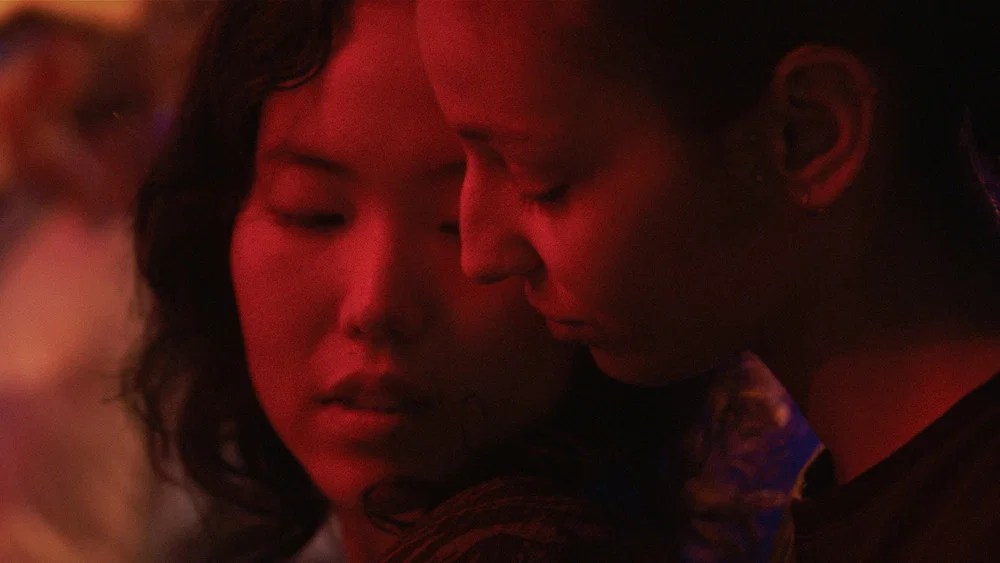
She goes on a couple more dates through apps, but it isn’t until she meets Ji-Na, a nurse at a clinic, that she truly falls for someone. They share meals, they attend Pride parades, and it starts to feel like Fatima is opening herself up to new experiences. But there’s another avenue she must confront: her self-imposed hostility.
We get brief glimpses of Fatima in a chador, looking both devout and slightly out of her depth. She’s looking out of a window in a location not named to us, but Nadia Melitti’s acting makes it clear Fatima is not at home with herself. She feels at home when she’s with Ji-An, but she also feels at home with her family, who are Muslim and expect her to have a boyfriend one day. Refreshingly, there’s no overwhelming need to have Fatima come out in the film, whether it’s expressed by the characters or not. Instead, it comes through the sheer whiplash of Fatima’s experience both in lesbian clubs and with her family. How can you feel at home in two places that feel diametrically opposed to one another? How do you reconcile that?
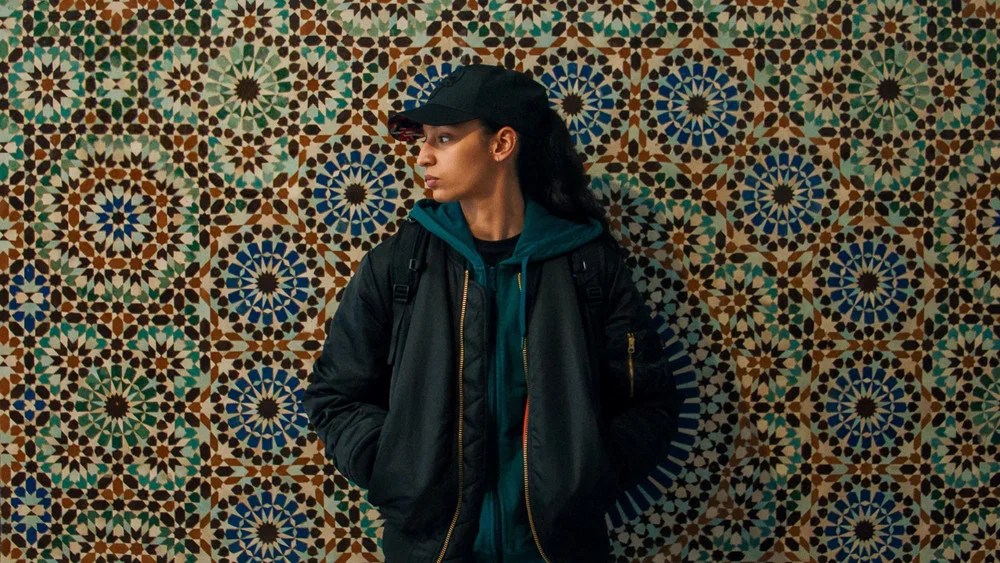
I don’t think all the ingredients in this film worked coherently, though. We desperately need queer women of color to be represented onscreen, but sometimes it feel as though director Hafsia Herzi is struggling to balance all the subplots into one concise product. Whether it’s Fatima’s on-again off-again Muslim boyfriend, her ever-changing friend groups, or her relationship with her mother, everything feels together and not together at the same time. It’s like every piece of the puzzle is a mosaic, except the gaps between the tiles are a bit too glaring. That doesn’t distract from the overall end goal, however.
Regardless of the film’s execution, The Little Sister is a welcome introduction for Nadia Melliti, who won the Best Female Revelation award at the Césars (French Oscars). Based on her performance in this film, I wouldn’t be shocked if she made a more international breakthrough.
FURTHER THOUGHTS
- We need more lesbian bars.
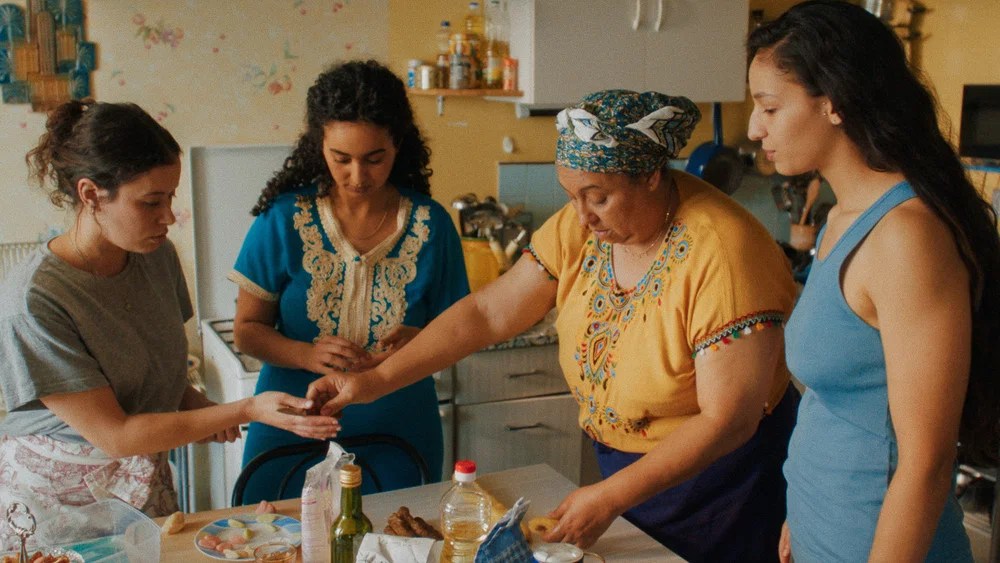
- Fatima’s relationship with her sisters felt very real. No matter how much you bicker, nothing is better than lazing around with them.
- Fatima’s college campus looks sick as hell.



Leave a Reply