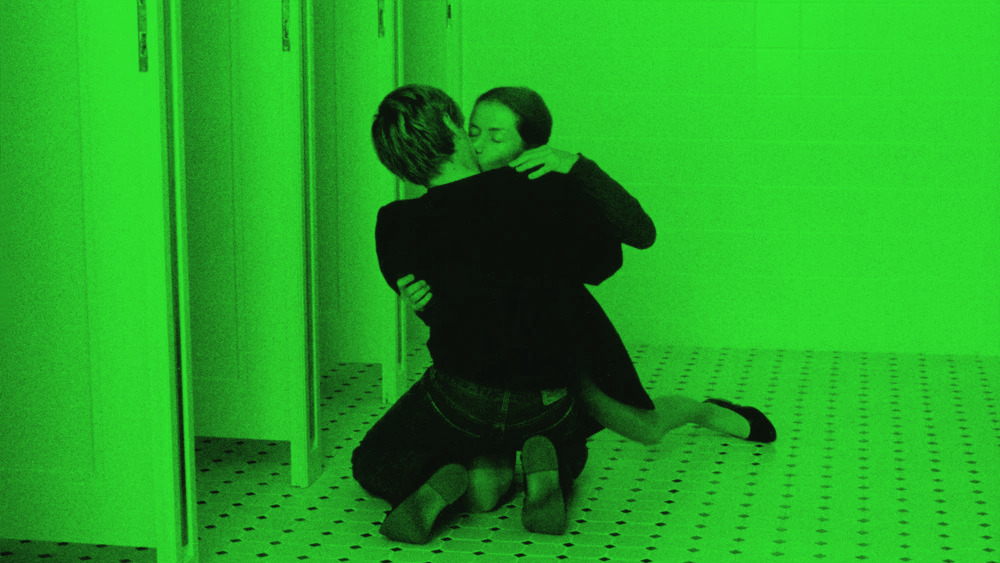
Sometimes, it’s really hard to describe a film without sounding like a pervert. It was even harder this time.
I’ve been a fan of Michael Haneke’s work since Prof. Kevin Wynter introduced me to Funny Games (1997) and The White Ribbon (2009) in his Screening Violence class at Pomona College. It’s a weird world you’re entering into. Every ounce of sentimentality and theatricality is stripped back until all you get is a bleak world with harsh white backgrounds and dysfunctional relationships. His filmmaking is direct, with no overt stylistic flair. It can feel sterile, almost oppressively so.
That is to say, it perfectly fits the tone of The Piano Teacher.
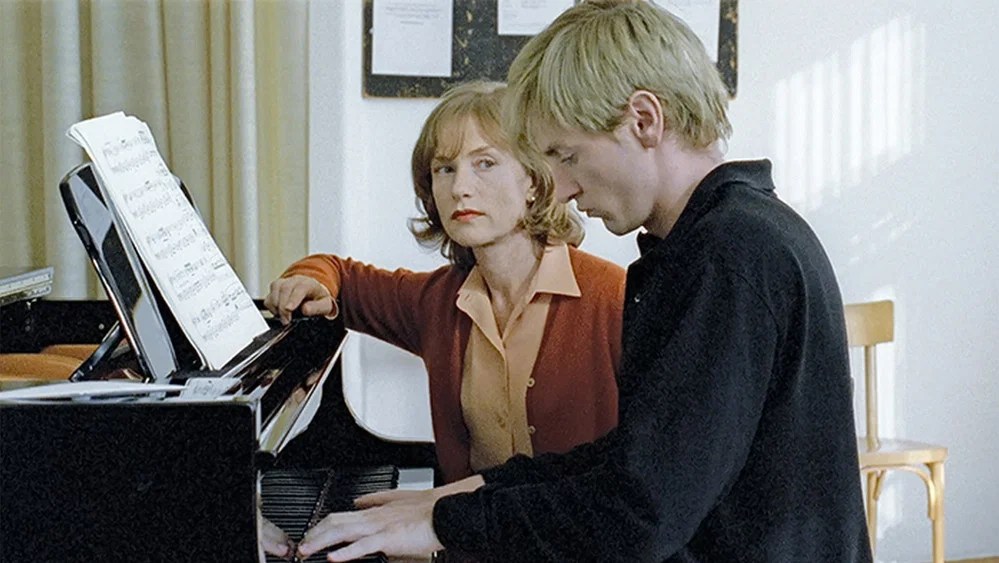
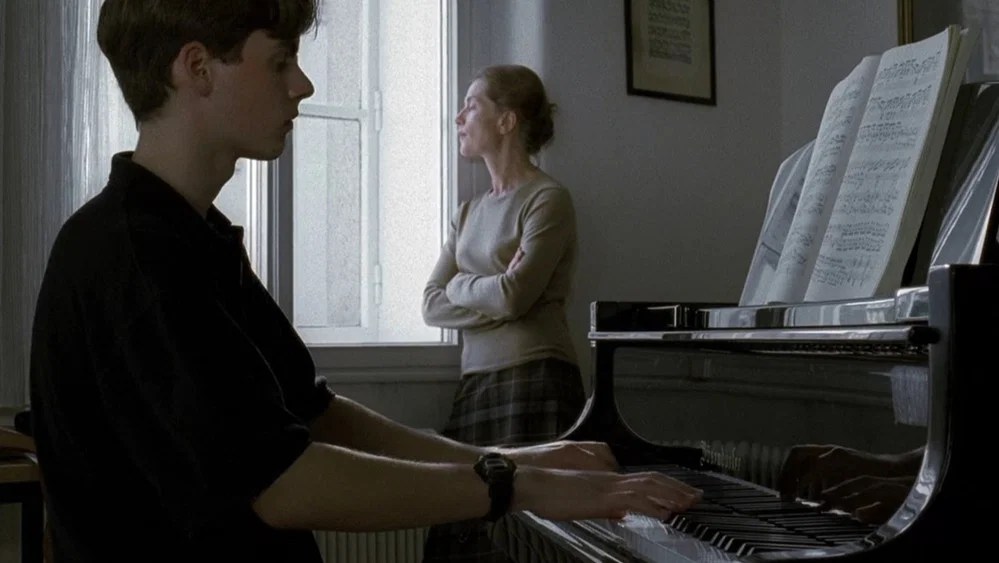
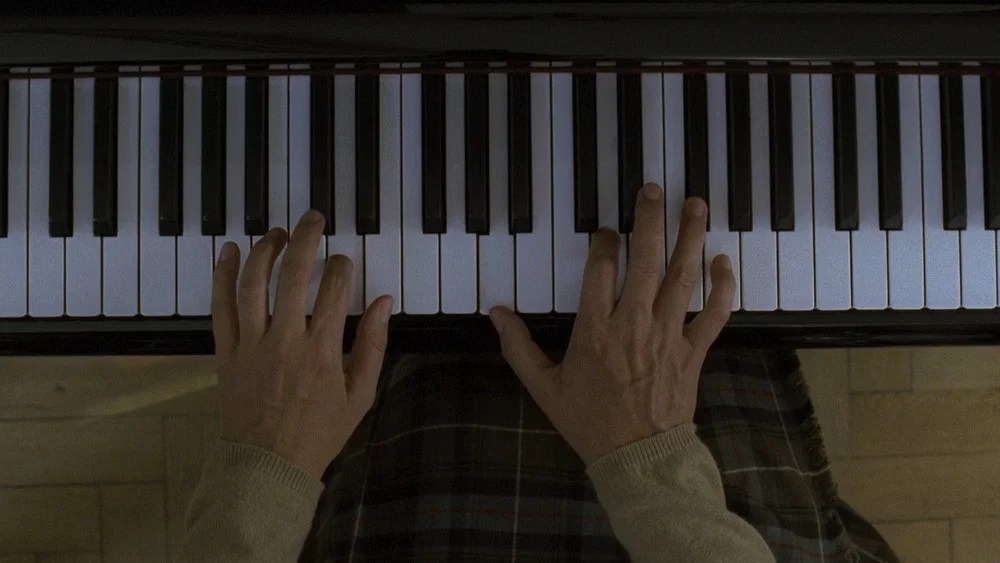
The Piano Teacher stars Isabelle Huppert as Erika, a piano instructor at a conservatory in Vienna who doles out harsh instruction to her students. When she’s in her private classroom, she’s dedicated to pointing out every flaw of her students and stamping out any errors in their efforts, no matter how hard they play or how much they sacrifice. But when Erika gets home, she is met with a domineering mother who sleeps in her same bed and calls her constantly, even while she’s at work.
We see a different side to Erika, though. As she walks through a mall, she finds herself going into an adult entertainment store to watch pornography in a private screening room. Drawn into these images, she picks up a used tissue off the floor and smells it. Amidst the rigid boundaries of her life, this is the one place where she can indulge in her own perverse desires.
One thing I admire about The Piano Teacher is that Haneke doesn’t pit one character as a saint and the other as a sinner. When Erika finds herself drawn to Walter Klemmer, her newest student, she finds an outlet for her repressed sexuality that turns out to be more mercurial than previously thought. It’s undoubtedly an unethical relationship, but Haneke is confident enough to blur the lines of acceptability without downplaying or romanticizing the crossed boundaries.
In a way, Erika’s sadomasochism is one of the few ways she can express herself. She’s constantly reminded by her mother that she used to be a musician, and that she’s training the next generation to exceed her in every which way. While her sexuality is criticized by other characters in the film, including Klemmer, whom she pursues, it’s worth noting that unlike the rigid hierarchal structure of the conservatory, Erika gives herself a position of power at which to serve herself. She is subjugating herself, but only because she wants to. It’s only when she meets someone who is almost as sexual as she is that she begins to unravel.
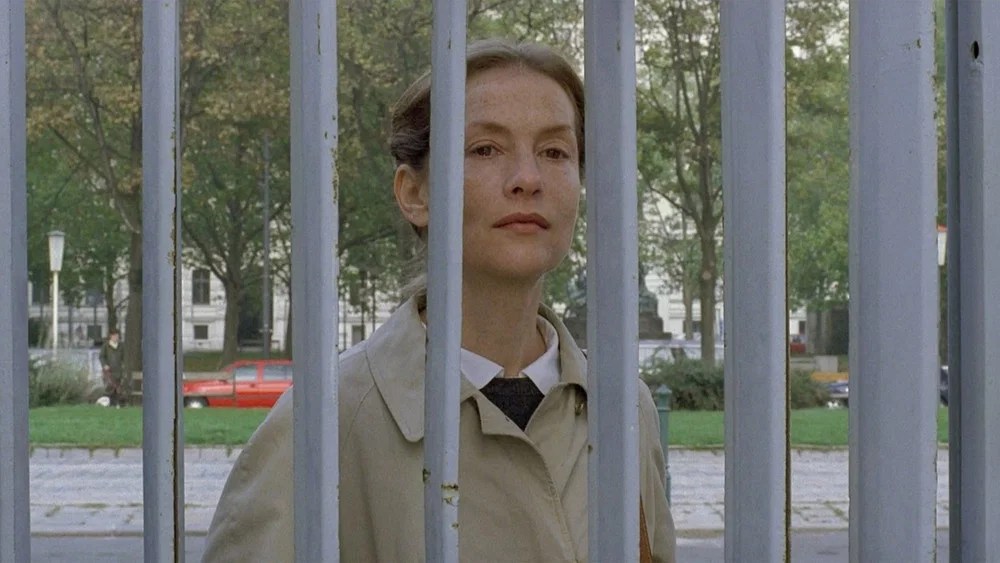
Huppert conveys this in a performance that fits perfectly well with Haneke’s directing, in what might be the best director/actor collaboration I’ve seen so far. Huppert controls her facial movements and her eyes in such a controlled way it feels like she was born to play Erika. When Erika’s in the apartment with her mother, she feels smaller under a powerful matriarchal force, but when she’s in her room with her students, Huppert glares at her students with a glance that feels almost interrogatory. When she feels her control slipping over her current relationship, her eyes dart across the room looking for something to hold onto. Huppert perfectly captures the arc of Erika from a self-controlled woman to someone who is losing the grip over their own life.
I was a bit conflicted on Erika herself. I don’t condone her relationship to Klemmer by any means, but on some level I sympathized with her current circumstances. She’s become fully a product of her environment in the music conservatory. She’s dominant over her students, but it’s clear that it doesn’t bring her joy–instead it’s frustration, jealousy, and longing for something that’s passed. With her power shifting as soon as she steps into her own home, I could resonate with her wanting something that puts her firmly outside of the mainstream. Who cares if people say she’s sick? At least she can say she did it for herself.
I’m still debating how I should see this film, and whether I like it as much as Haneke’s other projects. I think The White Ribbon still stands out to me for its subtle violence, but The Piano Teacher stood out for its unapologetically upfront exploration of female sexuality. It’s not a movie about female empowerment by any means, but rather a character study of a woman who’s trying to find some more control in a world where she doesn’t feel like anything she does is good enough. If this one small thing is good enough for her, then that should be enough. But unfortunately, it isn’t.
FURTHER THOUGHTS
- There is a bathtub scene in this film that is more traumatic than Saltburn.
- One of the actors from Funny Games is in this, and when I saw them, you bet I jumped in the air for joy.
- Is it weird that I want to move to Europe after this?



Leave a Reply