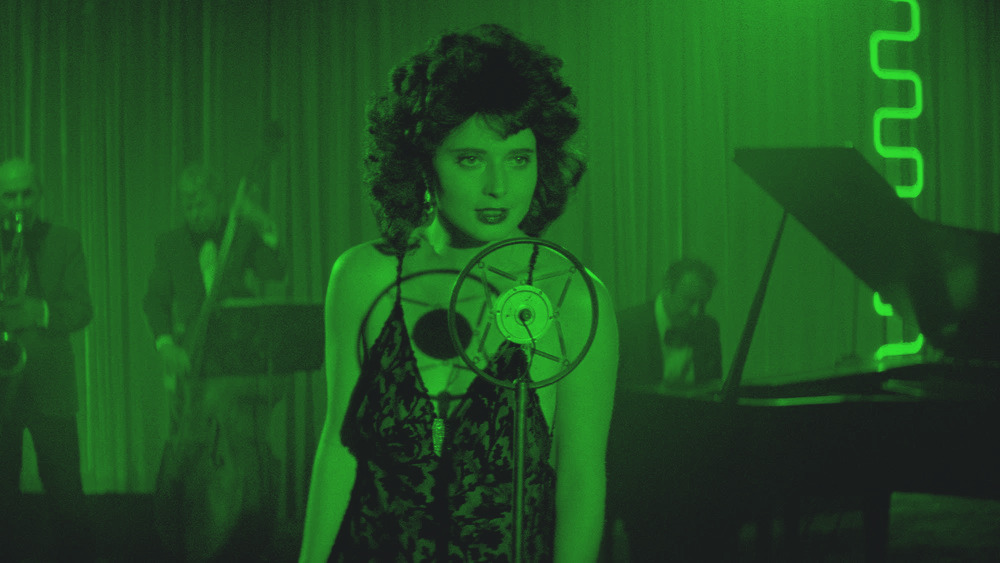
After his father is incapacitated following a gardening accident, Jeffrey Beaumont is on his way home from the hospital where he spots a dismembered ear in a field behind his house. Soon, he’s involved with a disillusioned nightclub singer, the girl-next-door Sandy, and a nightmarish gangster with a love for Pabst Blue Ribbon and the blues.
Welcome to Blue Velvet.
I’d heard a lot about this film before I’ve ever saw it. In fact, I wrote a review that included a spoiler from Blue Velvet before I’d even seen the picture itself. So I wasn’t going into this film totally blind as to what happens. But I wasn’t prepared for the experience, or how enraptured I would become.
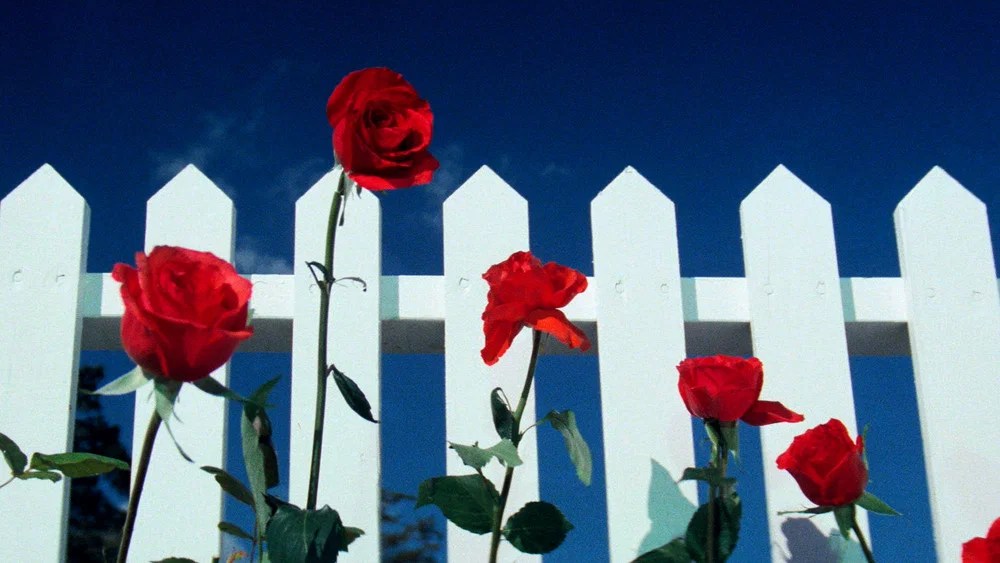
The first few shots of the film are some of the most exquisite. After a credits call introduction with the titular fabric in the background, you see a stark white picket fence with roses (pictured above), then another set of yellow tulips. A firetruck rolls down a quiet suburban street, with the fireman waving robotically as a dalmation sits by him. Everything is so perfect. It makes you squirm.
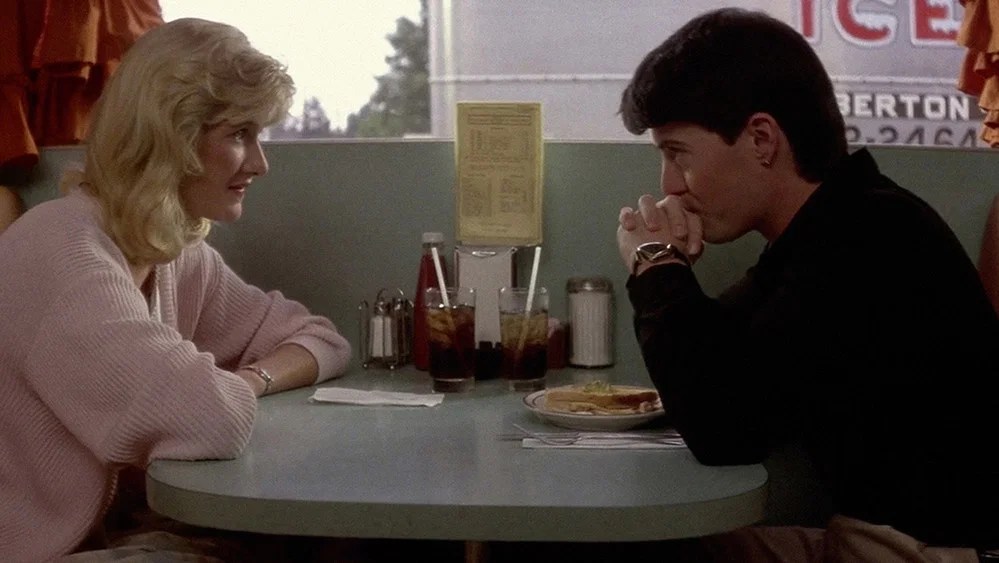
The ear is what sets everything off. Jeffrey Beaumont is not having a good day, and this is what sets him off on a quest to find out the strange events of his hometown Lumberton. He enlists the help of Sandy, a friend from school and the daughter of the local detective working on the case of the missing ear. She leads him to an apartment that the police have under surveillance. A woman lives on the seventh floor–a nightclub singer named Dorothy Vallens.
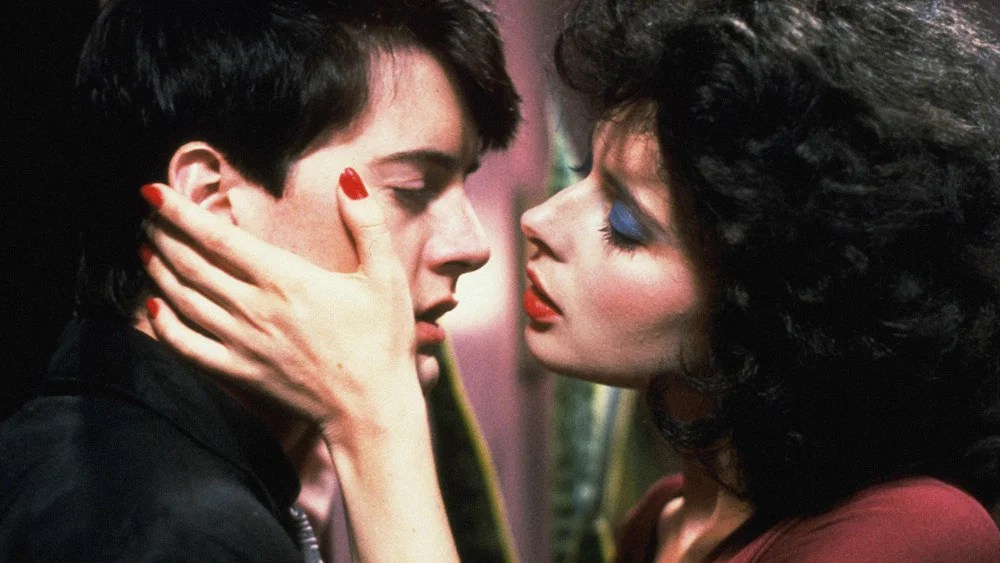
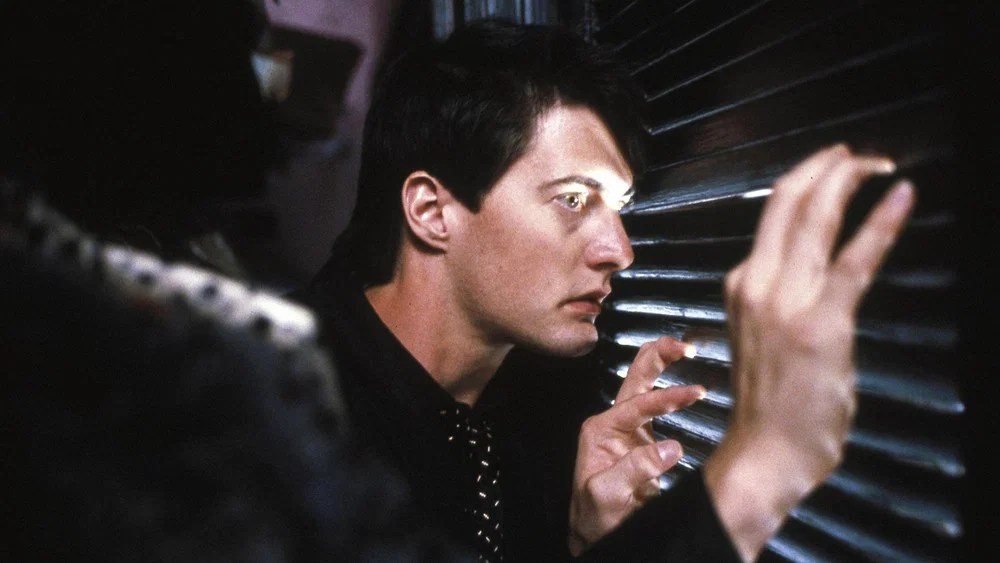
When he breaks into her apartment to surveil it, he gets an up-close and personal look into the dark secrets of Dorothy Vallens. She is gorgeous, but she’s also an object of bile and fascination. When she finds him hiding in her closet, she holds him at knifepoint and forces Jeffrey to undress. She starts seducing him, until someone knocks at the door. It’s Frank Booth–she forces her first voyeur back into the closet. What follows is a scene that will remain in your mind forever.
What’s truly amazing about Blue Velvet is how it uncovers the undercurrents of sex and violence of suburbia without adhering to realism. Dorothy Vallens is at once completely reachable and impossible to predict. She’s an entrancing nightclub singer with a gorgeous voice, but in her private veneer she’s a psychological mess. In a way, the violence of her life a nice break from how suffocating saccharine the rest of Lumberton is. Instead of people pretending everything is fine when it’s not, there is a person who holds all of the violence close to her chest. This is what first attracts Jeffrey to her, and to extension, the audience.
However, Jeffrey is not a reliable narrator. He’s not only a Peeping Tom who’s bitten off more than he could chew, but by participating in the voyeurism he himself is an actor in the violence against Dorothy. He doesn’t see her as a person, but a poor creature she’s got to save. He gives himself the noir identity as a grizzled detective, but as Sandy says to him, “I don’t know if you’re a detective or a pervert.”
David Lynch knows how to make the voyeurism stick. When Frank Booth looks at Dorothy’s naked body, we are restricted by Jeffrey’s gaze, only seeing her back. We don’t see her fully nude until later, and it happens at the worst possible moment. There’s a lot left unsaid in the film, and a lot of it is due to how Jeffrey’s warped perspective adds to things. We see his dreams, and Kyle MacLachlan’s acting blends his motivations between intrigue and desire. We don’t know whether we are seeing the detective or the pervert. Or is it both? It’s hard to tell. Regardless, we are fascinated.
The sex and violence we see in Blue Velvet breaks the peace of everyday life in Lumberton, and soon we get the stark realization that underneath this peaceful town, there’s a whole underbelly under everyone’s noses. Considering this was made during the Reagan years, it’s no coincidence that the “perfect life” seems to be made of inconsistencies. Even when things are perfect, there’s the lingering suspicion that there’s some dark forces perpetuating this cycle of perfection.
The music in this film works to great effect. There’s two songs that carry in this film: “Blue Velvet” by Bobby Vinton and “In Dreams” by Roy Orbison. When they’re sung, it’s with love, but with a twisted kind. If you were to listen to them on your own, they’d be silly little love songs from the 1950s. But in Blue Velvet, they’re something else. It’s a siren song, a warning to leave if you can.
God bless you David Lynch.
FURTHER THOUGHTS
- Beer has never played a more important role in a movie than Blue Velvet.
- “In Dreams” > “Blue Velvet,” and this is the hill I’d die on.
- When I watched this at the Film Center, I saw moviegoers of different generations go silent when the film started. David Lynch was truly a visionary.


 BEYOND THE FRAME
Leave a comment