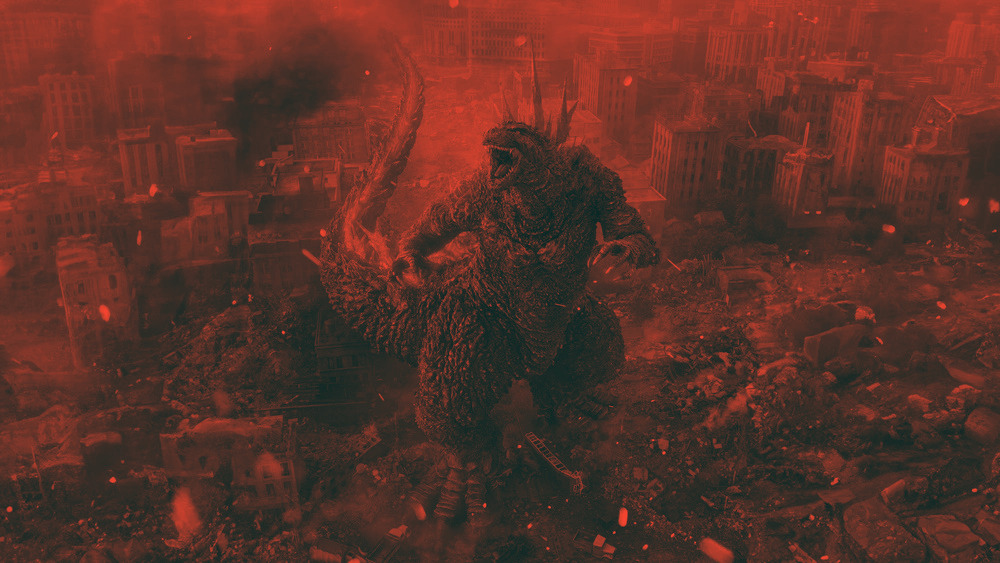
I can’t believe this was my first Godzilla movie.
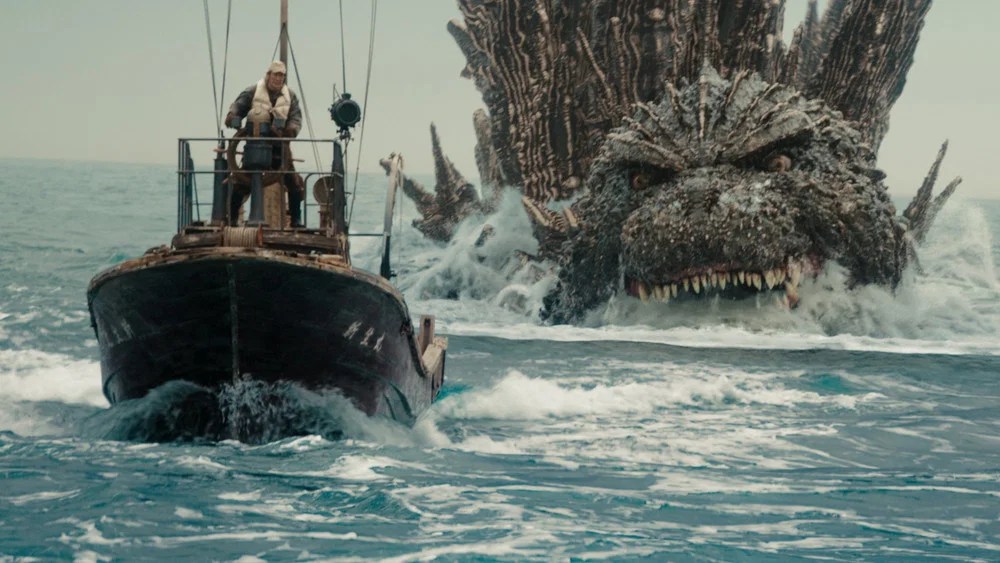
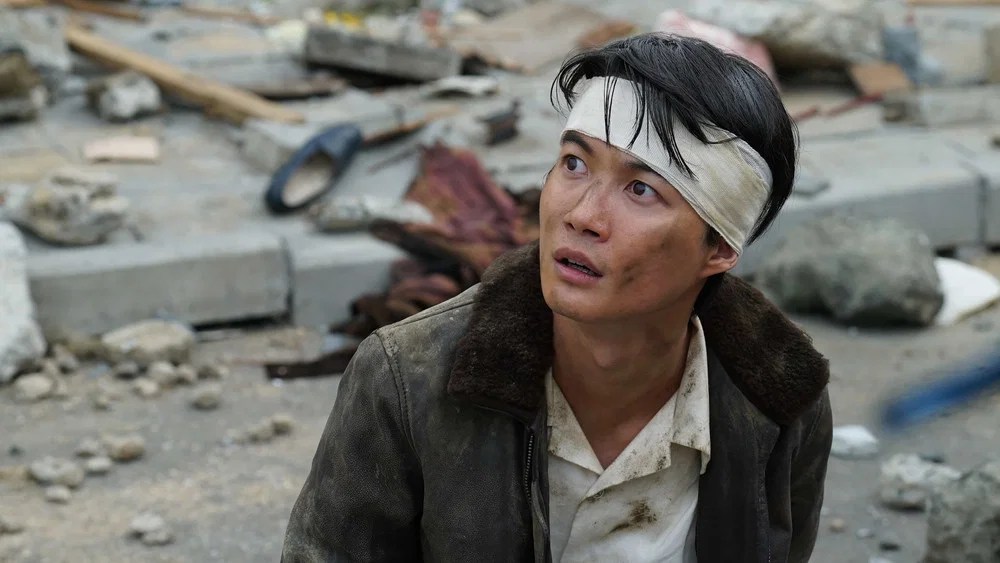
Released the same year as Oppenheimer and The Boy and the Heron, Takashi Yamazaki’s take on the famous kaiju is both staggering yet quite humanistic. We start the story with Godzilla wrecking havoc on Odo Island, where deserted kamikaze pilot Koichi Shikishima witnesses up close the sheer power of the monster. He manages to survive the attack, but the rest of the crew on the island is died, and he finds himself blamed for not acting sooner. It’s this guilt, both personal and inflicted, that plagues him and most of the other countrymen throughout the film.
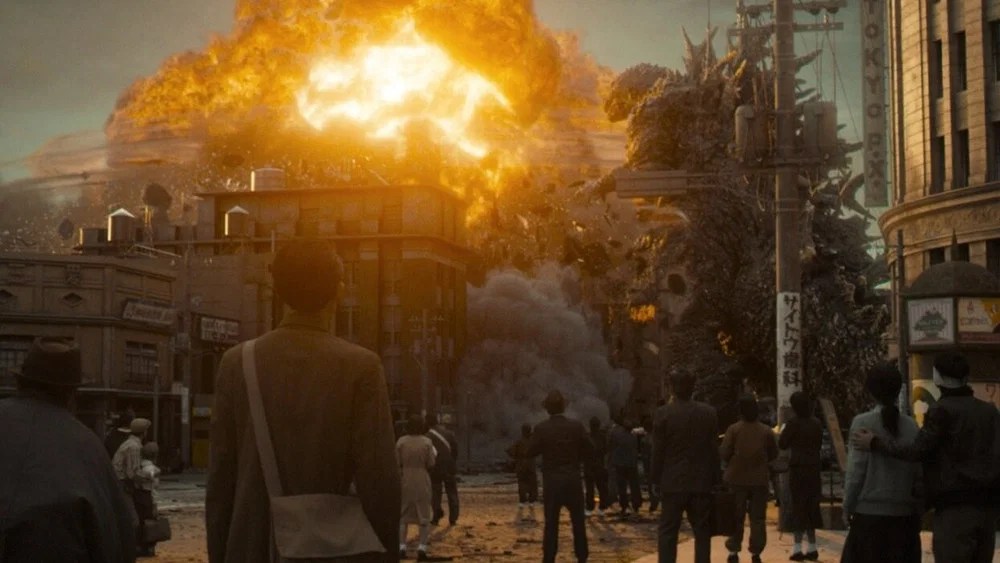
Godzilla’s not just a famous movie monster, but also a symbol of the damage brought on by nuclear weapons. I’m lucky to have been born in a time where nuclear war isn’t an existential threat in my daily life, but this film does a great job at representing how dire Godzilla’s appearance is. It would already have been bad enough having Godzilla show up, but Japan also had endured a brutal loss during WWII. Tokyo’s been reduced to ash, and while cities are rebuilding, the wounds are still deep and lurking in everyone.
Moreover, the government response to Godzilla’s threat is, to put it mildly, less than stellar. They don’t want to induce panic, so they withhold Godzilla’s initial appearance to the public, and considering their resources are depleted after the war, there isn’t much they can offer. So it’s up to a group of private citizens, mostly ex-Navy, to defend Japan.
So, to recap: there’s a huge kaiju, but the government isn’t helping, Japan is already in ruins, and our main hero has severe PTSD. No wonder this film is called Godzilla Minus One.
But even if this film didn’t blow me away, I was certainly captivated. One of the hardest challenges kaiju movies face is portraying a spectacle while keeping the human characters compelling. If you see a giant movie monster on a poster, that’s going to persuade people to go and see it. But if the characters aren’t interesting enough, you’re going to fall short in the story department.
One of my not-stellar-but-still-enjoyable-movies I still enjoy from time to time is Cloverfield, which is the perfect example of this. It’s basically an American version of Godzilla, except this time there’s parallels to 9/11 and the War on Terror. There’s certainly themes of appreciating the memories you have with your friends, but the film at times has a hard time balancing its youthful tone with the found footage intensity of the spectacle. It makes the monster more terrifying, but there’s a lot more characters moments that annoy me and take me out of the action (looking at you, T.J. Miller.)
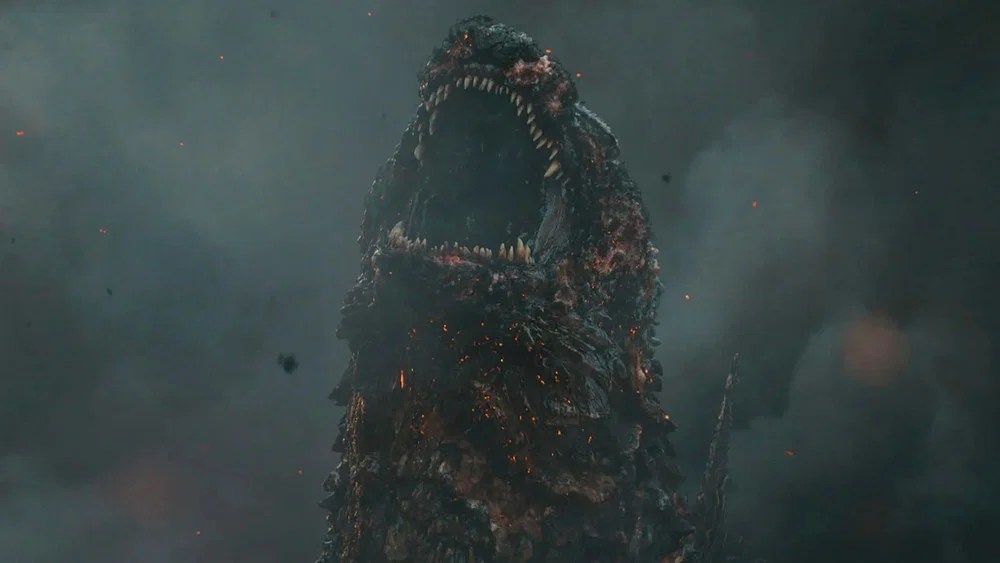
Which it makes it so much more heartening that the filmmakers behind Godzilla Minus One recognize that Godzilla’s sheer scale and power was never what made him a terrifying figure. It wasn’t just what he was, but what he represented. It’s what he means to all the characters that signal it’s not just about saving Japan, but saving their last hope for the future.
Shikishima’s position as a kamikaze pilot is crucial to the story because his whole function was that he was supposed to die for his country, but didn’t. Most films in the kaiju genre have characters try and take down the monster, often sacrificing themselves for the sake of taking it down, but it doesn’t work. Shikishima sees his survival as a mark on his permanent record. He carries around photos of the victims of the Odo Island attack with him constantly, reminding himself of what was lost that day, and what he could have done. But he’s not the only one struggling.
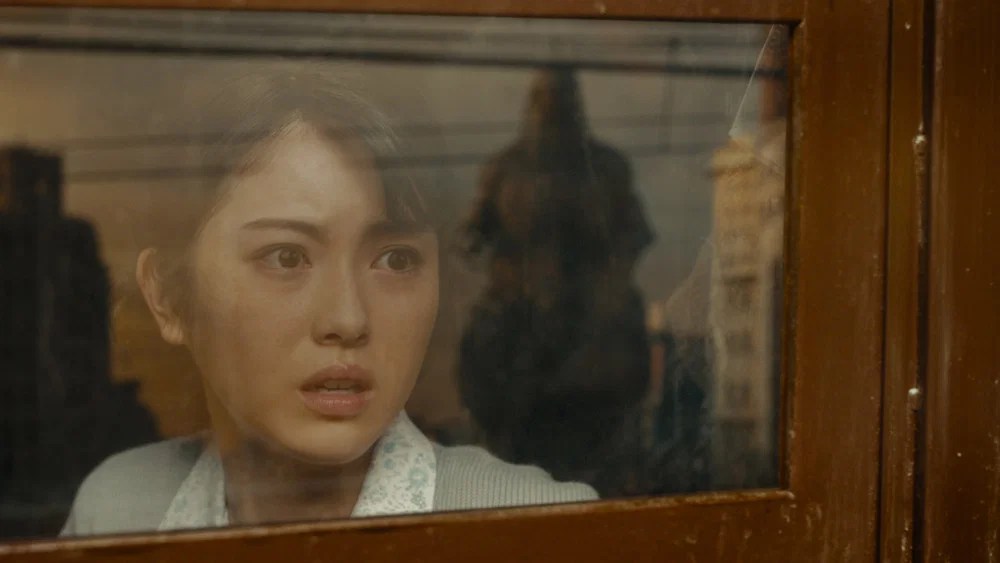
Every other character in the film seems to have a kamikaze attitude. Whether it’s Noriko and Sumiko taking care of an orphaned infant after the war, or the Dr. Noda and the crew of the Shinsei Maru cleaning up mines to atone for their role, everyone thinks there’s no escaping from the wounds the war left them. The more destruction Godzilla leaves behind, the more it seems clear that they are fighting a losing battle. In a way, death would be a mercy, because if you die facing Godzilla, you won’t live to see the untold havoc afterwards. But the post-WWII landscape adds a paradoxically hopeful attitude. Sure, they’re facing a kaiju god, but they’ve all been through the war before. The government isn’t on their side, but they weren’t on their side to begin with, with weakened supply lines and general disregard for human life. But they’ve seen enough death to know they don’t want more of that for future generations.
For once, it’s awesome to see a kaiju film that’s dedicated to life as much as it is dedicated to showing mushroom clouds and buildings being destroyed to pieces. This time, you don’t need to show a crying child to induce a brief moment sympathy in a film. This film shows consistent care for its characters amidst the action, and that’s a Godzilla-level threat of its own. That’s a miracle if I’ve ever seen one.
FURTHER THOUGHTS
- I had to turn the part of my brain off that kept thinking if Grave of the Fireflies could technically exist in the same timeline as this film.
- I love that as soon as Shikishima gets a job, the first thing he does is to go full postwar biker boy.
- Noriko is an underrated badass. Sometimes surviving utter hell is better than firing guns.



Leave a Reply