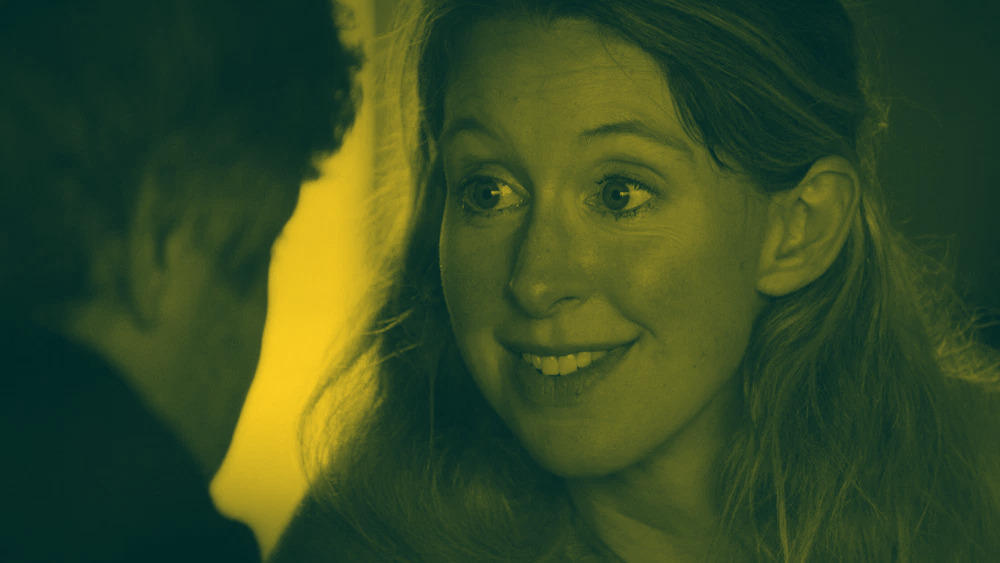
I still can’t crack the code.

It’s been almost a decade since the Theranos scandal broke, and we are still unpacking the mystery. By far the biggest mystery surrounding the failed biotech startup concerns its founder, Elizabeth Holmes, currently serving prison time in Texas for defrauding investors of billions of dollars. Filmed over the course of three years, starting 34 days before she was set to enter prison, You Can See Everything attempts to step inside Holmes’s mindset, along with that of her new partner Billy Evans. But the closer co-director Nathan Fielder gets to something resembling the truth, the farther it seems to elude him.
Normally it’d be really annoying and unsatisfying for a documentary to leave so many questions unanswered, but this film makes the experience worth it. A lot of people have said this film feels like a psychological horror film, but in my opinion it feels more like a film noir. There’s less focus on the overall scandal surrounding the failed Theranos and more around its elusive founder, who seems to have become a mythical figure in the last ten years. We’ve all seen the news coverage, we’ve all seen The Dropout, but now it’s time to see the real thing. But it’s destabilizing, nevertheless, to see Elizabeth Holmes go about her daily routine.
It’s not just about seeing the banality of evil, either. It’s seeing how her attempts to be “completely transparent” end up being nothing more than a smokescreen behind a smokescreen. She allows Nathan Fielder and the camera crew to film as she makes phone calls to get Theranos 2.0 up and running, she is more than ready to answer questions about her culpability (or lack thereof), and she even cries several times on camera. But it’s never enough to satisfy the feeling that she’s hiding something. Even when you can see everything doesn’t mean you can. You certainly are capable of doing so, but it’s almost impossible to grasp the true picture.
Soon, it becomes clear that this is Elizabeth Holmes’ reality, and we’re just living in it. With Nathan Fielder as our interloper, it becomes clear that even he doesn’t know what’s going on, but he wants to go deeper. Once he becomes involved with the Holmes’ daily routine, we begin to wonder if he’s truly safe from his position as a filmmaker. One big obstacle is Billy Evans, who pops up every now and then to intervene with Nathan’s line of questioning and with the documentary itself. If You Can See Everything is Rebecca, then Billy is Ms. Danvers, the strict housekeeper who’s not keen on bringing in outsiders who want to mess with the current dynamic.
One thing about documentaries is that you have to come in through a (mostly) impartial lens, which makes it interesting and destabilizing that we see Elizabeth Holmes and her mind through the eyes of Nathan Fielder. Fielder is both blunt and disarming, and constantly aware of how insane of a situation he finds himself in. Although he is there to film, he finds himself becoming a part of Elizabeth’s daily routine. This makes it awkward when Billy interrupts, and Nathan is forced to turn on the documentarian hat.
That’s not to say that Fielder isn’t critical or is overly fawning of Holmes–he’s just open to the idea that Holmes has more going on inside her head than she’s willing to show. In trying to peer into the mind of one of society’s most notorious individuals, Fielder wants to both humanize and criticize a figure who’s been dissected many times already. But to humanize someone means to have them admit they made a mistake, or to illustrate some fault. While Holmes does bring up some faults of hers, she claims she has never told a lie. When Fielder tries to question her about the efficacy of Theranos’s tech, Billy shuts that down with “I know how you feel.” Fielder’s response?
“No, you don’t.”
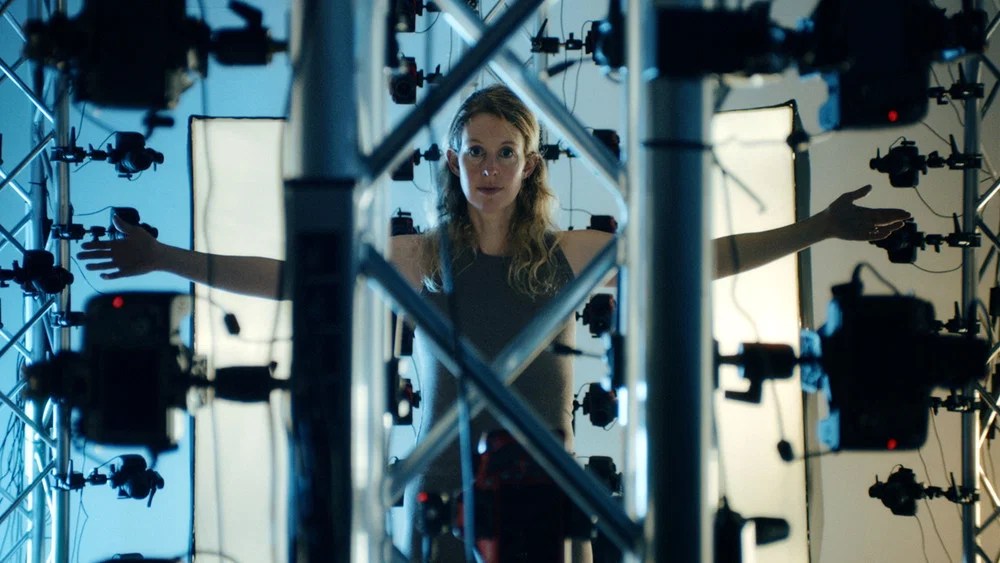
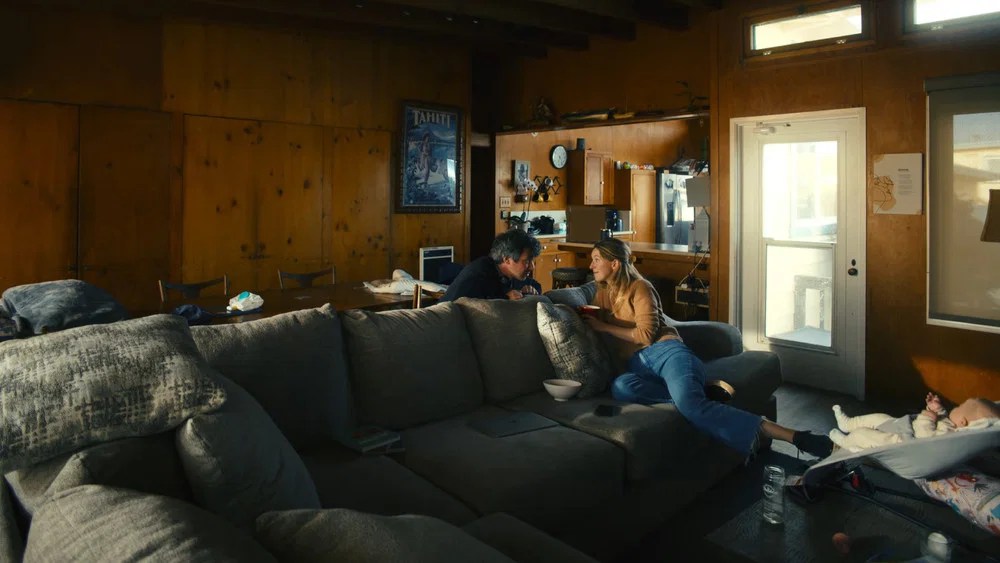
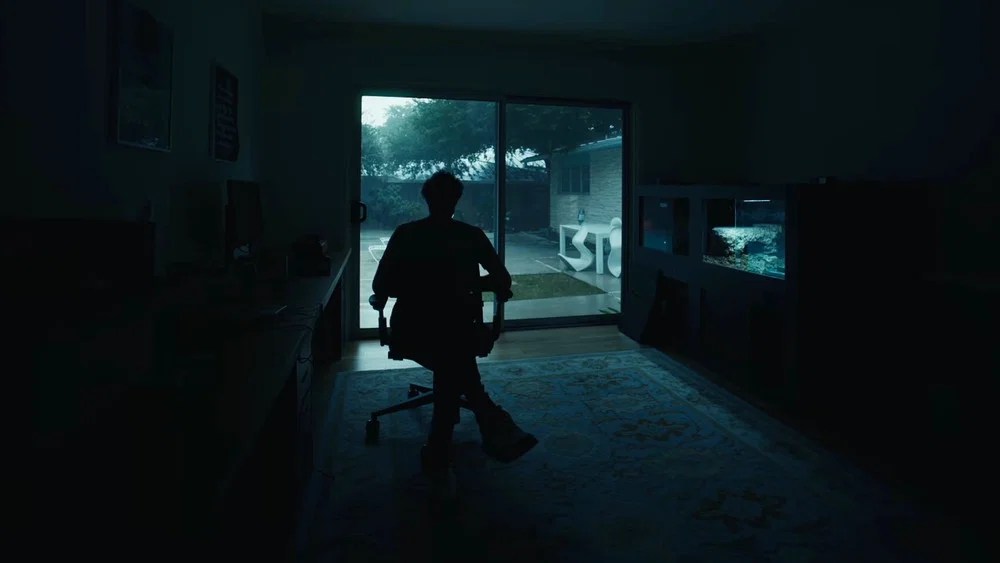
This constant push-and-pull tension between the three characters in the Holmes household makes for one of the most interesting dynamics in film so far this year. In between the warm wood-paneled interior of the Holmes household and the stark cold colors of the outside world is a weird purgatory where the truth somehow lies. Fielder is on an impossible mission, but so is Elizabeth Holmes. She’s trying to convince others that she is guiltless while still living in her own reality. Fielder is trying to uncover hidden layers of Holmes, but his willingness to let his guard down and give her the benefit of the doubt casts doubt on his impartiality. Suffice it to say, there’s enough paradox in this film to drive you slowly insane.
The problem with living in a post-truth society is that we don’t have to necessarily live in the same reality anymore; if enough things go wrong, we can just live in our reality where the rules are different for us. It can be a result of delusion, or it could just be a pragmatic strategy. Even stranger, it could be both. We consume enough material online that sometimes we prefer to live in these artificial realities where all we need is a simulation of a person. Sometimes the fictitious portrayal of a person is seemingly more real than the real thing. Or maybe you’re watching someone whisk eggs and someone takes it from them to show them the right method.
Ultimately, it doesn’t matter what is right. It’s only a matter of belief.

FURTHER THOUGHTS
- I love Lance Oppenheim’s dedication to making sure all of the colors are either incredibly warm or cold.
- I feel so bad for Elizabeth Holmes’s kids.
- I hope this wins more than Best Documentary Feature at the Academy Awards.



Leave a Reply