I had no idea films could be so tender right now.
All of a Sudden has been one of the most consistently critically acclaimed films of the year, and now I finally get why. Directed by Ryusuke Hamaguchi of Drive My Car fame, All of a Sudden is essentially a three-hour meditation on life, the future, and how we care for one each other.
In the Parisian suburbs, nursing home director Marie-Lou finds herself at a tough spot between her and her colleagues. She wants to try and implement a more patient-focused treatment plan called “Humanitude,” where her elderly residents are encouraged to move around and interact with caregivers, even at the risk of falling. However, the understaffed nurses and staffers are at the end of their rope, burnt out at the level of training they have to go through to work under a system that diminishes healthcare workers. One day, to escape her own burnout, Marie-Lou stumbles upon a play written by Mari, a Japanese playwright battling terminal cancer. After being profoundly moved by the performance, Marie-Lou and Mari find themselves working towards a solution to both their problems.
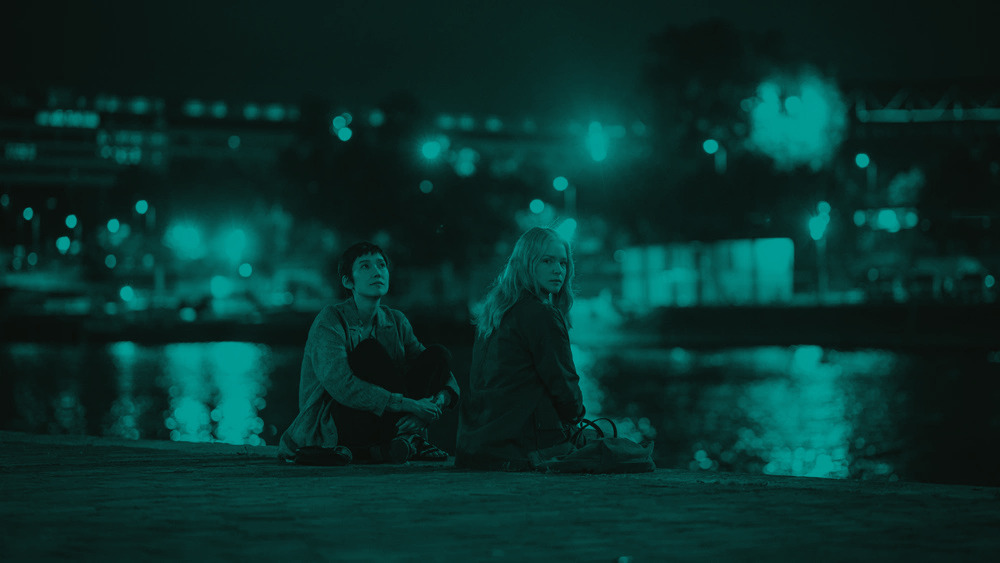
This film never ceased to be stunning. From the first opening shots of the nursing home, light fills every room. It’s there even when it’s dark outside. It’s a persistent theme that Marie-Lou and the other caregivers don’t get much sleep, but that doesn’t mean the blues that fill the dark rooms of the residents can’t still feel warm. We only get a few scenes in Paris outside of the nursing home, but every time we take a step out, we’re reminded of just how essential the care facility is. These will likely be the final place these elders will stay for the remainder of their days. Everything is brightly illuminated, the grass under their feet is soothing, and it seems as though the concept of a humane approach seems to be working.
But just because a person is healthy doesn’t mean they are living.
Marie-Lou and Mari find themselves trapped by a world that sees their respective careers–caretaking and artistry–as something that works under a system, not outside of it. Despite Marie-Lou working to get better wages for her disgruntled employees, since the center is for-profit, she can only advocate for so much. Mari wants to put on a production that speaks to her experience, but the French audience only wants to hear it in French, not in her mother tongue. In one striking scene, the two Maries find themselves working through the intricacies of the capitalist society they are subservient to. Nature is no longer the infinite resource the cities have. All of the inequality is spilling into the cities. Their work is not just an escape from the horrors of the world: it’s a reassurance that things will turn out okay, and that the Othered are looked after.
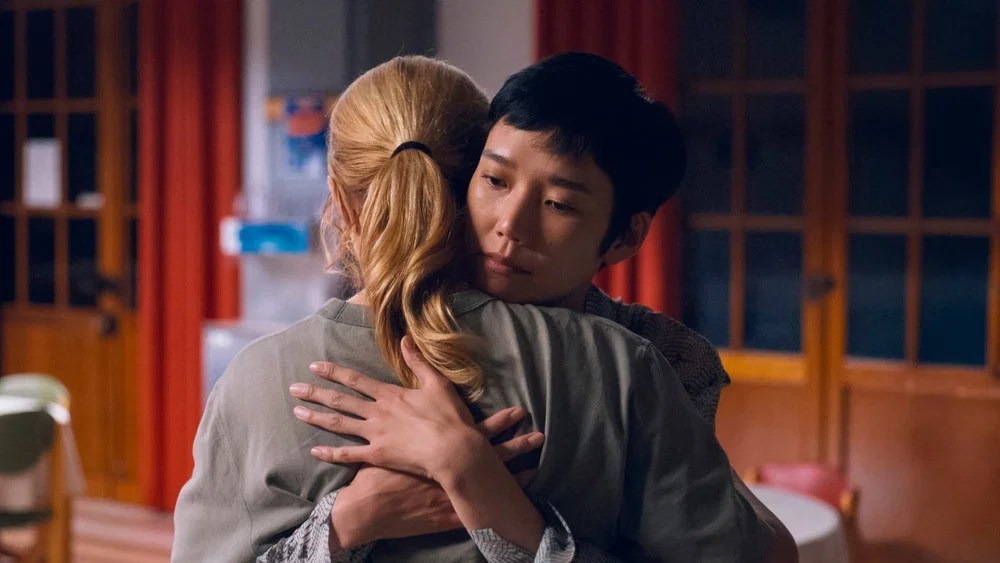
Most films like to take the subject of cancer as inherently a tragic one, but Mari’s story is anything but that. She takes control of the narrative, striking up a prolonged dialogue with Marie-Lou about thinking outside of the system rather than within it. Mari’s experience in philosophy means she is able to grasp the bigger picture, whereas Marie-Lou is more focused on the minute details. Rather than letting her disease consume her, Mari wants to live as much as she can. However, the fear still persists. When she hugs Marie-Lou to comfort her, the camera lingers on Mari’s face. She is capable of comforting others, but that doesn’t mean she is entirely capable of comforting herself. When she is gone, who will continue her work? There is still so much to be done.
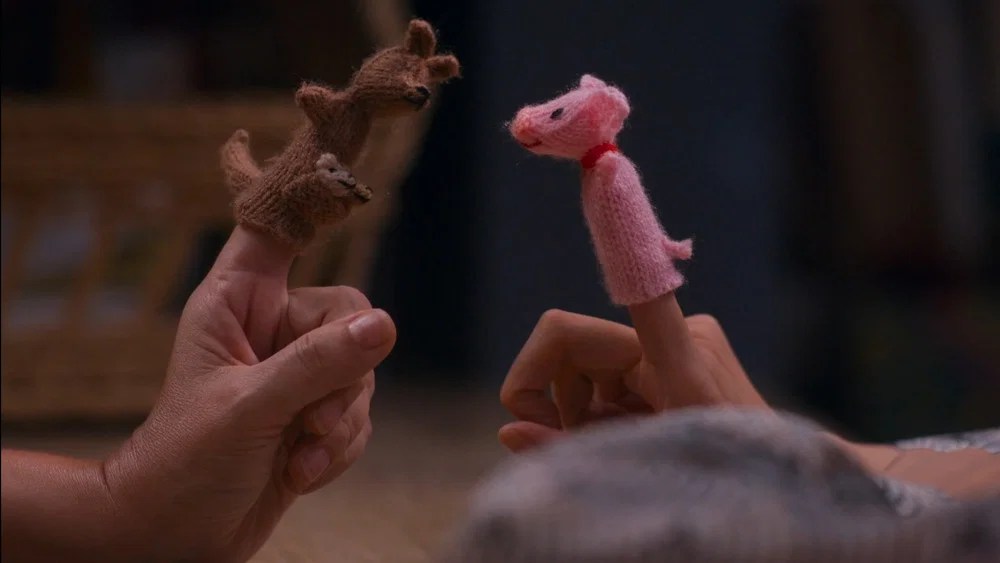
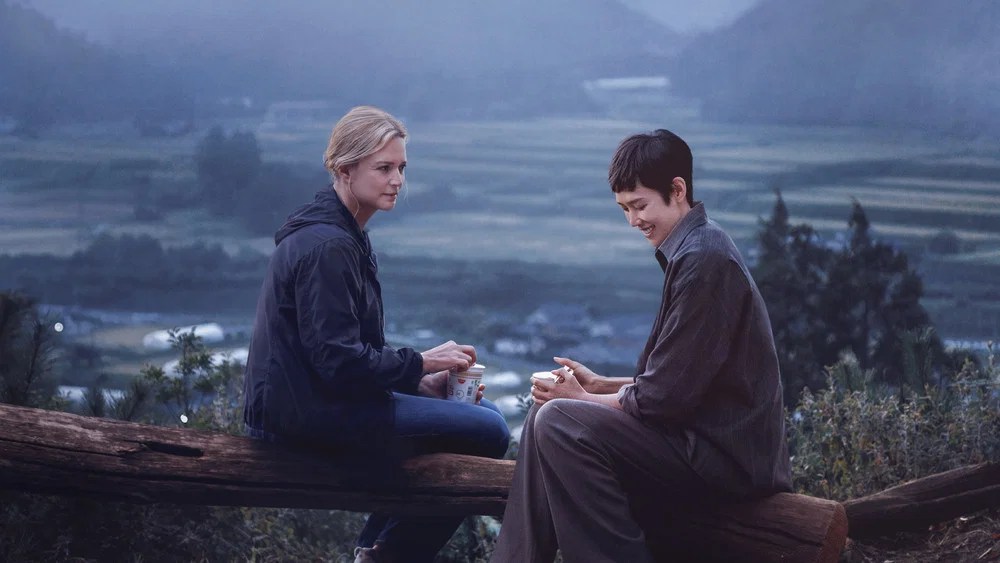
The performances of both Virginie Efira as Marie-Lou and Tao Okamoto as Mari are the reasons why All of a Sudden works. A lot of people hear the word “soulmates” and think of it in romantic terms, like you’ll marry your soulmate one day. But Hamaguchi takes the concept of a soulmate and transforms it. When someone is your soulmate, that doesn’t mean you’ll literally end up with them. Instead, Marie-Lou and Mari are intellectual soulmates, where their purposes in this world seem almost fated to intersect. They both fall in love with how the other sees the world. They guide each other through their worst moments. Although they come from different professional backgrounds, they trade positions at some point. Sometimes Marie-Lou finds herself a performer, guiding her residents through an exercise to help them resolve problems. Sometimes Mari is a caregiver, massaging the resident’s feet and bathing one of them at night. It’s a trading-places dynamic that’s played totally sincerely. These women are two halves of the same whole, but they’re irreplaceable.
But by far the biggest success of this film is its total faith in humanity and optimism. With rapidly aging populations and declining birth rates, it’s easy to scoff at the idea of a happy future. It’s even easier to abide by a glass-half-empty mentality. Ryusuke Hamaguchi proposes something different. If the systems that guide us try to grind us down into little more than means to an end, then what better way out than collective kindness and benevolence? The residents might have dementia, but they are capable of awareness and a different perception of the world around them. Instead of seeing time as a straight line, they approach time with a dotted line, going in many different directions. Even though reaching your 80s and 90s seems so far, we’ll all end up that age eventually. How we get there depends entirely on how we act towards each other in the present.
Yes, the arts and healthcare are drastically underfunded and understaffed. Yes, the world seems to be going madder by the day. Yes, it is easy to sleep into a nihilism and pessimism. Optimism seems increasingly radical. But if it’s so radical and our problems so entrenched, then what better solution could there be? Despite the long run-time, All of a Sudden will stick with you long after the credits role. I was incredibly blessed to see this, and I promise you will be too.
FURTHER THOUGHTS
- Bird shit has never been more poetic.
- Djibril is one of my favorite characters this past year. He has a jump scare in this but it’s so funny.
- Keep an eye on the head nurse Sophie. She’s an interesting lady.


Leave a Reply