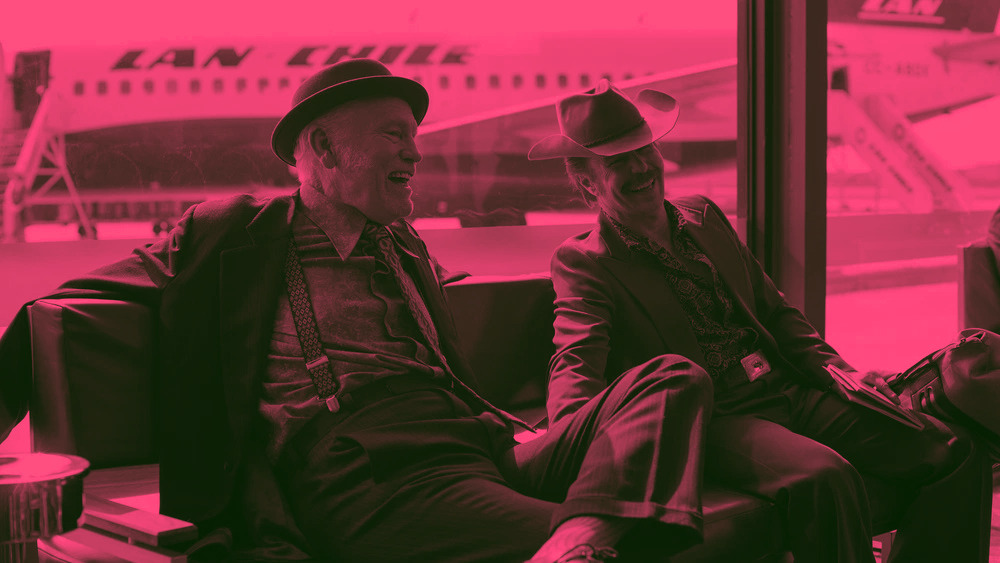
How do you tell someone the end is coming?
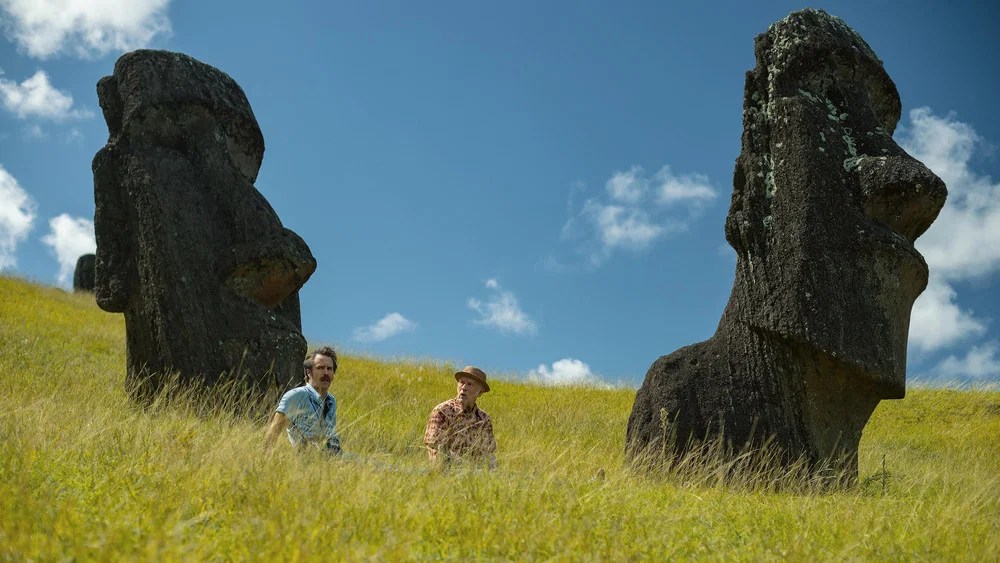
It’s not unusual for a Martin McDonagh film to be pessimistic, or to have pessimistic characters. The last film of his was The Banshees of Inisherin, a despairingly funny look at an old friendship abruptly meeting an end on a remote Irish island. Seeing as Wild Horse Nine is about two older men bickering on an island with their friendship on the rocks, it wouldn’t be too out of left field to compare the two. But while Banshees was unabashedly pessimistic, Wild Horse Nine offers something different.
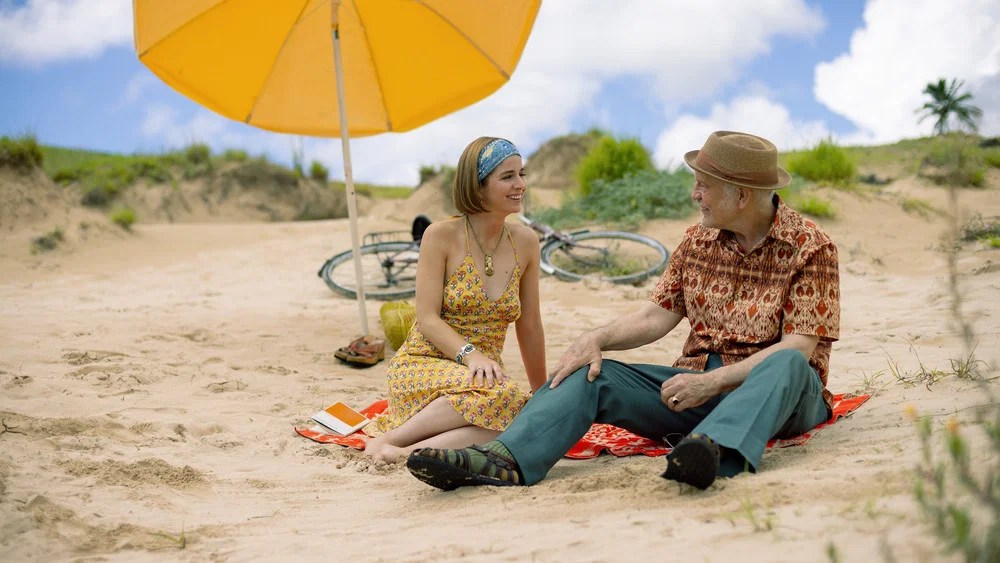
Chris and Lee, played by John Malkovich and Sam Rockwell, are two CIA agents vacationing on Easter Island in 1973. Unbeknownst to the rest of the public, Chile’s first democratically elected president is set to be unseated in a few months, courtesy of the CIA. Despite being told to keep a low profile, Chris flagrantly displays disregard for both the CIA and its rules on classified information.
Sounds like a blast!
Genuinely though, this film was great. I appreciate filmmakers like Martin McDonagh that still treat film as another version of the stage. Dialogue-laden films have gone in lieu of spectacle driven films nowadays, which kind of sucks. After all, we don’t go through life fighting gods and monsters everyday. Sometimes, we just have conversations with our pets and shoot the shit with our friends. Sometimes you can find the most profound meanings in some of the most meaningless interactions.
This comes in spades in Wild Horse Nine. Chris and Lee bicker like an old married couple, but in between each line of contempt, there’s a sense of genuine love and affection between the two men. It’s just that they’re both CIA agents, which means to a certain extent the two men will never come to know the full other without growing suspicious.
Coming from different generations, Chris has seen so much more than Lee. He’s a stalwart of the CIA, being there from the 1950s onward. He’s even got the wide sideburns that make him look like Sam the Eagle muppet came to life. But underneath all that bravado he’s an old man who knows he’s on his way out. His pessimism doesn’t just come from being a grumpy old man, but rather from seeing so much destruction brought about by his hands.
Lee, on the other hand, seems to have it all. He’s married to Parker Posey and has two teenage kids, and while Chris sees his role in the CIA as his dark legacy, for Lee, it’s just a job. If anything, he’s the pinnacle CIA agent. But there’s still so much he doesn’t understand, and it makes for a compelling father-son dynamic between the two men.
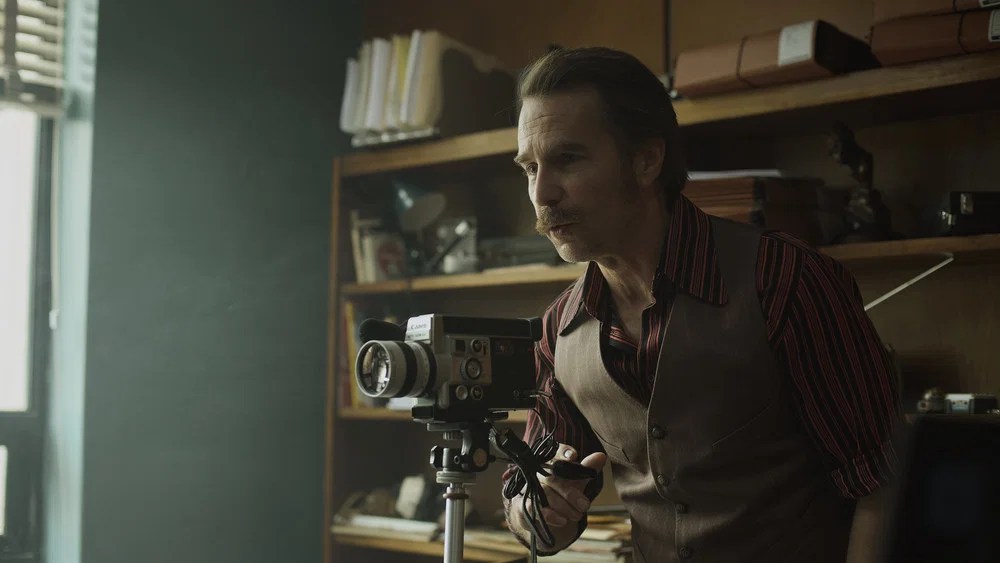
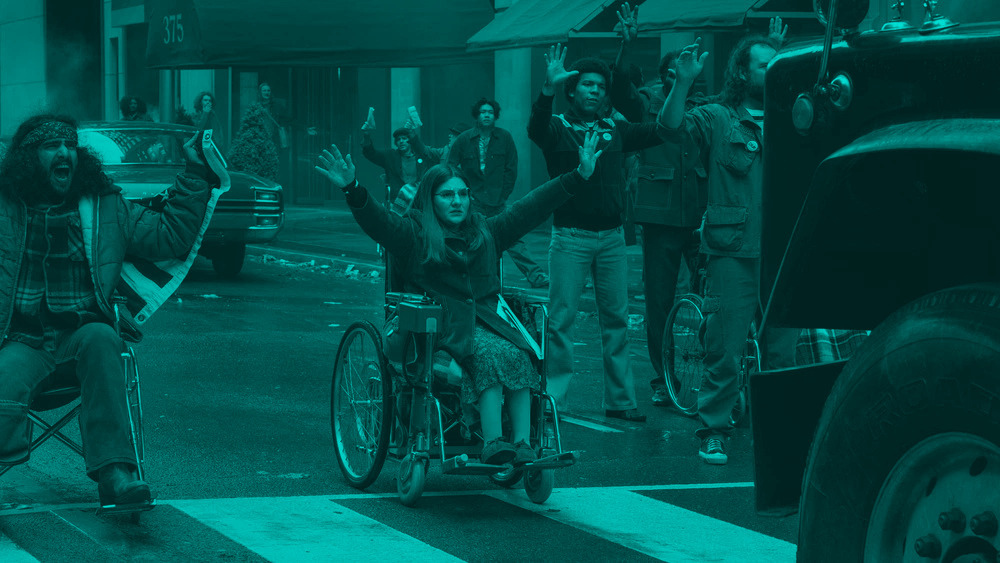
This film uses two unique framing devices that utterly change how you view both the landscape and the relationship between Chris and Lee. We open the film with Super 8 footage of the Chilean socialist movement, as young people take to the streets with a fervent optimism for the future. When we are introduced to Chris and Lee, the latter is filming the former through the same device. This time, it’s for work as he formally interviews Chris about his career at the CIA. As we move to Easter Island, it takes the form of a time capsule, capturing the last peaceful moments in the two men’s lives.
Chris, meanwhile, is busy “writing” his memoirs. He records his thoughts into a recorder, turning the rambling thoughts of a dementia-riddled man into internal monologues. He muses about the futility of his own life, whether or not he’ll get into heaven, and about the wild horses on the island. Taken out of context, it would be incoherent words coming from someone who’s on his way out. However, Chris is a CIA agent with decades of experience and classified intel. What could be personal for him on the tapes could be his end.
The collision course between the two men is drawn out deliciously. John Malkovich and Sam Rockwell are dynamite onscreen, whipping out one-liners and monologues like it’s second nature to them. John Malkovich is by far the strongest of the cast. You can feel every regret in each sentence he utters, and when there’s quieter moments, he lets you down gently, like a folk singer singing his swan song. He rarely raises his voice, but there’s weight behind every word, and every menace behind his eyes.
Wild Horse Nine is a film you can look at through many different angles, and I feel as though I’ve barely scratched the surface with each stone I turn over. Is it political or no? A statement on male friendship? About mortality? About life? Turns out, it’s about all of these things and more.
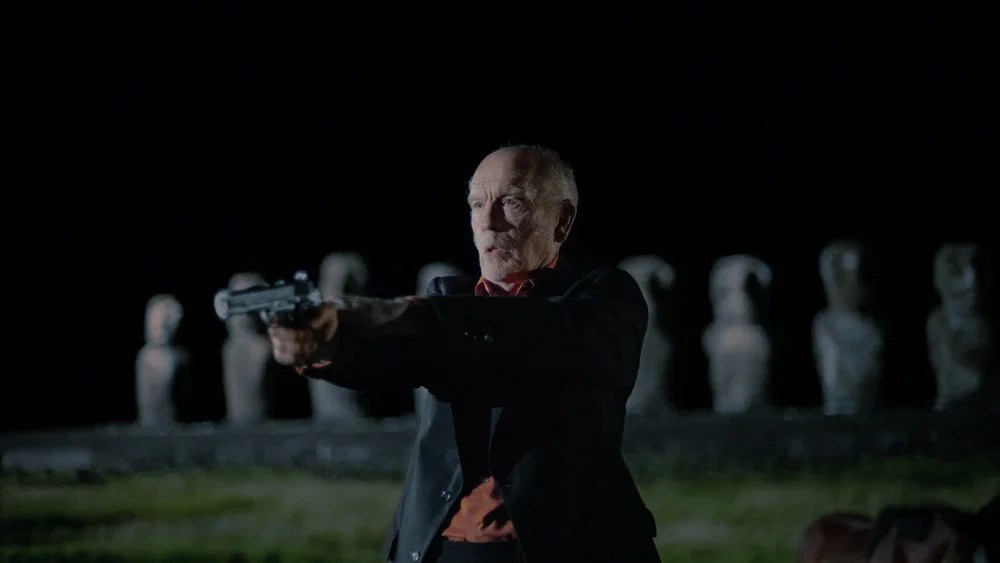
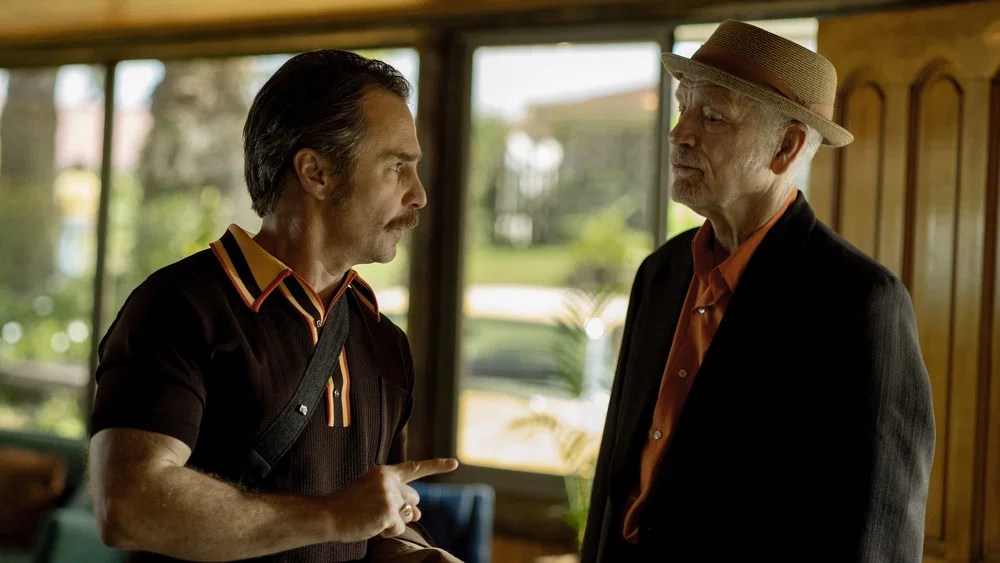
FURTHER THOUGHTS
- John Malkovich kills it as a horse girl.
- Those wild horses filled the void left by Jenny the donkey in The Banshees of Inisherin.
- Steve Buscemi just has a knack for playing devious political maniacs, and he’s so damn good at it. Seriously, watch The Death of Stalin, and come back and argue with the wall.



Leave a Reply