Chamber dramas? Not my cup of tea. Directed by the guy who made Él? Hell yeah.
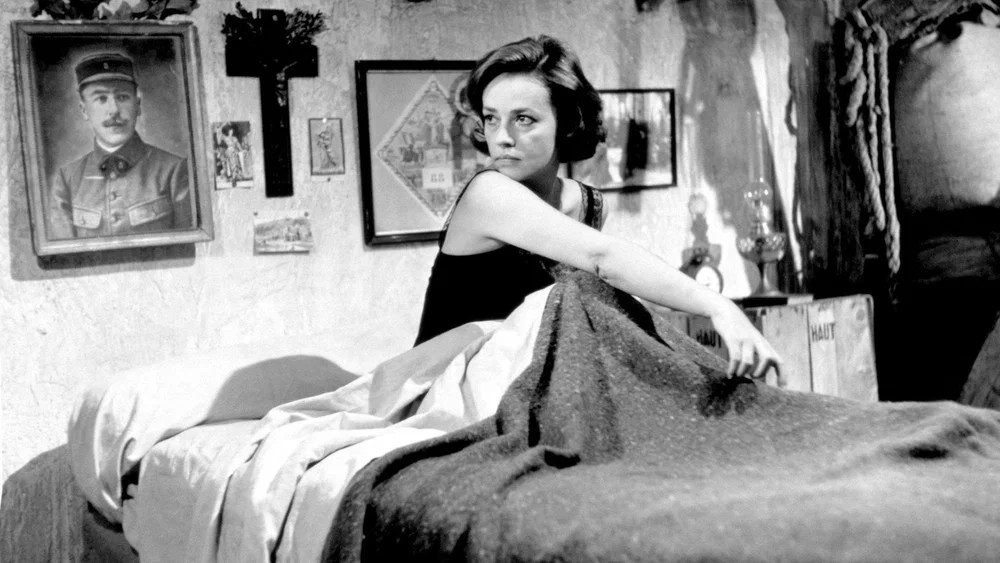
Diary of a Chambermaid was the first film I saw as part of SBIFF’s annual French Wave Festival, which expanded to include more than 20 films across two weeks. To my dismay, my parents saw Contempt while I was at work, so I decided to get back at them by watching an excellent film on my own. As it turns out, that was the right call.
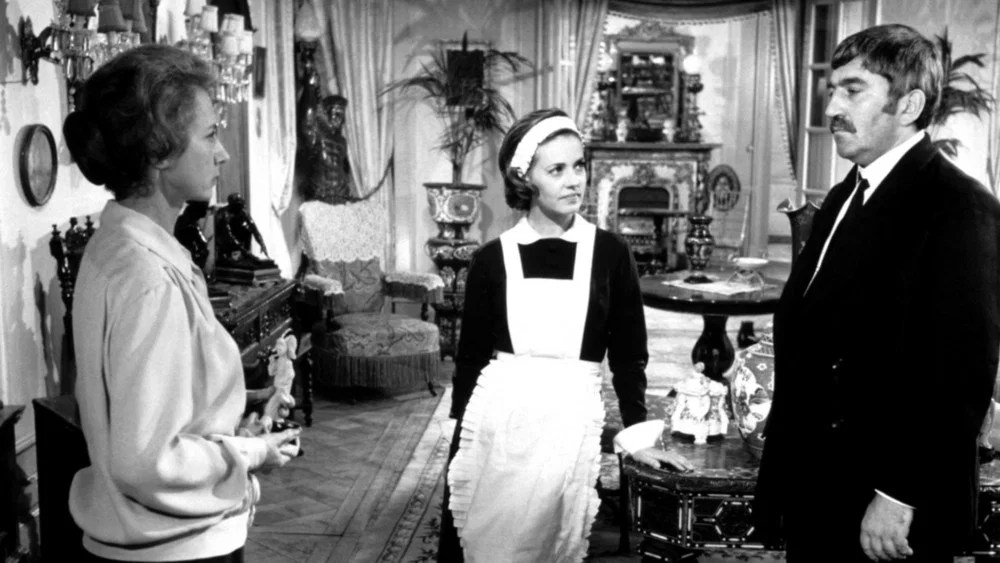
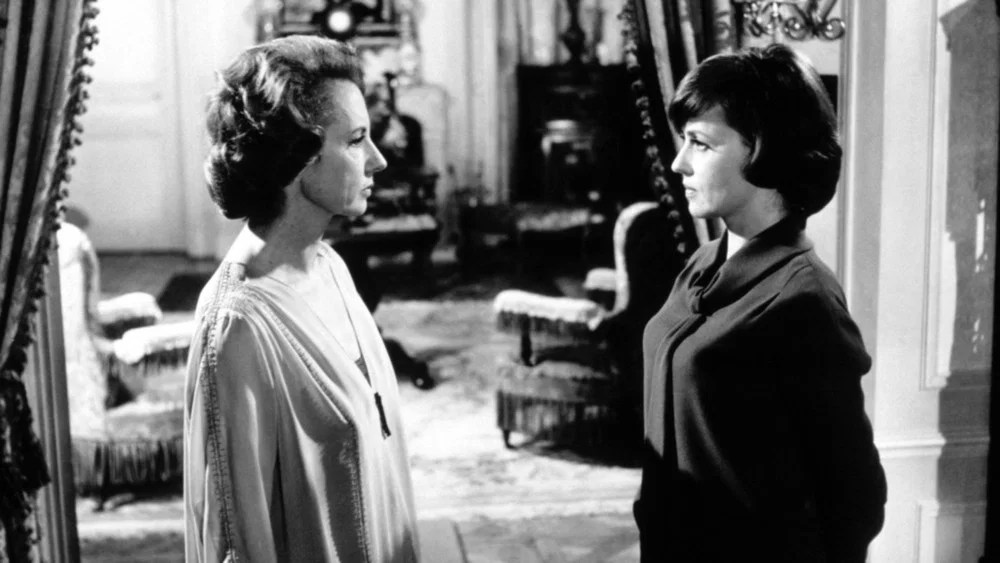
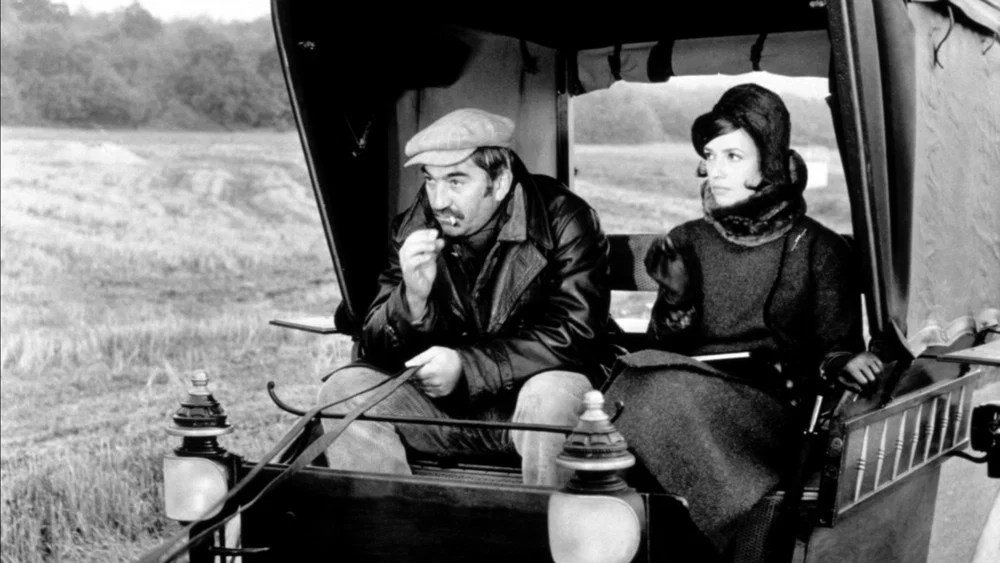
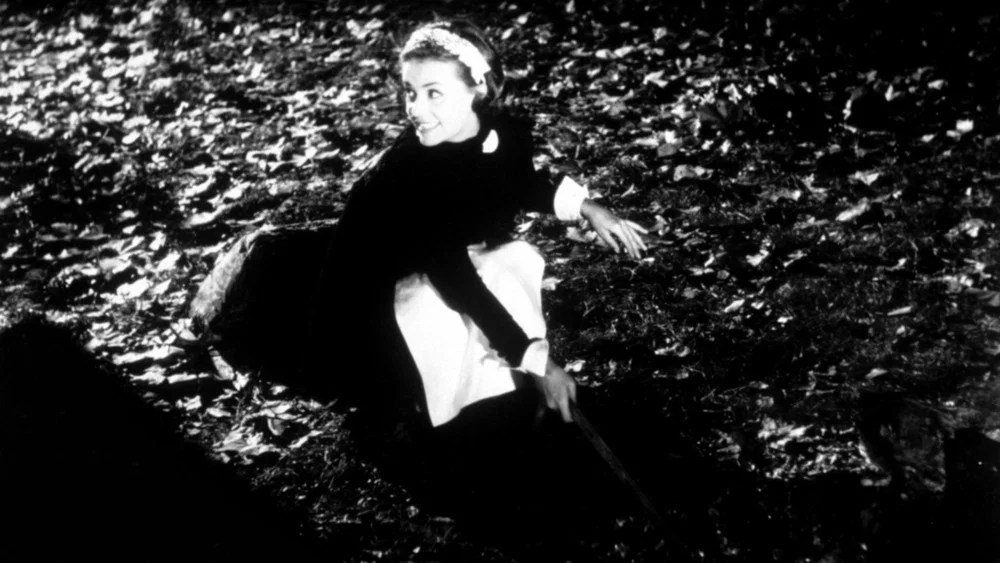
Set in the 1930s at a bourgeois estate, the film follows Celestine, a Parisian woman who goes to work as a chambermaid for a family more perverse than it initially seems. The wife is a control freak, but she’s also willing to overlook her husband’s affairs. Her husband has an affinity for young women of lower economic standing. The aging patriarch has a foot fetish. And also, the groundskeeper has a disturbing fondness for a young local girl.
Suffice it to say, this film goes to some dark places.
For those who are looking forward to Luis Buñuel’s traditional surrealism, this film is not quite that. But it’s also not not Buñuel. Where his visual style is subdued his satirical look at the farcical and dangerous nature of bourgeois life is accentuated. They like to present themselves as all put together and ahead of everyone else, but at the same time they have the same base desires as the lowest individual.
And the people who work for them are also not without perversions of their own. Groundskeeper Joseph is a provocateur for the growing fascist movement in 1930s France, and he is more than happy to leer at the young girl at their dinner table while dinner is about to be served. Like Buñuel’s Viridiana, life at the bottom is not necessarily more virtuous than life at the top. Regardless of wealth and social status, humans can be some truly nasty creatures.
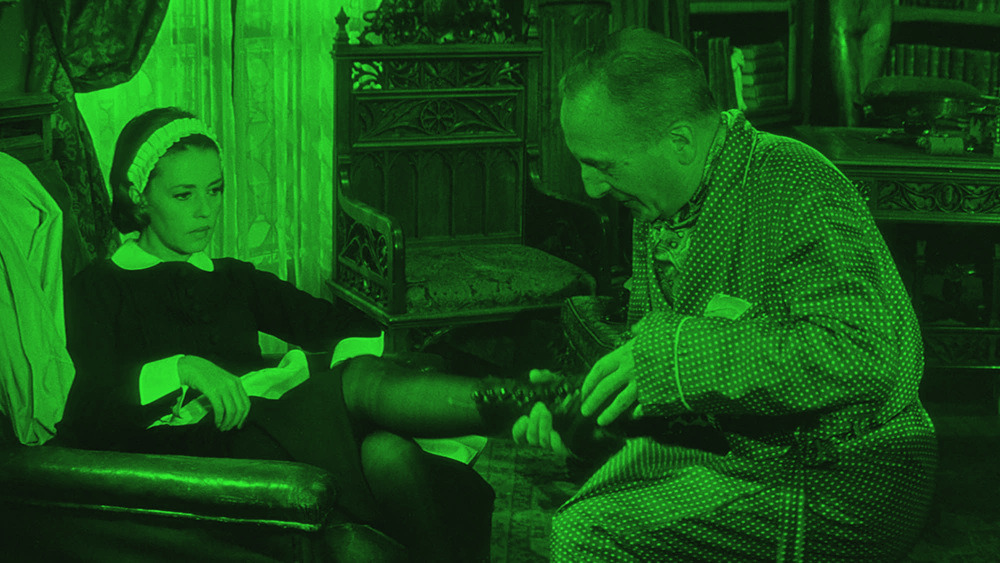
The scenes inside the manor are the most fascinating to me. Buñuel does a great job at deconstructing the psychology behind the perversions of the inhabitants, mostly through the eyes of Celestine, played by an alluring Jeanne Moreau. Take the patriarch Monsieur Rabour. At first, his overall vibe just seems creepy enough, with him requesting that Celestine read to him while he strokes her calves. Then he asks her to put on an old pair of working boots he used to wear, and then the camera focuses on her feet as she shows off the shoes. This isn’t your normal foot fetish, though.
The true intended turn-on is to see a self-assured yet compliant young woman wear the shoes of a wealthy man that have been worn down. By having a young woman wear them, they are given new life. The true fetish is not just in the blemished femininity, but in the power it begets.
Furthermore, the psychology of the inhabitant’s fetishes also extend to their fascist sympathies. Diary of a Chambermaid is full of the bodies of women being used to further the cause of fascism. While fascism posits that an Other is going to corrupt the bodies and minds of fragile women, it is actually the fascists themselves that punish women for being confident and then force them into subservient roles. The men in the house see Celestine as an object of desire, and not as an actual person. They don’t see who she is really is, but they see who they want to see. However, this opens a blind spot. When Celestine is aware that they are looking, she does everything in her power to turn the tables.
The most damning part of satire isn’t in how reality is turned farcical, but in how the farcical nature of reality reveals the most horrible truths. Life is often stranger than fiction. What seemed impossible ten years ago is practically commonplace in the present day. In the blink of an eye, what seemed creepy in the 1930s is so normalized today that we would shake our heads and say “Oh, you have no idea.” But it’s a cycle. We all laugh and shake our heads at how stupid we were back then.
Yet we are stupid still.
FURTHER THOUGHTS
- For the record, I’m not saying you’ll become a fascist if you have a foot fetish, but it’s for sure a red flag.
- Jeanne Moreau is like a black cat in this film. She’s sly, mercurial, yet lethal as hell. I love her.
- The only thing that would have made this film better is if they had a greenhouse in the backyard. That would have made it even creepier!




Leave a Reply