
I am not sure that what I just saw was a horror film.

It was a love story.
We’re All Going To The World’s Fair had an Internet challenge. The next it was I Saw The TV Glow with a cult TV show from the early aughts. Now it’s the 80s slasher genre that Jane Schoenbrun is reimagining. And like their other three films, Schoenbrun has managed to reframe our cultural digest for a 21st century perspective that is as flawed as it is surprisingly ingenious.
Teenage Sex and Death at Camp Miasma is probably the most conventional work that Jane Schoenbrun has done. You can see where all of the money went, whether it’s in the gorgeous set design or the dedication to nailing the 80s aesthetic of slasher films, down to the 70s-inspired clothing and the film-like texture. It’s nice to see indie directors be given larger budgets after years of working with shoestring budgets, but at the same time I left the film wanting more out of it.
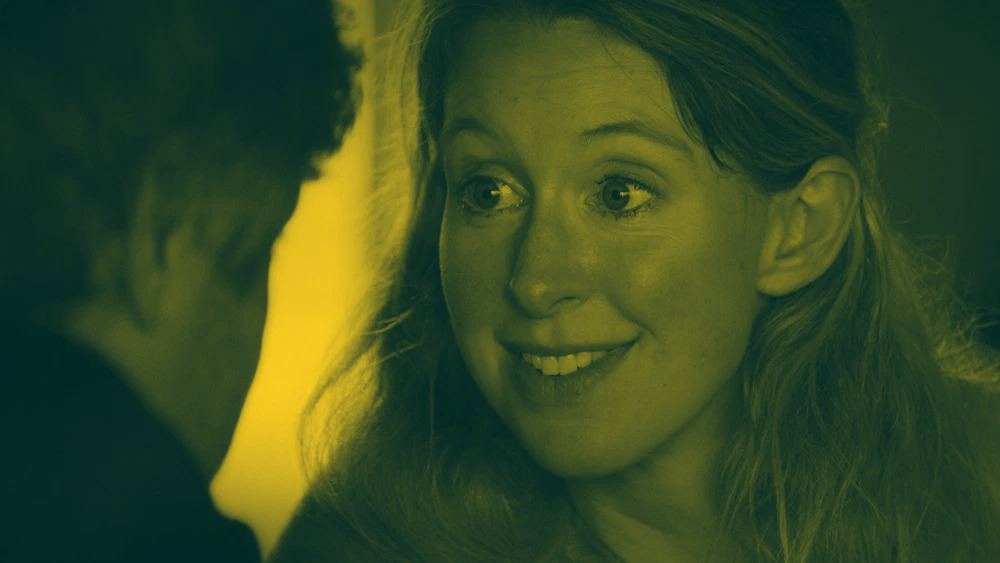
This film follows an indie filmmaker played by Hannah Einbinder who’s been attached to remake a long-dormant slasher franchise, much to her chagrin and fascination. Einbinder’s Kris had her gay awakening to the Camp Miasma franchise, where a reflection of the killer in the final girl’s eye during sex unlocked something inside her. She’s always been fascinated by that image, desperate to recapture that same feeling. Disappointed in her current career and social choices, Kris is determined to make this horror reboot mean something, considering this film jumpstarted her journey.
She meets the actress who played the final girl in the first Camp Miasma film, played by Gillian Anderson with magnificent flair and charisma. Billy Presley is a reclusive figure, living on the recreated campgrounds from the first movie and who’s staunchly refused to return to any sequels. Billy strongly rejects any attempt by Kris to make an academic judgment on the film and instead encourages her to look at the film through a sensual perspective. Instead of looking for deeper themes, look for “flesh and fluids.”
Instead of fear being the driving force behind this film, it’s lust. Instead of having the audience fall in love with Billy, it’s the audience falling in love with the idea of being hunted. As Kris’s perceptions of reality starts to blur the closer they get involved with Billy, Schoenbrun blows past any moral quandaries and plunges us into the fantasy. This film is unabashedly horny, for better and for worse. Instead of having us question the social implications of slasher films, Schoenbrun gives us a moment to surrender to the orgasmic joy of watching someone be killed. In a way, we all want to be.
But this film didn’t do it for me.
For all the gleeful abandon which Schoenbrun directs the gory kills and the 80s homages, there’s a lot of ideas in this film that don’t always come together. It’s a shame, because there’s a lot of ideas to chew on, whether it’s the connection the characters feel with the famed Camp Miasma serial killer Little Death, to the mercurial nature of Billy, to the intergenerational differences of our two queer characters. But in some instances it felt like I was watching a film where the director was placing in jokes as a placeholder for more important plot points and thematic threads. For a director who’s known for using media to bend the line between reality and fantasy, I was expecting more.
The disappointment is even more palpable considering the subject material the creators are exploring. The 80s slasher boom was an explosive cultural moment, enraging conservative moviegoing audiences and jump-starting a new horror genre that is still riding high today. And horror is a great way to examine these threads by weaving us into these uncomfortable truths through an uncomfortable viewing experiences. Paradoxically, the only way to critically analyze a piece of media is by confronting and breaking down something primal you experience. It can seem counterintuitive to lean into your emotions when you watch something, but it’s only when you lean into them that you realize what the film is trying to get you to do. Kris leans into her emotions for the film, and it’s something she must overcome and dissect to reach her character development.
As a lover of I Saw The TV Glow, I wish Schoenbrun could have made this film more firmly horror. There’s definitely a lot to like about this film. The sexual chemistry between Kris and Billy is delicious. Gillian Anderson is a delight onscreen. The VHS avant-garde aesthetic is still there. Schoenbrun’s love for trashy horror movies shine through. But I didn’t feel shocked or uncomfortable watching this. Did I feel excited? Yes.
But the conclusion left me wanting.


FURTHER THOUGHTS
- Seeing that Brad Pitt was an executive producer on this made me do a double take in theaters.
- There’s an erotic eating sequence here that made my Substance-loving heart squeal.
- The end credits is exquisitely well done.


Leave a Reply