
Never has a back patio been more poignant.
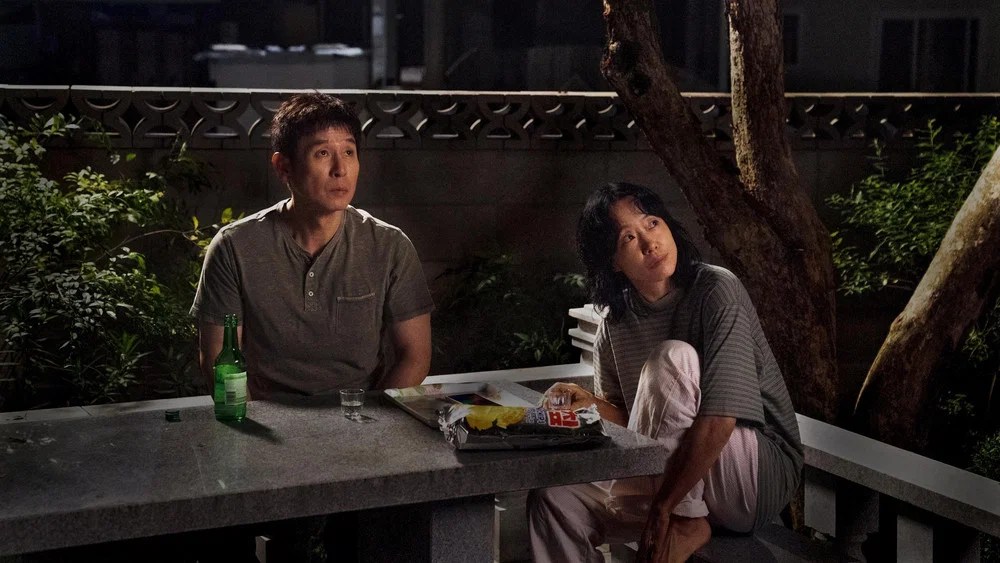
I’ve been excited to see Possible Love since it won a special jury prize at Venice a few weeks ago. I’ve been trying to get into contemporary South Korean films for a while now, and this was a great adventure to see at Alice Tully Hall. Not only was it a visual feast, but it’s a thematic lasagna.
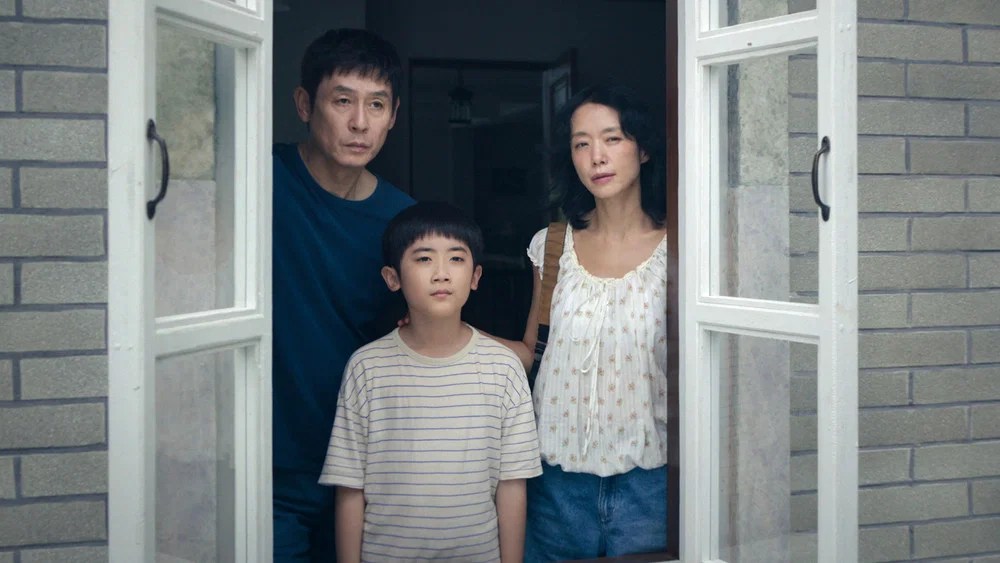
When documentary filmmaker Ye-ji meets struggling couple Mi-ok and Ho-seok, she doesn’t know she and her spouse Sang-wook are about to embark on an odyssey. Mi-ok and Ho-seok are going through a rough patch in their marriage. Ho-seok was laid off from his factory job, and after a brutal confrontation at a strike, he was left severely disillusioned and without a clear sense of direction. Worse, he’s been bottling up his emotions and lashing out. Although he strongly rejects any interviews from Ye-ji, Mi-ok jumps at the opportunity to tell their story. However, the class barrier separating the two couples is insurmountable, as well as the media barrier delineating who is being surveyed.
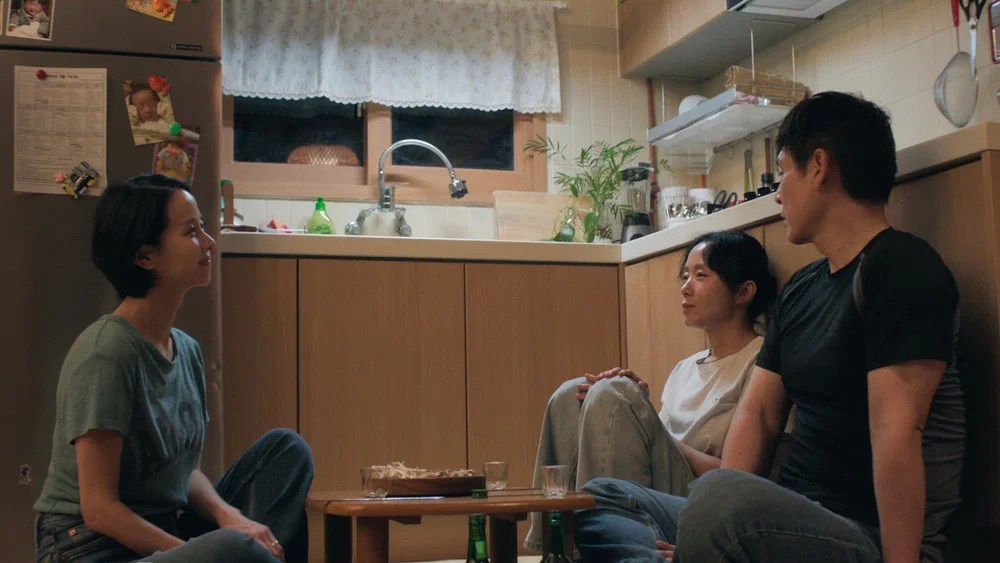
I’ve never seen any K-dramas, but this felt like one. There’s definitely some melodrama with a lot of testy relationship dynamics, but they never feel ripped from a soap opera. As the two couples interact, you get a sense that all these characters are desperate to get rid of the protective barriers they’ve put around themselves, albeit with some hesitancy. Mi-ok is enthusiastic to integrate Ye-ji and her husband into her daily life, but Ho-seok and their son Cheol are more put off. It’s not that they don’t want to tell their story, but it’s another thing entirely to have some point a camera at your face and interrogate you.
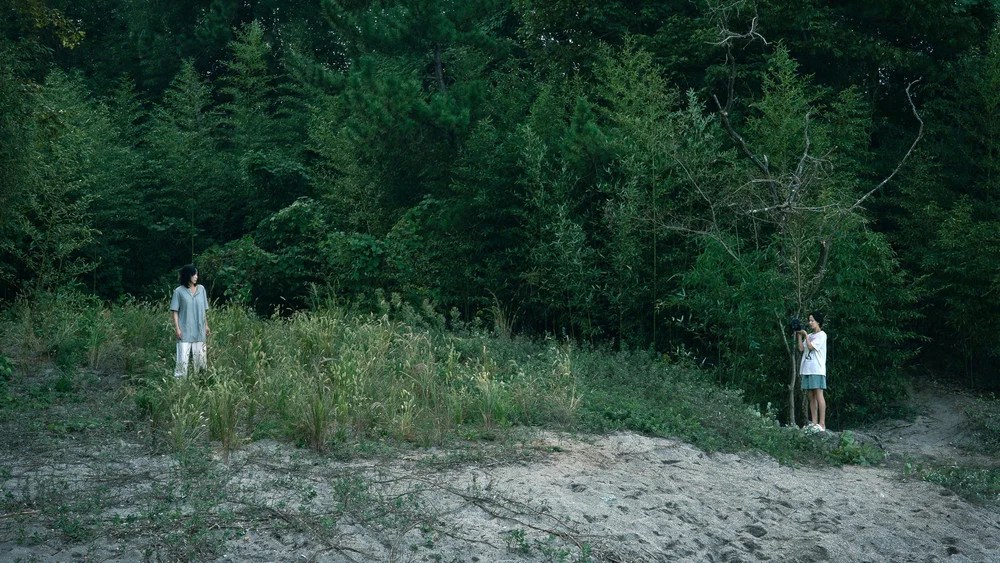
The relationship dramas at the center of this story also lead Lee Chang-dong to investigate the ethical implications of documentary filmmaking, one of the more interesting areas Possible Love explores. As an independent documentarian, Ye-ji isn’t doing this project for the money, but more out of a sense of curiosity and apparent empathy for her subjects. She tries to establish a rapport with Mi-ok and her family, but she’s still in a position of power. At numerous points, the camera cuts to Ye-ji standing in the corner like a horror villain with a camera in her hand, interrupting moments some would prefer to be private. There’s undoubtedly some humor to be found in these interruptions, but in this humor lies a sense of distress. How many private moments can Mi-ok’s family have without Ye-ji’s curiosity getting the better of her?
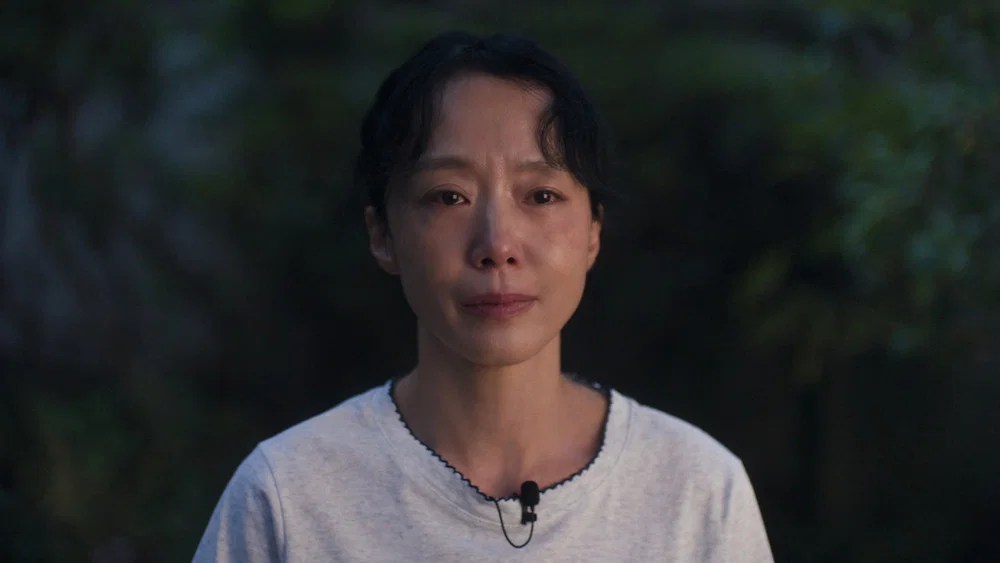
This filmic invasion happens most egregiously with Ho-seok. He’s the most stoic figure in the story who also happens to be the most emotionally fragile character. His interview scenes feel more like witness testimonies at a trial. Even though he’s supposed to be the “central character” in Ye-ji’s documentary, when he opens his mouth it feels like his body is physically fighting to get the words out. This isn’t a man trying to recall a memory–this is a man bearing his soul.
There’s a lot of soul-bearing in Possible Love, but it never feels overdramatic. In fact, it’s very subtle. It’s most apparent with Mi-ok, but even after she’s done explaining what her family went through in the strike, there’s clear she has hidden desires of her own to be unburdened from the troubles she and her husband face. They were essentially high school sweethearts, but how do you keep that love alive when you’ve been through so much? They’re not 16 anymore. The same goes for Ye-ji and Sang-wook, who, while they have less screen time as a couple, do operate more on a professional basis than on an emotional and sensual one.
The class distinctions between the two couples are yet another roadblock for the characters to transcend. Ye-ji and Sang-wook are a lovely and accommodating couple, but Sang-wook reminds his wife that as much as she wants to befriend her subjects for her documentary, she can’t truly understand what it’s like to be laid off. In a scene at a bar, Ye-ji tries to make the connection that her father was a laborer because he worked at a cleaner’s. But Ho-seok worked at a factory, where being laid off was a matter of life and death. Cleaners didn’t get laid off so the company could restructure and be sold off for a high price. Cleaners don’t necessarily have to strike. Cleaners don’t get beaten up the police. It’s an attempt at empathy, but it comes off as insensitive and almost casually cruel.
For an almost-three hour film, Possible Love takes its time, but it never takes up too much of it. Lee Chang-dong lets the key moments sit, but he also knows that each piece has a part to play. Normally with three-hour movies I can get antsy waiting for the next thing to happen. It’s one of the main problems I had with The Odyssey. The set pieces were great–then it was just a matter of waiting for the next one. But with Possible Love, I was clued in to every subtle expression, every trick of the camera, every clever flashback. Each shot felt intentional, like a general calculating his battle plan. When the final explosions came, I was awed by the execution.
When I was talking to some of the attendees after the screening, they had a smattering of opinions that conflicted with mine, but the one thing we all could agree on was that we had just witnessed one of the finest films of this festival season. And it’s just gotten started! Don’t be deterred by its length. Possible Love is the film you are going to remember for a long time.
FURTHER THOUGHTS
- Blue is the best.
- Nothing will get you married quicker in your teens than your crush performing a breakdance routine for you.
- I don’t know why, but falling asleep under a mosquito net sounds oddly comforting.



Leave a comment