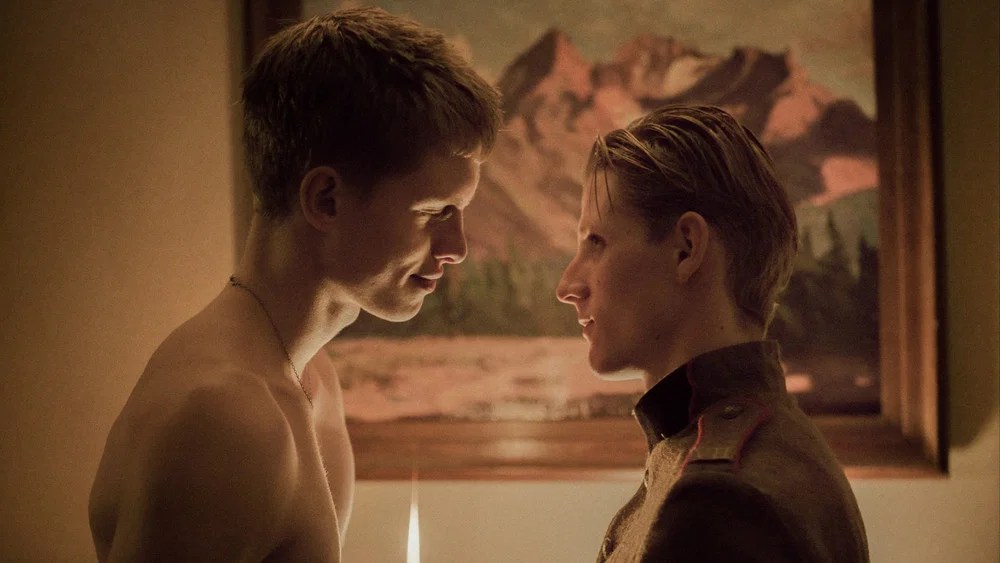
One of the most fascinating periods I’ve learned about was how WWI directly led in part to the rise of the modern gay rights movement. Amidst all the brutality of trench warfare across Europe, men found themselves longing for the comfort of a woman, and realized they could find the same love and tenderness from the other soldiers. In Coward, this exploration of love against the backdrop of carnage is the driving force that binds the two lovers together.
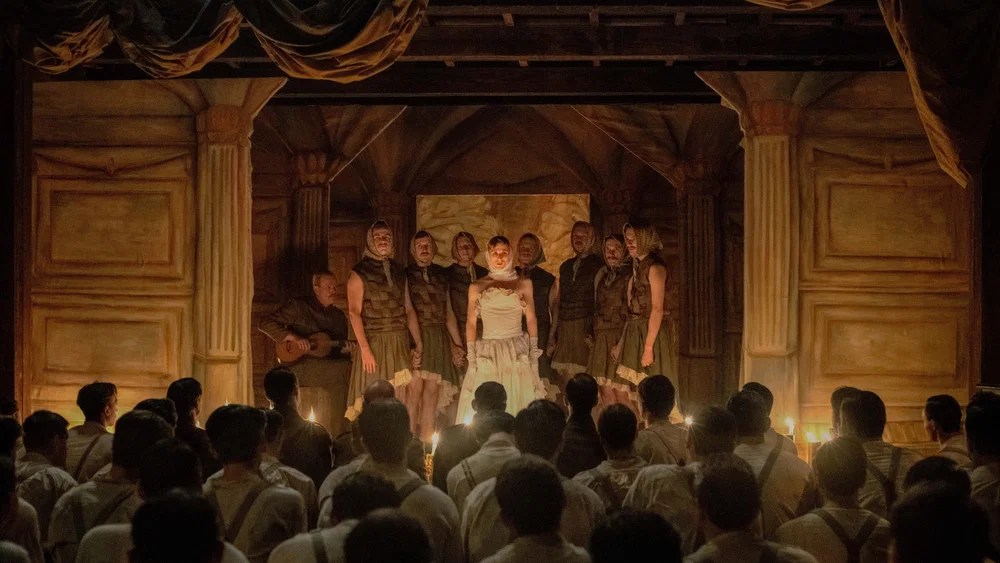
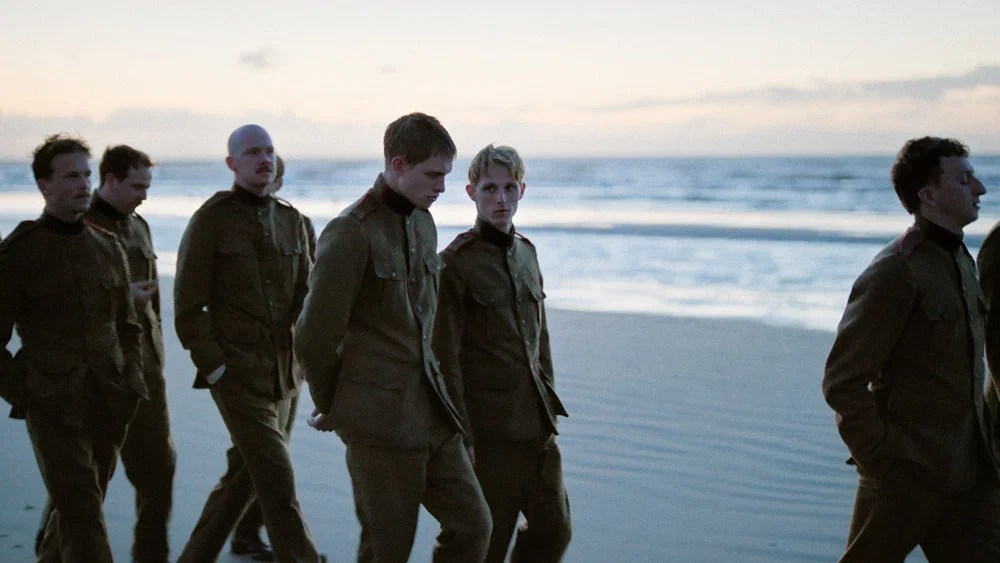
Emmanuel Macchia (in his debut role) and Valentin Campagne respectively play Francis and Pierre, two Belgian soldiers who are mobilized to help fight in the trenches in WWI. They’re constantly being rotated from the harsh muddy and bloody terrain of the battlefield to the apparently idyllic countryside, marred only by the sound of bombing miles away. After disposing of dead bodies and witnessing the horrors of war firsthand, the two decide to help put on a theatre production to help boost morale among their comrades. They might be going through hell, but they’re all going through hell together.
Director Lukas Dhont said during the Cinema Society Q&A with Roger Durling that during his intense research of soldiers’ journals during this period, he found a surprising amount of tenderness hidden in the testimonials. Even though these men were surrounded by death on a daily basis, they comforted themselves in the arms of men who reminded them of the women at home. He recounted one such instance where one soldier was the de facto “mother” of the entrenched soldiers, giving them a gentle kiss goodnight as they went to sleep.
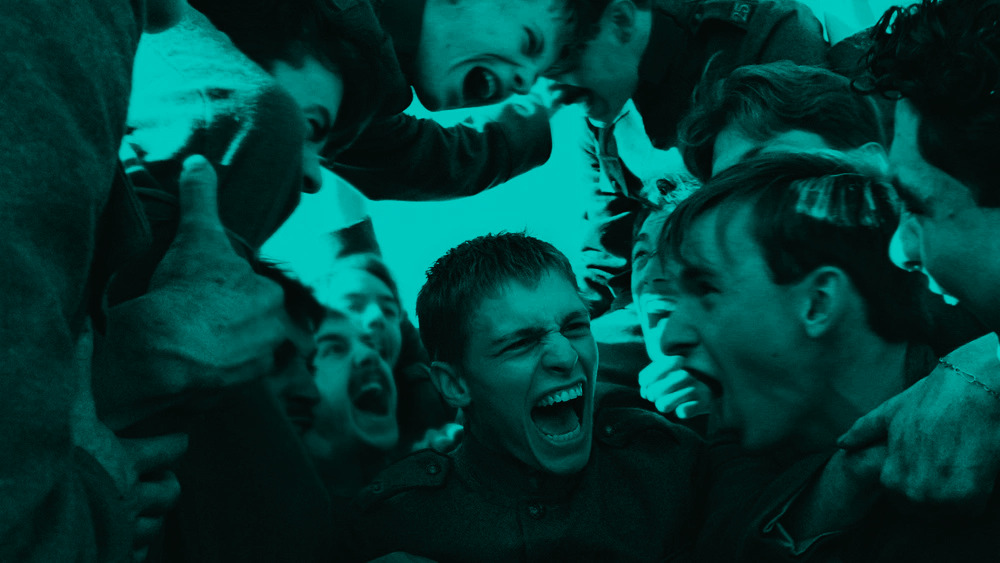
Pierre and Francis’s relationship reflects this, but also counteracts this as well. When Pierre first meets Francis, it’s part of an over-the-top joke against a fellow soldier, where Francis acts the part of his pregnant wife giving birth to their child born ten days before their friend was deployed. Despite all the friends egging on the diabolical nature of the prank, Francis fully commits, leaning into the screaming, red-in-the-face tumult of the “laboring” experience. When Pierre sees him for the first time in this prank, he finds himself both amused and enchanted. Francis is deep into the joke, but he’s sincere in his emotion.
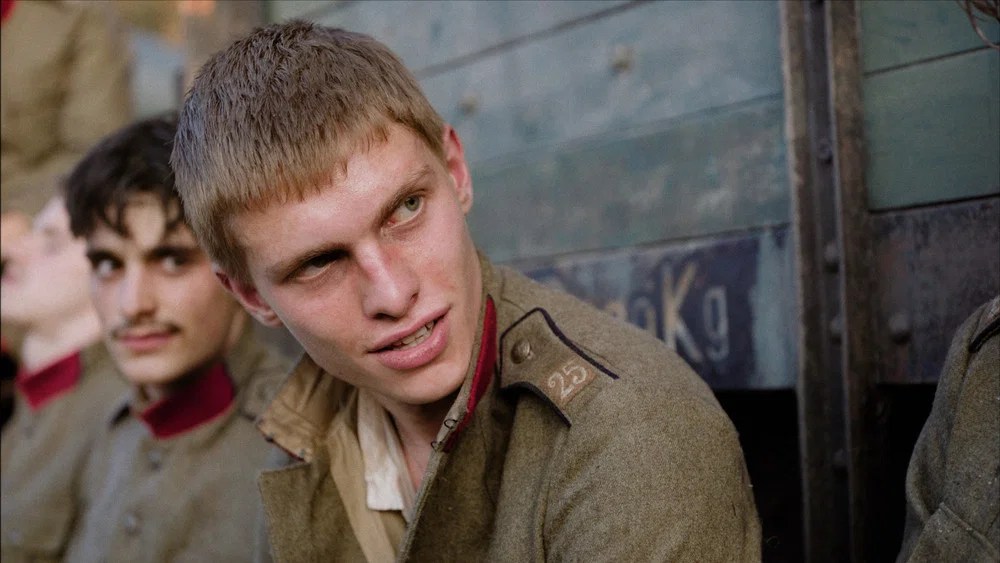
When Pierre starts the film, he’s quick to go along with the mentality of the crowd. Whether they’re crowing propaganda songs on the train or tormenting German prisoners of war, Pierre finds himself reluctantly going on with the rigid masculinity of the camp. In reality, the war is tearing at his very being. With Francis, he finds someone who feels things as deeply as he does.
What’s truly interesting about Coward is how it seems to lose itself in the poetry of performing before sharply pulling back the curtain. Lukas Dhont said he made it a mission to not solely emphasize the brutality of warfare as a stark contrast to the performances Francis and Pierre put on. We don’t see bodies being blown apart in front of us, but we do see the effects of the soldiers who witnessed it. They’re shaken. Some are barely getting out of the tub. When they’re disposing of dead bodies, they’re so pale they may be dead as well.
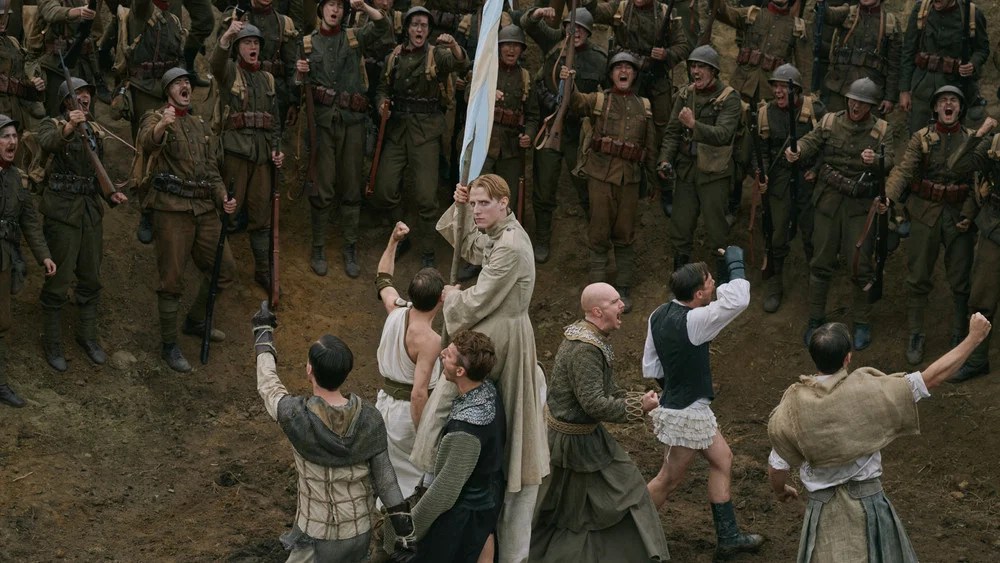
In the barn where Francis and Pierre and others perform, they create a sanctuary to perform femininity and softness without being judged. While the soldiers laugh at first, Francis’s voice transfixes them until some of them start crying. I don’t see this as them necessarily escaping from the war. If anything, they’re allowing themselves to process the trauma the war has inflicted upon them by seeing their experience reflected onstage. Their superiors are telling them not to be “sissies,” but deep down they are. The performance is letting them know that feeling something means survival, even though some call it cowardice.
But that doesn’t mean the play will last forever. Emmanuel Macchia and Valentin Campagne’s performances are so striking it landed them the Best Actor Award at Cannes, the first time two lead actors have tied for the role in a long time. They make Pierre and Francis both star-crossed and complicated at the same time. When they convey heartbreak or simmering rage, they’re not playing clichés of gay romances in period pieces, where the actors are only allowed a romantic glance for a second before reverting back to stoicism. Here, both actors lay it all bare, an incredible act of bravery in a film about the bravery of emotional vulnerability.
I’ve seen reviews on Letterboxd where people have compared this to Call Me By Your Name, and this isn’t that. If anything, Luca Guadagnino walked so Lukas Dhont could run. By rooting this film in history and making the romance accordingly messy, Dhont adds depth and blistering commentary to a genre often ripe with tragedy. He lets the poetry speak for itself instead of forcing it to die in the name of “realism.” Because for soldiers in WWI, the comfort they received gave them a reason to keep fighting in the carnage. Even on death’s door, they were not alone.
In the end, that’s what love is about. Wearing your heart on your sleeve even if it wears.
FURTHER THOUGHTS
- Francis rocked so many insane wardrobe choices in this film. I need his first parachute dress ASAP.
- The score for this film killed me. Ambient synths are my weak spot.
- There were so many blonde people in this film it almost blinded me.



Leave a Reply