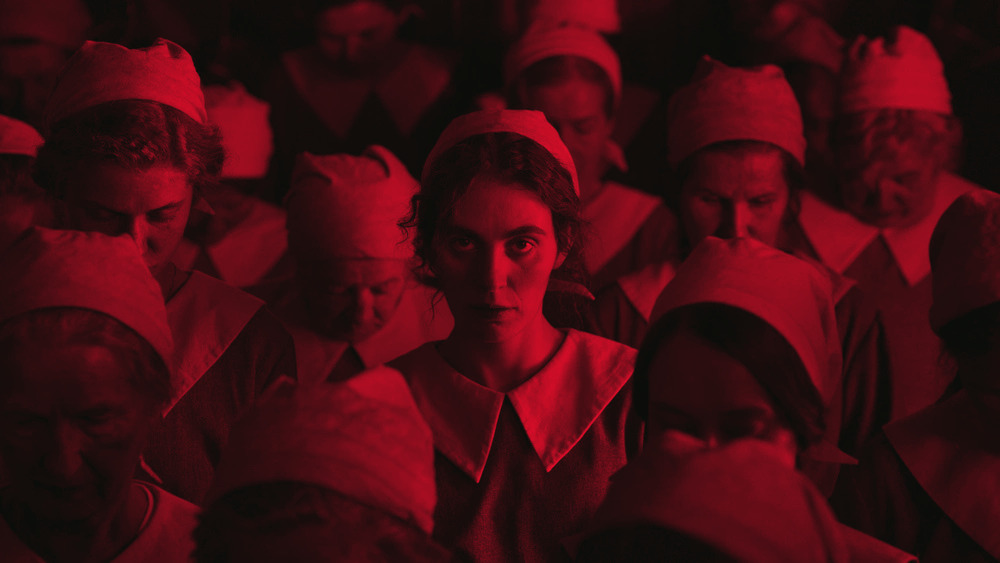
Nothing sets the tone for a film much like getting evicted.
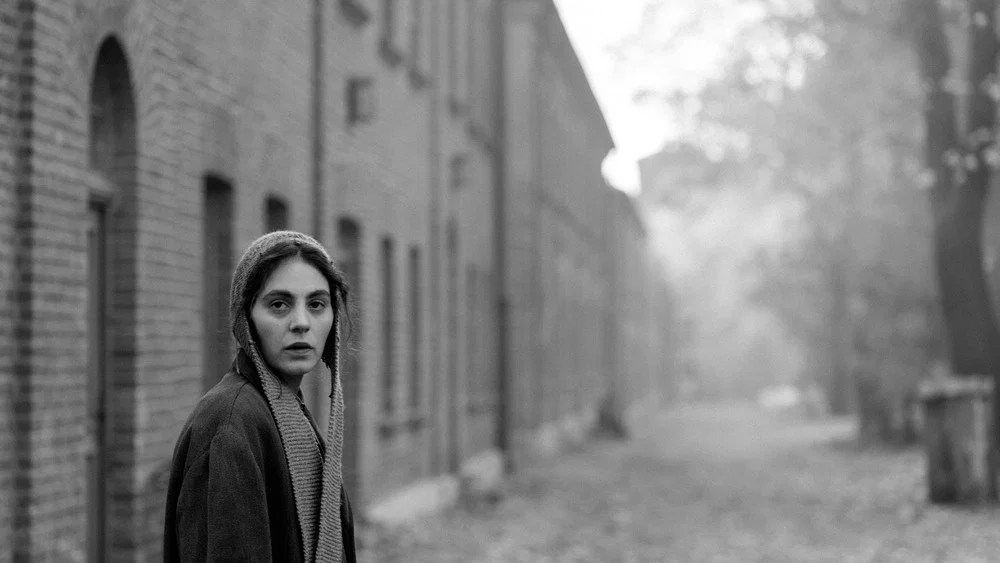
Steeped in dreary black and white, Magnus von Horn’s The Girl with the Needle retells the story of a real-life serial killer in Denmark through the eyes of a young woman afraid of motherhood. After naively falling in love with her wealthy boss, Karoline finds herself pregnant. Desperate to rid herself of an unwanted future, she finds herself approached by a woman who promises that if she gives her baby to her, it will be adopted by a loving and affluent family. The woman seems legitimate, so she accepts. She has no idea what’s in store for her.
Serial killer stories tend to focus a lot more on the spectacle of killing rather than the forces behind it, and I’m glad this film chose the broader-scale approach. The Girl with the Needle wastes no time in establishing its setting. It’s World War I, and people in Denmark are going through it. Karoline hasn’t paid rent for fourteen weeks. Her husband Peter just came back from fighting on the front, but his face is severely wounded and he suffers from night terrors. To Karoline, finding out she is unexpectedly pregnant is in and of itself a huge sentence. She’s going to be bringing life into a world, but she’s a deer in the headlights, unsure of how to proceed.
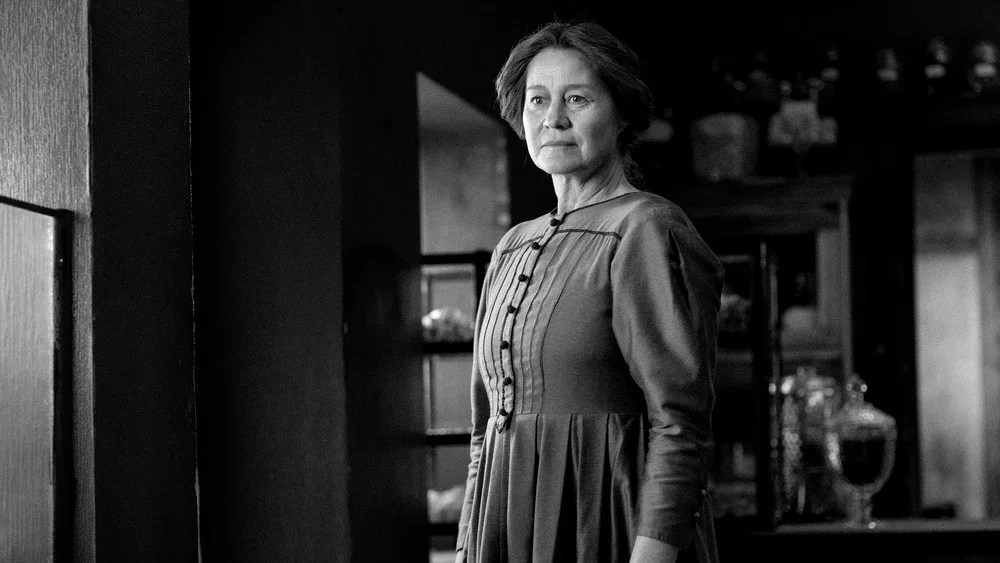
It’s no wonder that she falls prey to the suspiciously benevolent Dagmar, a matronly figure who runs a candy shop by day and an underground adoption agency by night. Dagmar reassures Karoline that she is doing the right thing by giving her baby up for adoption, an unorthodox opinion considering the strict social and moral boundaries of the time.
Post-WWI Europe was a period of eugenics, where people with disabilities, unwillingly pregnant women, and more were deemed as “imperfect” beings who needed to be ostracized from mainstream society as much as possible. When people weren’t trying to “cure” them, circus shows paraded people with disabilities like Peter as colorful “freaks” for money and laughter. While pregnant women weren’t deemed defective, pregnant women who didn’t want to be pregnant were seen as “problems” that needed to be fixed. But Karoline’s pregnancy doesn’t fix any of her problems. She is still impoverished, in a failing marriage, and deep down she knows she can’t be the good mother her child needs her to be. That’s behind her decision to give up her child to Dagmar. While it might seem cruel to some, for Karoline, this was the best option.
While WWI was over a century ago, a lot of these corrective behaviors persist. It’s easy to think that we’ve improved a lot since then–and we have–but the stigma around women not wanting to be mothers is still a taboo subject. When we force women into the shadows for not wanting to fit into traditional gender roles, there’s a legitimate risk of them falling prey to malicious forces who intend to do serious harm. It’s easy to be shocked when criminals and serial killers trick ordinary people into bodily harm, but it really shouldn’t be. When we rob people of the security to be in control, they’ll do anything to retain it.
Some of the best instances of body horror in this film come not from gross-out shots of body parts or fluids, but rather from what we don’t see. You can’t see where the needle is going in, but you can see from pained expressions and despairing eyes what is happening or is about to happen. You don’t see the finished fabric, but you see the needle going in and out, breaking at every uniform that is made. You don’t see the bodies, but you see where they went. The true horror lies in the gaps of our sight. When we refuse freedom to choose our own destiny, we have our own agency taken away from us. That’s where the film’s true bleakness lies.
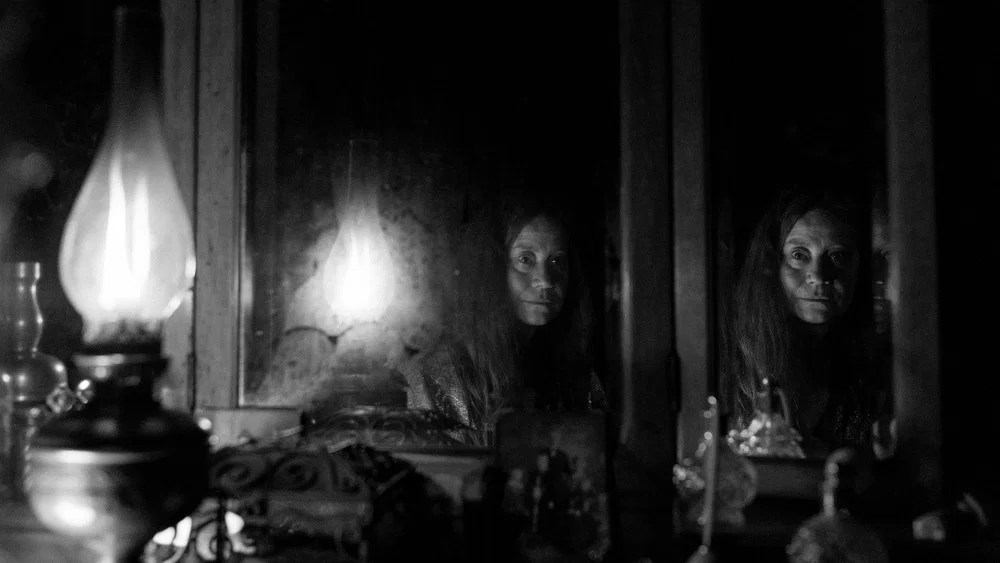
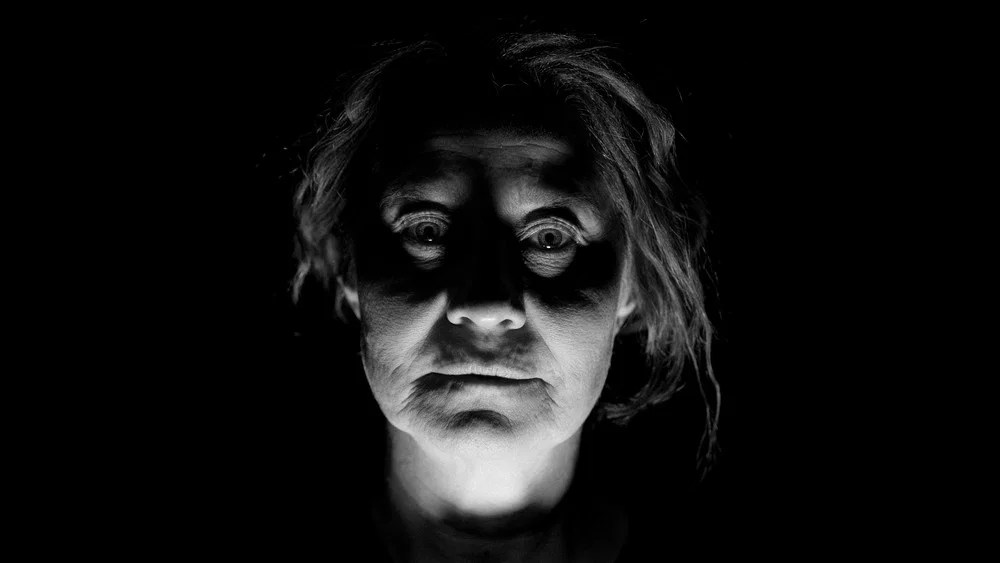
The stark black-and-white cinematography adds to this. I felt like I was watching a Danish remake of The Cabinet of Dr. Caligari with the expressionist lighting and the frightening images interspersed throughout the film. The score is also electrifying. The beats and the droning bass sound like a monster you’d be afraid of when you’re a kid, creeping through the walls waiting to get you at any second.
I’d highly recommend The Girl with the Needle if you want to see a horror film that relies more on what you don’t see. If you’re not a fan of blood, you’ll love (or hate) this.
FURTHER THOUGHTS
- Erena’s got some issues.
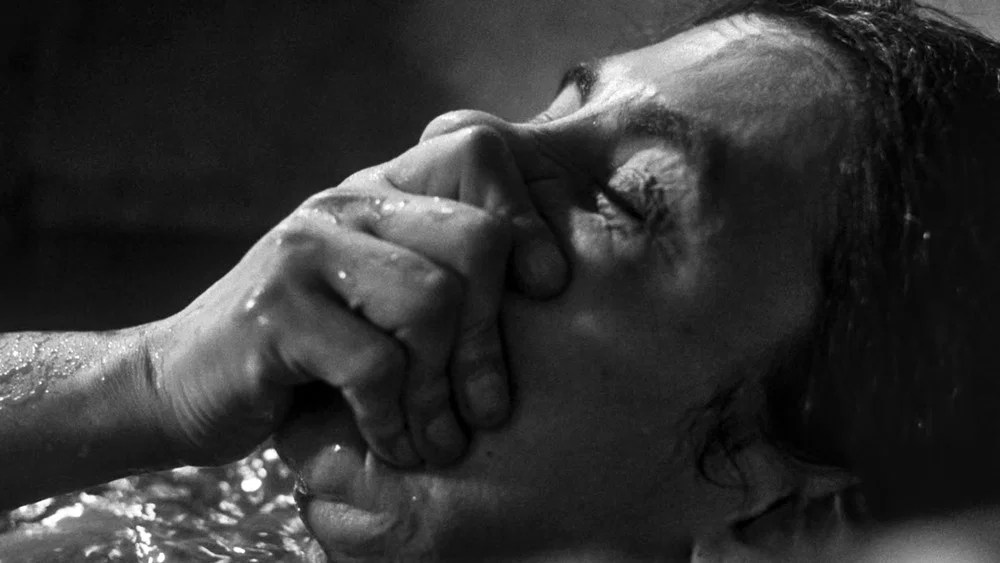
- I don’t know why, but now I feel like I’ve got to go to a Danish women’s bathhouse.
- Dagmar in this film reminded me of a more sociopathic version of Lillian Gish’s character in The Night of the Hunter.



Leave a Reply